
The Game Exposing a Hidden Trade-Off
11th August 2026
Jenny Danson
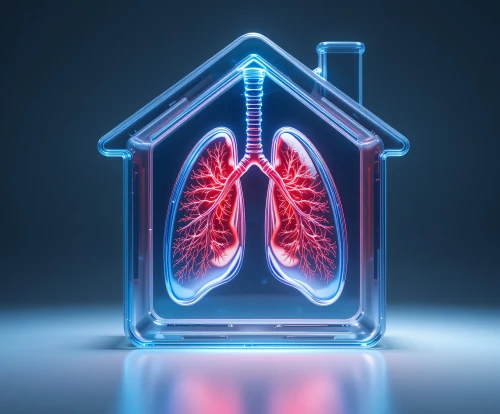
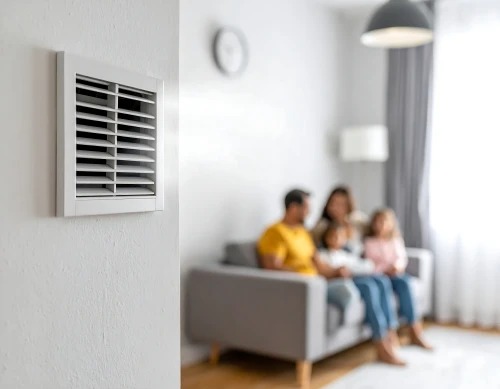
Air quality cannot be seen or smelled in most homes, which makes it easy to ignore. Many people avoid opening windows because they associate ventilation with heat loss and higher bills. The result is a widespread and largely invisible problem: a warmer home is not automatically a healthier one.
Energy efficiency measures typically work by making homes more airtight. Without adequate ventilation, that airtightness can trap moisture and indoor air pollution, raising the risk of respiratory infections. Research suggests that only around 11 per cent of people have both minimum ventilation provision in their home and know how to use it.
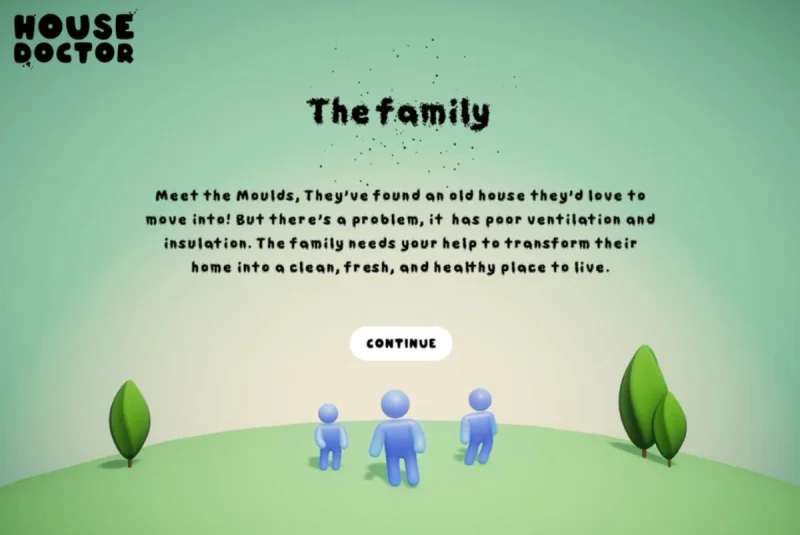
These trade-offs are difficult to explain in words but become intuitive once people can test them directly. A new interactive game, House Doctor, lets players adjust a virtual house, adding insulation, extractor fans and other measures, and see the immediate effect on warmth and air quality. It was designed as a conversation starter about healthy homes and energy use.
Whose idea was it
The game began with a simple observation: "Child health meets building science." It is a collaboration between Dr Livvy Swann, a children's doctor at the University of Edinburgh who leads the Homes, Heat and Healthy Kids study, and Dr Gráinne McGill, a healthy net zero housing researcher at the School of Architecture, Queen's University Belfast.
Livvy developed the idea after seeing how much people struggled to understand the relationship between warmth and air quality. As a children's doctor, she turned to play to explain a complex problem. Children, the team found, are powerful agents of change within a household, often able to influence family behaviour in ways that external advice cannot. People are more likely to make changes at home when those changes affect someone they love who has less autonomy, and children are the clearest example of that.
The game was co-developed with the Homes, Heat and Healthy Kids Parent Group, made up of families across Scotland with lived experience of raising children in homes that are hard to heat, alongside local primary school children. It is funded by Wellcome and the Safe Deposits Scotland Charitable Trust, and built by Mark Dobson at Spot Design, an award winning games designer who specialises in interactive museum exhibits. Discussions are now under way with museums in Edinburgh about bringing the game to a wider audience.
How it has landed
The game debuted at the Edinburgh International Science Festival, where it drew more than 700 visitors to the stand across four days, with strong feedback throughout. It has since been presented at the Glasgow Science Festival and is heading to the Orkney International Science Festival in September. A primary school lesson plan package is now in development.
Watch and download
A video of House Doctor being played through is available to view. The game can be downloaded for iPads from the App Store, and for Android tablets from Google Play.
The conversations it starts
The game's central lightbulb moment is the realisation that warmth and air quality can pull in opposite directions. Sealing a home can make the air inside worse unless ventilation improves alongside it.
It also opens up conversations about damp and mould without attaching blame. Moisture comes from ordinary family life, cooking, bathing and drying washing indoors, so the fix lies in the home rather than in the family's habits. Playing the game surfaces the everyday trade-offs households make, and children often reach the right answers faster than the adults around them, which tends to surprise parents. For policy audiences, it offers a tangible way to see why ventilation needs to be designed in alongside energy efficiency, rather than added afterwards.
In their own words
Members of the Homes, Heat and Healthy Kids Parent Group reflected on why they helped make the game and what it has meant for their own families.
Asked why they wanted to make the game, one parent said:
“We made the game to help people understand what it's like to live in and manage a cold home. It shows the difficult choices families often have to make and teaches simple ways to keep a home healthier. Playing the game helps people understand these challenges in a way that words or reports cannot.”
Asked how their own daughter responded to it, another parent said:
“My daughter really enjoyed playing the game. It made her curious, and she asked questions like, why do we open all the windows for at least five minutes? It helped her understand more about keeping a home healthy in a fun and engaging way.”
Asked what they hoped other families would take from it, a parent said:
“We hope families will learn simple ways to manage a cold home and keep it healthier. We also hope they feel understood and know they are not alone, while helping others better understand the challenges families can face.”
Image credit: House Doctor
Unlock all content
This is the 1 of 3 articles you can access for free. Become a member to unlock unlimited access to our full content library.