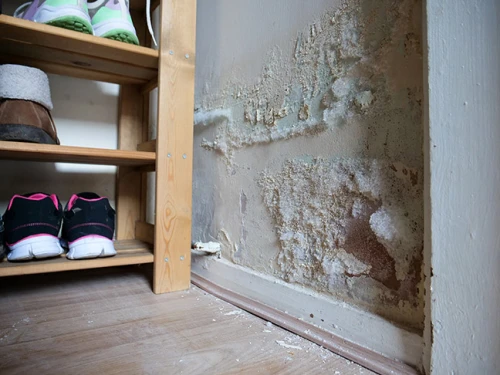

Making Healthy Homes Someone's Job
15th September 2026
Two housing associations explain why creating dedicated healthy homes roles is a structural response to the gap between KPI-driven repairs and the outcomes residents and regulation now require.
At a glance
Regulatory pressure from Awaab's Law, HHSRS, the Decent Homes Standard and the drive toward proactive asset management is pushing housing associations to restructure around outcomes rather than repair metrics, anddedicated healthy homes roles are one visible expression of that shift.
Both Riverside and Bromford Flagship Live West named their new posts after the outcome they want to deliver, not the problem they are managing, a deliberate signal that the role exists to pursue health, not just contain damp and mould.
The commercial case for proactive healthy homes investment is inseparable from the resident case: fewer recalls, fewer complaints, lower reactive costs, reduced regulatory exposure, and rebuilt resident trust.
Housing associations have long structured their repairs functions around metrics: speed of response, job closure rates, time-to-repair. Two senior practitioners in dedicated healthy homes roles argue that this model is reaching its limits, and that the regulatory and resident context now demands something structurally different.
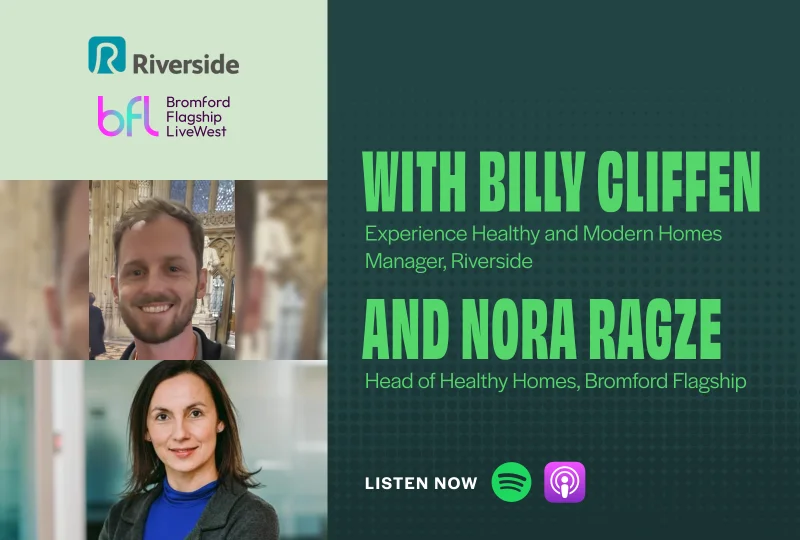
Billy Cliffen is Healthy and Modern Homes Manager at Riverside, a national landlord managing approximately 75,000 homes. Nora Ragze is Head of Healthy Homes at Bromford Flagship Live West, formed from a recent sector merger and managing around 120,000 homes. Both roles were created from scratch and placed within strategic asset management, deliberately close to long-term investment planning rather than day-to-day repairs delivery.
The framing behind each appointment is similar. At Bromford Flagship Live West, combining the former disrepair and damp and mould teams into a single healthy homes function was a conscious decision to orient the service around an outcome rather than a symptom. At Riverside, the role emerged from recognition that multiple regulatory and investment pressures, including HHSRS, EPC-C requirements, Awaab's Law and the cost of living, shared a common thread: the health and safety of the resident. Giving that thread a dedicated owner was the response.
Both practitioners identify culture change as the principal obstacle. Housing associations are KPI-driven and structurally siloed, features that reflect genuine regulatory and operational complexity but make it difficult to hold a whole-picture view of a resident's home and circumstances. The transition from a break-fix repairs model to outcome-focused case management is under way, accelerated by Awaab's Law, but requires sustained leadership commitment and protected space for strategic thinking. The Riverside role carries no operational targets, a deliberate design choice that allows longer-range analysis of how investment decisions affect resident health outcomes.
On the question of what the sector needs, both point beyond organisational practice. The courage to evaluate homes honestly and invest, replace or rebuild rather than patch indefinitely is one part of the answer. The other is a national strategic vision that embeds health, not just warmth and energy performance, at the heart of housing investment programmes.
Practical steps for housing providers
Map where health sits in your organisation. Identify which team, if any, holds a complete picture of building condition, resident vulnerability, repair history and outcomes. If no one holds that picture, that is the starting point.
Review how repairs teams are measured. If KPIs focus on speed and closure rates, examine what they are not capturing. Rising recall rates and repeat-visit patterns on the same properties are signals that the current model is not resolving root causes.
Examine the naming of your teams and functions. A team defined by damp and mould or disrepair is oriented around a problem. Reorienting around a healthy homes outcome changes what the team is aiming for, not just what it is called.
Consider where a dedicated healthy homes function would sit. Placement within strategic asset management, rather than reactive repairs, gives the role access to long-term investment planning and the space to think beyond immediate operational pressures.
Build the internal business case using cost data. Proactive, outcome-focused investment reduces reactive expenditure over time. Healthier homes produce fewer voids, fewer complaints, fewer regulatory interventions and stronger resident trust.
Ensure ventilation and air quality are treated as compliance priorities, not peripheral concerns. Standardised approaches to ventilation maintenance that go beyond minimum Part F requirements are a practical and achievable early focus for a healthy homes programme.
Review onboarding processes for new tenants. Assumptions about residents' familiarity with how to operate and maintain a home are not reliable. Clear, practical information at the start of a tenancy supports both resident health and early identification of property issues.
Host:
Jenny Danson, Founder and CEO, Healthy Homes Hub
Guests:
Billy Cliffen, Healthy and Modern Homes Manager, Riverside
Nora Ragze, Head of Healthy Homes, Bromford Flagship Live West