
Why Healthy Homes Is a Personal Mission
8th October 2026
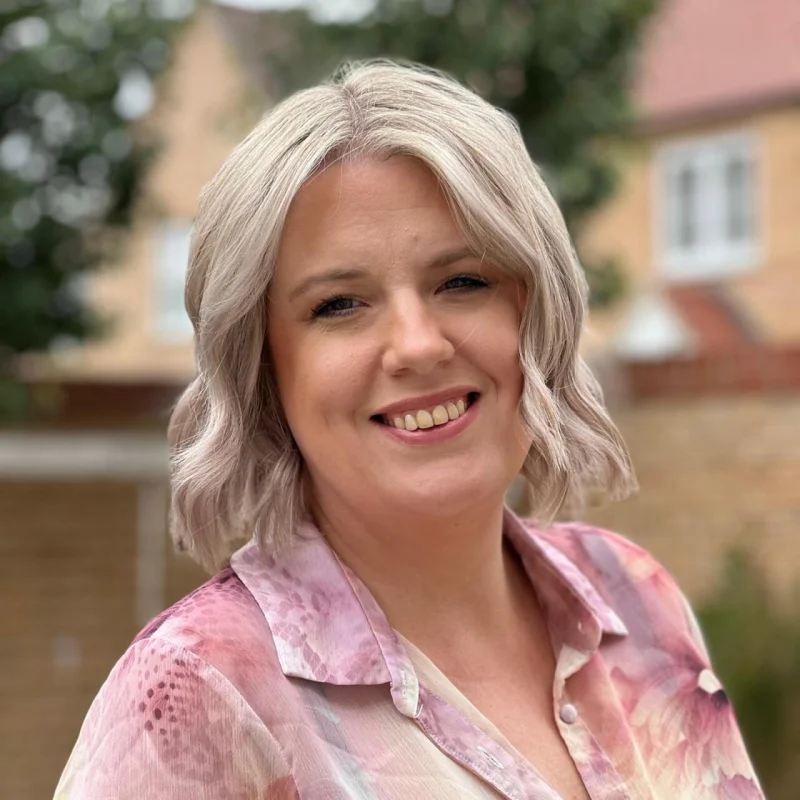
As we welcome Anglian Building Products (ABP) to the Healthy Homes Hub, Samantha Alleyne, Head of Business Development, shares the personal experiences that have shaped her perspective on healthy homes and her approach to creating better outcomes for residents.
When we talk about healthy homes, it’s easy to start with the physical elements of a property: damp and mould, ventilation, energy efficiency, overheating and building safety. The list can get technical pretty quickly, and of course, they are all important. But fundamentally, for me, healthy homes starts somewhere much more basic. It’s about everyone having somewhere warm, safe and secure that allows them to get on with life.
It's a fairly simple expectation, but the reality is that for too many people, it still isn’t.
I came into social housing almost by accident, starting my career designing kitchens following my Art degree, before moving to Moores Kitchens. This is where I started working with housing associations and local authorities and began to see the difference our work could make to people’s lives.
Part of why that resonated with me was because I understood some of those pressures myself. I grew up on a council estate and later found myself on working tax credits trying to afford childcare. I'm a mum of two, with one child who has additional needs. There have been things my son has needed that weren’t funded through the NHS and that I couldn’t always afford. From experiences like that, I know that needing something and being able to access it are two very different things and it has given me empathy for people who find themselves in difficult situations.
But it’s not just about what you can afford. I’ve seen in my own life how important the environment around you can be. For my son in particular, having the right space around him, somewhere warm, safe, calm and secure, is incredibly important in giving him the opportunity to stand still against his peers. I know how much my surroundings affect me as well. There’s a lot of truth in the saying ‘tidy house, tidy mind’. I need somewhere clean, tidy, warm, safe and well lit to be able to focus and get on with what I need to do.
And I think many of us realised how important our environment was during Covid, when we had to adapt our homes to make it work, but not everyone had the ability to do so. For residents who are genuinely trying to get on in life, if the home they’re living in isn’t fit for purpose, it can be a real hindrance. We’re asking people to work, raise families and move their lives forward while already starting behind everybody else.
I’m now fortunately in a position professionally where my work can make a difference to some of those people’s lives and if there’s something I can do through my career that has a positive impact, I’ll find every opportunity to do it.
More than four walls
That thinking has naturally fed into what we do at ABP. Over the last couple of years, we’ve taken what was quite a basic social value strategy and developed it into something much broader. From providing furniture and laptops with training how to use them, to improving communal areas, working with food banks and running skip amnesties, we’ve tried to understand what residents actually need and where we can make a practical difference.
The same thinking applies to the physical home. Windows are still too often treated as a component renewal, sitting neatly on a long-term replacement cycle until the spreadsheet says it’s their turn. But homes, and the people living in them, rarely behave quite as neatly as an asset management spreadsheet.
A window touches far more than one workstream. There’s warmth and energy efficiency, but also natural light, ventilation, security, building safety, overheating, damp and mould, and fuel poverty.
As a manufacturer and installer, our involvement doesn’t have to begin and end with putting a new window into an opening. Our surveyors can look at what is actually happening in a property. Is a room overheating? Is there damp and mould? Is poor ventilation contributing? We can identify those issues and put potential solutions forward, rather than assuming the same answer is right for every home. That same approach carries through to installation, where the way we manage the work can vary depending on the resident and their circumstance.
For me, that’s where place-based specification really comes into its own. The principle is straightforward: specify for the place and the people in it. What works in one property isn’t automatically right for the house next door.
Start with the problem, not the package
But that thinking needs to start before we arrive at someone’s front door. Rather than deciding on the solution first, we need to be clear about the problem we’re trying to solve. If a building has an overheating problem, start there. If residents are struggling with fuel poverty, start there. If there is damp and mould, understand why.
Residents need to be part of that conversation from the outset, alongside the specialists who can help find the right solution. We have so much specialist expertise across the sector, but we still have a habit of putting it into separate boxes: windows and doors in one, ventilation in another, damp and mould somewhere else.
That’s where the healthy homes ideal gives us an opportunity to join the dots. But procurement needs to allow the right specialists to work together, rather than pushing for one workstream with one contractor to do everything.
That’s where I’d like ABP’s role to continue evolving. We manufacture the products, survey properties, install in people’s homes and work directly with residents. We see what is happening on the ground, so we can bring that knowledge into the conversation much earlier. And now we have added a solar panel installation service into the mix with the newly launched Solar Solutions by ABP, a natural extension of our existing services that can help housing providers improve energy efficiency, progress towards net zero and, most importantly, look after residents.
A resident doesn’t experience their home as a series of separate components, contracts or workstreams, it’s just their home. If we start there and build our specifications, procurement and delivery around what residents actually need, we stand a much better chance of creating homes that genuinely help people live well.
And really, shouldn’t that be the point?
Image credit: Anglian Building Products
Unlock all content
This is the 1 of 3 articles you can access for free. Become a member to unlock unlimited access to our full content library.
Author