
The Missing Link: The Key Role of the Contractor In Improving the Health of our Homes
18th September 2026
Rebecca Hart,
Novus Property Solutions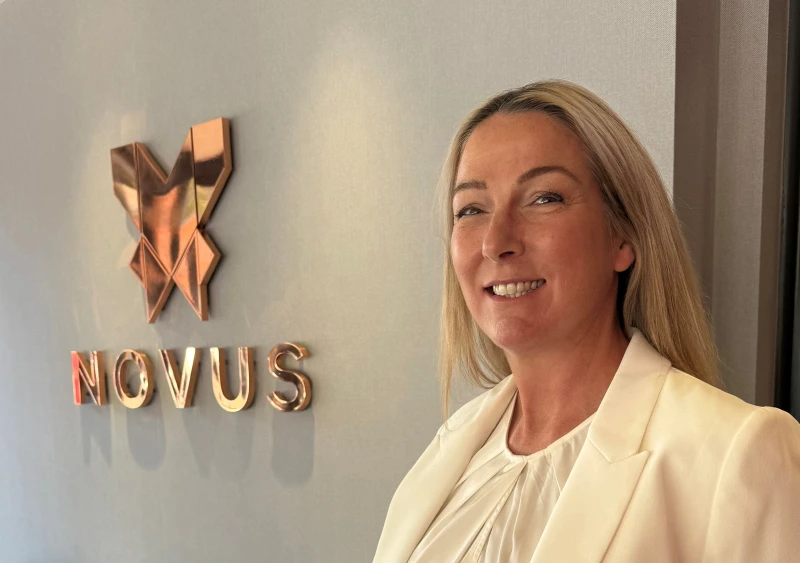
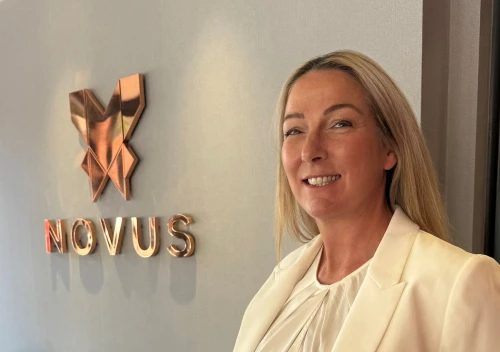
We spend a lot of time talking about data, retrofit specifications and resident engagement strategies. What does not get the spotlight is the person who's actually standing in the kitchen, the person who sees the damp patch before anyone logs a repair. We caught up with Rebecca Hart, Head of Sustain at Novus Property Solutions to understand better the contractor’s view.
Why is the contractor role a special one
We are very much in a unique position because really no one else in the housing relationship spends as much time inside the home itself. Surveyors and housing officers will visit, but contractors will often be in and out of a property repeatedly over the course of a job, working in close proximity to how a resident actually lives and uses the home.
This gives us real insight into a home's condition, and a resident's circumstances, that's genuinely hard to get any other way. It is the personal element. The eyes inside the home you could say. No one enjoys the same level of access.
Is it understood how much time is spent in residents' homes and speaking to residents? Is this insight used effectively
Not as well as it should be, in my view. As contractors we can build trust with the resident and we would always like this to be seen as a three-way partnership – landlord, resident and contractor.
Through our work we build a detailed, informal picture of a property, ventilation habits, how a resident is coping with a repair, simply through conversations while we work. But this insight rarely has a formal route back into the landlord. This is an asset which is undervalued we feel.
We can help identify situations before they become complaints and we can help to explain and build understanding with residents of how their home operates. We feel if we can build the right open, honest relationship with landlords we can use this to help move further towards a predictive, rather than reactive approach to maintenance.
Do we underestimate the influence of the contractor
It will not surprise you if I say we think so.
We clearly understand that our approach in someone's home shapes how that resident feels about their landlord, sometimes more than any letter or survey does. We are also often the first person a resident will mention a health concern to, because the conversation happens on the resident's own territory, not in a formal setting. To us that is real influence, but it is rarely viewed as such.
We are often seen as a delivery mechanism, but we feel we are more. We are a relationship asset. We can help shape whether residents feel respected, whether they place trust in their landlord, whether they grant access to the home, whether they will complain and whether they will disclose their needs.
Our ask would be not to overlook this. We feel there is real value on the insight a contractor can bring and we should be working hard to ensure this perspective is captured to help aid housing providers decision-making. There is an emphasis on us to help make this happen, but there is a role for the housing provider to play here also. At the end of the day, it is the potential for a real win-win for both parties.
How can we learn from our people to help put the resident first and deliver customer-centric solutions
By using the feedback from our staff to understand better what they see and hear, not just what they fix. Our people listen to residents. This is probably the most valuable data we can gather in housing.
This makes the challenge one of how we effectively collect and disseminating this intelligence because it often sits outside of formal feedback channels. And this is why it is perhaps even more valuable as feedback because it is not contrived. It comes direct at a time and a point when the contractor is in the resident’s home and addressing matters important to the resident.
It is our role to feed this back to our client, the landlords. That might be as simple as a short debrief after certain jobs allowing the ability to flag a health-related observation, not just a technical fault.
What role can the contractor play in a broader health message with residents, on repairs and retrofit projects
A significant one. Very often we are the face of the housing intervention.
A repair or retrofit visit provides a natural moment to talk with a resident about ventilation, heating use or damp prevention. This is often in a way and environment that lands better because it is coming from someone already in the room rather than from a leaflet or letter.
We feel this position places us favourably to reinforce a health message at exactly the point residents are most engaged with their home.
Image credit: Novus
Unlock all content
This is the 1 of 3 articles you can access for free. Become a member to unlock unlimited access to our full content library.
Author