
Your Car Gets an MOT. Why Doesn't Your Home?
26th August 2026
Jenny Danson

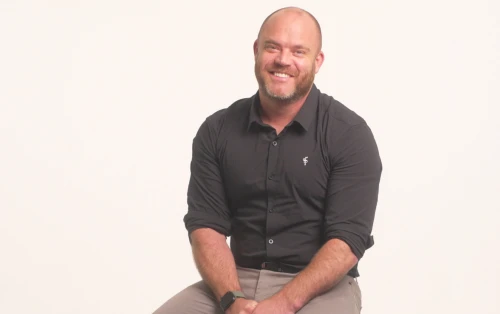
A conversation with Andre Hedges, Chartered Surveyor and Expert Witness
Every year, millions of us take our cars for an MOT without a second thought. We accept that a vehicle needs to be inspected regularly, that things go wrong invisibly over time, and that neither we nor our families should be exposed to risks we are not qualified to detect. We do not consider this an imposition. We consider it common sense.
So why do we not apply the same logic to our homes?
That question sits at the heart of a conversation I had recently with Andre Hedges, a Chartered Surveyor with over 30 years of experience working across local authorities, housing associations, and the commercial sector. Andre now works primarily as an expert witness, called in when tenants have reached the end of the line and litigation is the only option left. What he sees in that role is, by his own description, a preventable crisis.
The problem with waiting to be told
The current system in social housing relies almost entirely on the tenant to report a problem. On paper, this sounds reasonable. In practice, Andre argues, it is fundamentally flawed.
"Most of the unfit housing or unfit items I raise, the tenant didn't even add to the letter of claim," he told me. "Because they didn't know it was a problem."
This is not a failure of the tenant. It is a failure of the system. People adapt to the conditions they live in. A missing banister rail becomes normal. A broken double socket in a child's bedroom gets covered by a toy box. A carbon monoxide detector installed in the hallway, with the boiler in the bedroom, sits there looking compliant while offering almost no protection. The hazard is invisible precisely because no one qualified has ever been asked to look for it.
Andre draws a direct parallel with the car.
"If it's new, it probably is fine. But the older it gets, the more likely things are to go wrong. And because I'm not a mechanic, I'm grateful for that service. When they tell me something could be about to break down, that saves me a lot of inconvenience. And if it's not safe, I'm glad to have it fixed, because I have children and grandchildren."
We all accept this logic for our vehicles. We do not expect car owners to self-diagnose brake wear or spot a failing catalytic converter. We build in a mandatory, independent check. Andre's question is a simple one: why do we think housing is different?
What expert witnesses see
Andre's day job puts him in front of some of the worst housing conditions in the country. Not all of it involves longstanding neglect. He described visiting a property that had been refurbished just six months earlier. A basement flat, recently let to a private tenant, had no ventilation whatsoever. Humidity levels were above 80 percent. The staircase, the only way in or out, had an irregular bottom step creating a fall risk. There was no handrail. Mould covered the walls and ceiling. The tenant had been hospitalised following a serious asthma attack.
He described another case involving a social housing tenant who had been waiting for damp remediation for so long that she had developed aspergillus in her lungs, making her permanently and acutely sensitive to mould. She will carry the consequences of that delay for the rest of her life.
It's all out there, Andre said,
“Every hazard you can possibly think of. And when I look at it, I know exactly what's happened. It's gone on the too difficult pile."
The Pandora's box problem
Andre is not naive about why organisations resist proactive inspection. He has worked inside housing associations and local authorities. He knows the institutional logic.
"I know the mindset," he said. "We don't want to lift the lid off what could be a Pandora’s box. There could be all kinds of creepy crawlies under there. You don't want to take the lid off Pandora's box."
Awaab's Law has changed the regulatory landscape, and Andre welcomes it. But he is clear about its limitations.
"It still depends on the tenant reporting it. And all those properties out there are falling into disrepair apart where the tenant does not report, and so the landlord does not address the issues.
The law creates accountability for what is reported. It does not yet require organisations to go and look.
What a housing MOT would actually look like
When Andre talks about proactive inspection, he is not describing a bureaucratic overhaul. He is describing something straightforward.
"Keep it simple," he said. "Don't make it too complicated. Don't talk about masses of software to support the arrangement. Just go out, go to a property, and ring it in as a health and safety hazard that needs dealing with."
A competent surveyor can walk through a home and identify the priority health and safety risks in a single visit. Missing window restrictors in children's rooms. Faulty electrics. Absent or incorrectly placed carbon monoxide detectors. Leaking gutters quietly saturating the fabric of the building. Mould that is structural, not superficial. An MOT does not restore a car to showroom condition. It establishes whether the car is safe to drive. The same principle applies here.
Crucially, Andre argues that a risk-proportionate approach is entirely achievable. Newer properties in good condition might be inspected every two or three years. Older terraced housing, carrying all the damp and structural risks that come with age, might warrant an annual visit. This is not a uniform burden. It is professional judgement applied systematically.
"Priority should be keeping houses safe, keeping tenants safe," he said. "There is no way out of that. You can't be a landlord and leave your tenants at risk. And you can't expect tenants to understand the risk in a lot of cases."
The relationship it would build
There is something in this conversation that goes beyond the technical. Andre described what a proactive inspection visit does for the relationship between a landlord and the people they house.
"I like to go and have a brief banter with the tenant and just put the extra little bit of effort in. They would feel cared for by the organisation. Rather than, we want the rent but we don't want a repair."
He described tenants who, once they trusted that someone would come and check in, became more communicative, more likely to flag smaller issues before they became expensive ones, and less likely to reach the point of despair where a solicitor becomes the only option.
"You immediately start communicating that you're interested in the tenant, you're interested in their welfare. It will go miles in terms of improving your image. And you can go, right, how can we improve this? Because it seems to be working. We're reducing our claims. Just start."
Why this matters now
I use the car and sensor analogy quite often in my own work at Healthy Homes Hub. We are comfortable with the idea of 1,500 sensors monitoring what is happening inside a vehicle. We are still wrestling with the concept inside a home. The logic is identical. A car that has not been checked is not necessarily dangerous. But you would not bet your children's lives on it. Neither should we accept that bet for the families living in the homes our sector is responsible for.
Not every housing association is operating as Andre has described. There are good organisations, good surveyors, good people who genuinely want to do this differently. What they need is somewhere to collect that best practice, a framework for challenging the Pandora's box instinct, and evidence that proactive inspection produces better outcomes for residents and for the organisations themselves. That is exactly what Healthy Homes Hub exists to support.
Andre put it simply:
"Just start."
That feels like the right place to end.
Andre Hedges is a Chartered Surveyor and Expert Witness based in Blaenavon, South Wales. You can connect with him on LinkedIn.
If your organisation is exploring proactive inspection approaches or wants to connect with others working in this space, get in touch with the Healthy Homes Hub team.
Image credit: Andre Hedges
Unlock all content
This is the 1 of 3 articles you can access for free. Become a member to unlock unlimited access to our full content library.