
What Don't We Know About Our Homes and the Impact On Our Health
15th July 2026
Dirk Huibers,
SPOTR
At a glance
Housing providers often hold detailed data on individual elements of a home – compliance checks, condition surveys, repairs history – but rarely bring it together to understand how a property performs as a whole.
Multi-million-pound investment decisions risk being made without a joined-up view of building fabric, environmental conditions and system performance.
Better building knowledge enables prevention, targeted intervention and measurable health outcomes, but requires connecting data that sits in fragmented systems.
Do we really know how our buildings perform?
Housing providers operate within a regulatory framework which is designed to identify hazards and enforce minimum quality standards. The Housing Health and Safety Rating System (HHSRS) gives housing providers a method for assessing risk, and the Decent Homes Standard sets baseline expectations for property condition.
However, these frameworks assess housing condition at a point in time. They do not provide continuous insight into how a building performs once occupied, how environmental conditions change across seasons, or how building systems respond to resident behaviour and external weather patterns.
Most housing providers already hold a great deal of relevant data – stock condition surveys, repairs records, compliance certificates, energy performance certificates and resident contact logs. Individually, each of these tells you something useful about one part of a property. None of them, on its own, tells you how the building performs as a whole, and because the data sits in separate systems, few providers can easily connect it to find out.
The result is that investment decisions are often made with a partial view of how homes are actually functioning.
Managing investment risk through data
Investment programmes in social housing are substantial. Planned maintenance, retrofit programmes and stock improvement works require housing providers to allocate resources across thousands of properties, often with limited visibility of how those properties perform once you look beyond the individual checks and surveys.
Where data is incomplete or fragmented, housing providers face a trade-off: prioritise intervention based on age and assumed deterioration, or wait for problems to be reported by residents.
Bringing existing, accurate data together reduces this risk. It allows housing providers to see, at a portfolio level, which properties are most likely to experience performance issues, where environmental conditions may be contributing to health hazards, and which building elements need attention before failure occurs - rather than judging each dataset in isolation.
This does not eliminate the need for professional surveys or on-site inspection. It does, however, allow organisations to prioritise inspection activity more effectively, and helps them to make investment decisions with greater confidence that they are addressing the right problems in the right homes.
Is current building data adequate for health-focused decisions?
A common misconception is that housing providers already hold the data they need to make health-focused decisions. In practice, the data exists but is fragmented.
Stock condition surveys provide snapshots of building fabric. Energy performance certificates estimate thermal performance. Repairs records show where problems have been reported. Compliance certificates confirm that safety checks have been completed. Resident contact logs may reference damp, mould or heating issues.
Each dataset provides useful information. However, when these datasets remain disconnected, it becomes difficult to identify patterns, understand cause and effect, or judge whether interventions are actually improving conditions.
Accurate health-focused decision-making depends on connecting building performance data with environmental conditions and resident experience. Without that connection, landlords risk treating symptoms rather than causes, or investing in improvements that do not resolve the health risks residents are experiencing.
Integrating data to deliver homes free of serious hazards
Delivering homes free of serious hazards means understanding where hazards are most likely to occur, and intervening before conditions deteriorate.
That means joining up data across asset management, repairs, compliance and resident engagement systems, rather than treating each as a standalone record.
When building fabric data is combined with environmental monitoring, heating system performance and resident demographics, housing providers can identify properties where health risks are elevated and prioritise intervention accordingly.
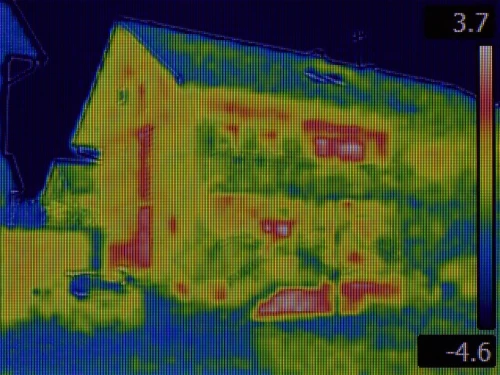
Digital tools that bring together imagery, asset data and analytical models can support this by surfacing patterns across housing stock that wouldn't be visible from any single dataset, helping asset managers prioritise inspection and intervention more effectively.
However, data integration alone is not enough. Housing providers must also establish governance processes that review analytical outputs, validate findings through professional inspection, and ensure that investment decisions are informed by both data and expertise.
What we need to understand about our homes
Understanding how a home performs means monitoring four interconnected areas together, not as separate checklists.
Building fabric performance covers the condition of walls, roofs, windows and insulation. Deterioration here can lead to water ingress, heat loss and structural problems that affect resident health.
Environmental conditions cover indoor air quality, temperature and humidity. Monitoring these shows whether a home is maintaining a safe, comfortable environment for the people living in it.
Performance of systems covers heating, ventilation and hot water. Failures or inefficiencies here can mean cold homes, poor air quality and higher energy costs for residents.
Residential factors include demographics, fuel poverty indicators and reported health conditions. Understanding who lives in a property and what challenges they face enables housing providers to tailor support and prioritise intervention where health risks are greatest.
Each of these areas, looked at alone, gives a partial picture. It's only when they're monitored and analysed together that housing providers can identify properties where multiple risk factors overlap, and intervene before serious hazards develop.
How better building knowledge transforms health outcomes
Better building knowledge – built from data that's actually joined up – can transform health outcomes by enabling housing providers to move from reactive repairs to preventative maintenance.
Prevention becomes possible when housing providers can identify properties at risk of developing health hazards before problems are reported. Early intervention reduces the severity of issues, lowers repair costs and prevents residents from prolonged exposure to poor housing conditions.
Targeted intervention ensures resources go where they'll have the greatest impact. Understanding which properties present the highest combined health risks – rather than looking at each risk factor in isolation – lets housing providers prioritise investment and inspection more effectively.
Effective evaluation becomes possible too. Monitoring environmental conditions before and after retrofit works, for example, provides evidence of whether thermal performance has actually improved and whether residents are experiencing warmer, healthier homes.
Resident support is strengthened when housing providers can explain what is known about a property's condition, what improvements are planned, and how residents can manage their homes to reduce health risks. Transparent communication builds trust and helps residents to make informed decisions about heating, ventilation and reporting problems.
None of this replaces professional judgement or resident engagement. What it does is give housing providers the portfolio-wide visibility to see how their homes are performing as whole buildings, not just as a collection of separately-monitored parts – and to act on that understanding with confidence.
Housing providers operating under increasing scrutiny regarding housing conditions and building safety need to show they understand their housing stock and that maintenance resources are being used effectively. Technologies that join up existing data are becoming more relevant for exactly this reason – not as a substitute for professional inspection, but as a way of showing where inspection and intervention should happen first.
Unlock all content
This is the 1 of 3 articles you can access for free. Become a member to unlock unlimited access to our full content library.
Author