

Overheating Risk Has Layers Beyond Location
1st September 2026
Jenny Danson
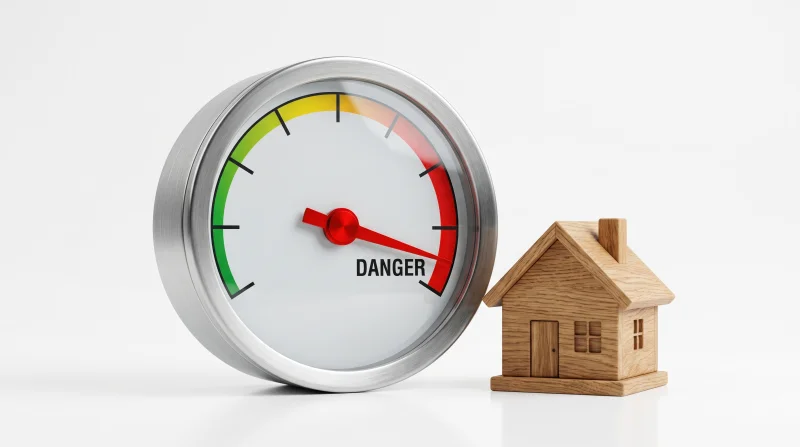
Orbit's dynamic thermal modelling shows which homes and residents carry the greatest overheating risk, and why climate adaptation needs a place in every retrofit strategy.
At a glance
Orbit modelled overheating risk across 26 property archetypes and seven locations spanning the Midlands, the South and the South East.
Bungalows, and bedrooms facing south or on upper floors, emerged as the highest risk archetypes in the modelling.
Awaab's Law brings excess heat inside the same statutory response timeframes that already cover damp and mould, from 30 November 2026.
Overheating in social housing is moving from a seasonal irritant to a regulated hazard. The Housing Health and Safety Rating System already treats excess heat as a hazard category, and the second phase of Awaab's Law brings it inside the same statutory response timeframes that cover damp and mould from 30 November 2026. Landlords will need to identify and act on heat risk to a fixed schedule, not only when a resident complains.
Gemma Brookes, Head of Asset Optimisation at Orbit, has completed a Masters in Low Energy Building Services Engineering at Loughborough University, using dynamic thermal simulation to model how overheating risk varies across a large and geographically diverse housing stock. The modelling covers 26 property archetypes across seven locations spanning the Midlands, the South and the South East, and projects forward to 2050 and 2080 using Exeter University's Prometheus weather files.
Which residents and locations carry the greatest risk
The research groups residents by their capacity to adapt to rising temperatures rather than by age alone. The highest risk group includes older people, those with health conditions or disabilities, babies and young children, and residents with restricted mobility who cannot easily reach a cooler room or manage blinds and windows. Separate research from the HEARTH programme, which studies heat risk in care homes and hospitals, finds that older people often feel less thirsty and are slower to notice how hot a room has become, reinforcing why age alone is an unreliable proxy for risk.
Location matters too. The South and South East recorded the highest risk, with London, Margate, Brighton and Dover among the worst affected. London's exposure follows from the urban heat island effect, where dense, built up areas retain and re-radiate heat, and the same pattern appears in Part O of the Building Regulations. Location alone does not settle the picture, since the archetype and the resident living in it can raise or lower that risk further.
Bungalows emerge as an unexpected risk
Newer, airtight homes performed broadly as expected. Bungalows did not. Their large roof space and heavily insulated lofts absorb heat, and because their windows sit at ground level, opening them overnight for purge ventilation raises a security risk rather than offering relief. Bungalows also tend to house older residents and people with mobility needs, compounding the exposure of an archetype already prone to overheating.
Bedrooms facing south, and rooms on upper floors, recorded the highest overheating exceedance, particularly at night. The finding raises a design question that extends beyond retrofit: whether bedrooms should sit lower in a home and living space higher, an arrangement already common in parts of Europe. Disrupted sleep affects healthy adults as well as vulnerable residents, and the modelling incorporates night time overheating for that reason, an aspect existing definitions of overheating had left out.
A single metric for the building and the resident
Overheating has lacked a single agreed definition, complicating its treatment as a regulated hazard. The methodology combines the CIBSE TM59 and TM52 standards with British Standard adaptation categories, an approach informally nicknamed a Frankenstein model rather than a single new standard. It brings together building pathology and a resident's ability to thermoregulate rather than treating either in isolation. The aim is not to ask whether a home is overheating, but whether the people living in it remain comfortable across summer and winter alike.
Passive measures alone are not enough
The modelling tested louvres, internal blinds and window opening patterns. Purge ventilation performed best in houses, though noise, air quality and, in bungalows, security concerns limit where it can be used. For less vulnerable residents, passive measures were generally sufficient. For the highest risk archetypes and the most vulnerable residents, they were not, and mechanical solutions are increasingly needed alongside them.
Orbit is piloting air to air heat pumps, which heat and cool from a single system, alongside solar generation, and is exploring shared comfort spaces in later living schemes where residents can cool down if their own flat overheats. The approach links directly to decarbonisation, since properties moving away from oil or LPG heating can adopt a system capable of both functions rather than two separate ones.
Making the case for investment
The argument to leadership rests on risk rather than a single capital request. Lenders and the regulator are expected to ask about overheating exposure, and a prioritised, stock wide assessment gives boards a clearer basis for investment than a blanket proposal. Climate adaptation is treated as a thread running through existing retrofit, remediation and decarbonisation programmes rather than a separate budget line competing with them.
Housing providers do not need new data to begin. EPC and SAP data, already held for compliance, is the same information the modelling was built on, and identifying the highest risk archetypes, particularly bungalows and homes with south facing or upper floor bedrooms, is a realistic starting point.
How Healthy Homes Hub is helping providers respond
Healthy Homes Hub's own response sits alongside this research. The Cooler Homes programme, launched last month with MAP Impact, Good Homes Alliance, Loughborough University and Oxford Brookes, gives every home in a portfolio a heat risk score, matches at risk properties to practical mitigation options with cost bandings, and produces board ready evidence for the Regulator of Social Housing, ahead of a summer 2027 forecast to be hotter still. Housing providers wanting a head start on the Awaab's Law deadline can find out more, or register interest, via the Healthy Homes Hub website or by contacting the team directly.
Practical steps for housing providers
Review existing EPC and SAP data to identify which archetypes and locations carry the greatest overheating risk, before commissioning new modelling.
Treat bungalows, and homes with bedrooms facing south or on upper floors, as priority checks, given their disproportionate risk profile.
Reassess night time ventilation options for ground floor and bungalow properties, where open windows raise security concerns.
Raise climate adaptation explicitly within retrofit, remediation and insulation conversations, rather than treating it as a separate workstream.
Consider mechanical solutions, such as air to air heat pumps, where passive measures alone will not bring the most vulnerable residents into comfortable conditions.
Build a heat risk register that brings together location, archetype and resident vulnerability, ahead of the Awaab's Law phase two deadline on 30 November 2026.
Image credit: Adobe Stock
Unlock all content
This is the 1 of 3 articles you can access for free. Become a member to unlock unlimited access to our full content library.