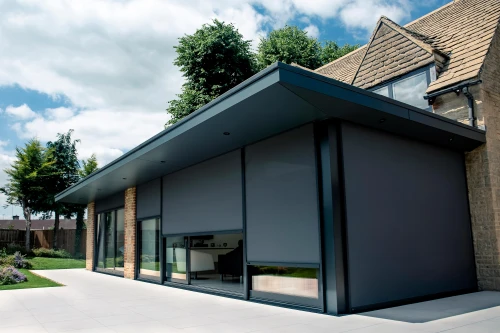

Deadly Overheating Isn't Coming: It's Already Here
22nd June 2026

Extreme heat is already killing people in their homes, and the £7.4 million HEARTH research programme is building the evidence base to make net zero and climate resilience inseparable policy goals.
Host: Jenny Danson, Healthy Homes Hub
Guest: Professor Rajat Gupta, Director, Oxford Institute for Sustainable Development and Low Carbon Building Research Group, Oxford Brookes University
At a glance
The 2022 UK heatwave produced over 3,200 excess summer deaths, with most heat exposure occurring indoors — HEARTH connects climate projections, building design and health outcomes across four high-risk settings: homes, care homes, hospitals and prisons.
Passive cooling, primarily ventilation and external shading, is the priority intervention strategy — internal blinds are ineffective once solar radiation has entered a space.
Integrating overheating management into all retrofit and new-build policy now is HEARTH’s most urgent call to action for housing providers.
The UK’s national research hub on net zero, health and extreme heat, HEARTH is a five-year, £7.4 million programme funded by UK Research and Innovation and the National Institute for Health Research. Led by Oxford Brookes University, it brings together six universities and four non-academic public sector partners, including the Greater London Authority, Oxfordshire County Council and Sussex NHS Foundation Trust. Its core argument is that rising temperatures are not a future risk: 80% of homes in London already overheat, and the 2022 heatwave, during which UK temperatures exceeded 40 degrees for the first time, resulted in more than 3,200 excess summer deaths.
HEARTH focuses on four settings where high exposure meets high vulnerability. In homes, design constraints including single-sided ventilation and restricted window opening worsen overheating. Care homes face similar limitations, compounded by the fact that older residents are frequently unaware of the health risks heat poses to them. Hospitals saw service delivery affected during the 2022 heatwave as indoor temperatures rose. In prisons, limited environmental control raises concerns about the established link between sustained heat and increased interpersonal violence.
The programme takes a whole-systems approach, connecting climate projections, indoor and outdoor environments, human behaviour and health outcomes. Its research spans building-level interventions, urban cooling strategies and behavioural guidance. A particular emphasis is placed on sustained heat rather than acute heat spikes: buildings that cannot lose heat overnight accumulate temperatures over days or weeks, creating cumulative physiological stress that disproportionately affects older people, those with chronic illness, infants and socially vulnerable groups including residents in poorly designed top-floor flats.
One consistent finding from existing research is that passive cooling must take precedence over mechanical or energy-intensive solutions. External shading is significantly more effective than internal blinds, which block light but not solar radiation that has already entered a space. For new housing, window design that accommodates external shading is a current gap in UK practice, with outward-opening windows making the addition of shutters difficult. Part O building regulations are identified as a mechanism through which some of these constraints may begin to be addressed.
HEARTH’s policy ambitions span building regulations, the National Adaptation Programme, NHS estate planning and local authority decision-making. The programme is developing heat health indicators and decision support tools to ensure policy is evidence-based. Its central message for housing providers is that net zero retrofit and climate resilience cannot continue to be treated as separate conversations: insulation without ventilation, or external wall insulation without external shading, risks solving one problem while creating another.
Practical steps for housing providers
Audit your current retrofit programme to identify where overheating management is absent and establish whether ventilation and shading are being considered alongside insulation measures.
Treat every planned retrofit as an opportunity to integrate climate resilience, including ventilation improvements and external shading, rather than addressing net zero and heat risk separately.
Review window specifications in new-build schemes to assess whether current designs allow for external shading to be added now or in future.
Move beyond temperature monitoring alone when assessing overheating risk — consider duration of elevated temperatures, nighttime conditions and the vulnerability profile of residents in each property type.
Prioritise passive cooling measures, including ventilation strategies and external shading, before considering mechanical or energy-intensive cooling options.
Identify residents most at risk from sustained heat, including older people, those with chronic illness, residents in top-floor flats and those with limited ability to adapt their environment, and develop targeted support plans.
Sign up for HEARTH’s quarterly newsletter at hearth.ac.uk to track emerging evidence and practical guidance as the programme progresses.