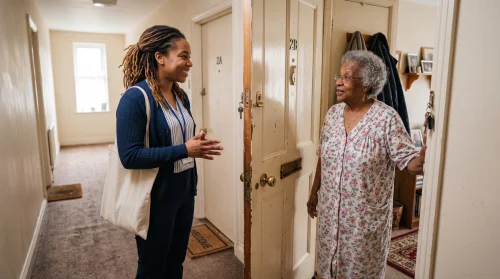
It’s Time We Better Understand Radon And Its Impact On The Health Of Our Homes And Residents
1st October 2026

Radon is a naturally occurring radioactive gas which can enter homes from the ground and accumulate indoors
Long-term exposure to elevated levels of radon increases the risk of lung cancer, and is linked to around 1,100 lung cancer deaths in the UK each year
Testing is the only way to truly know whether a property has elevated levels
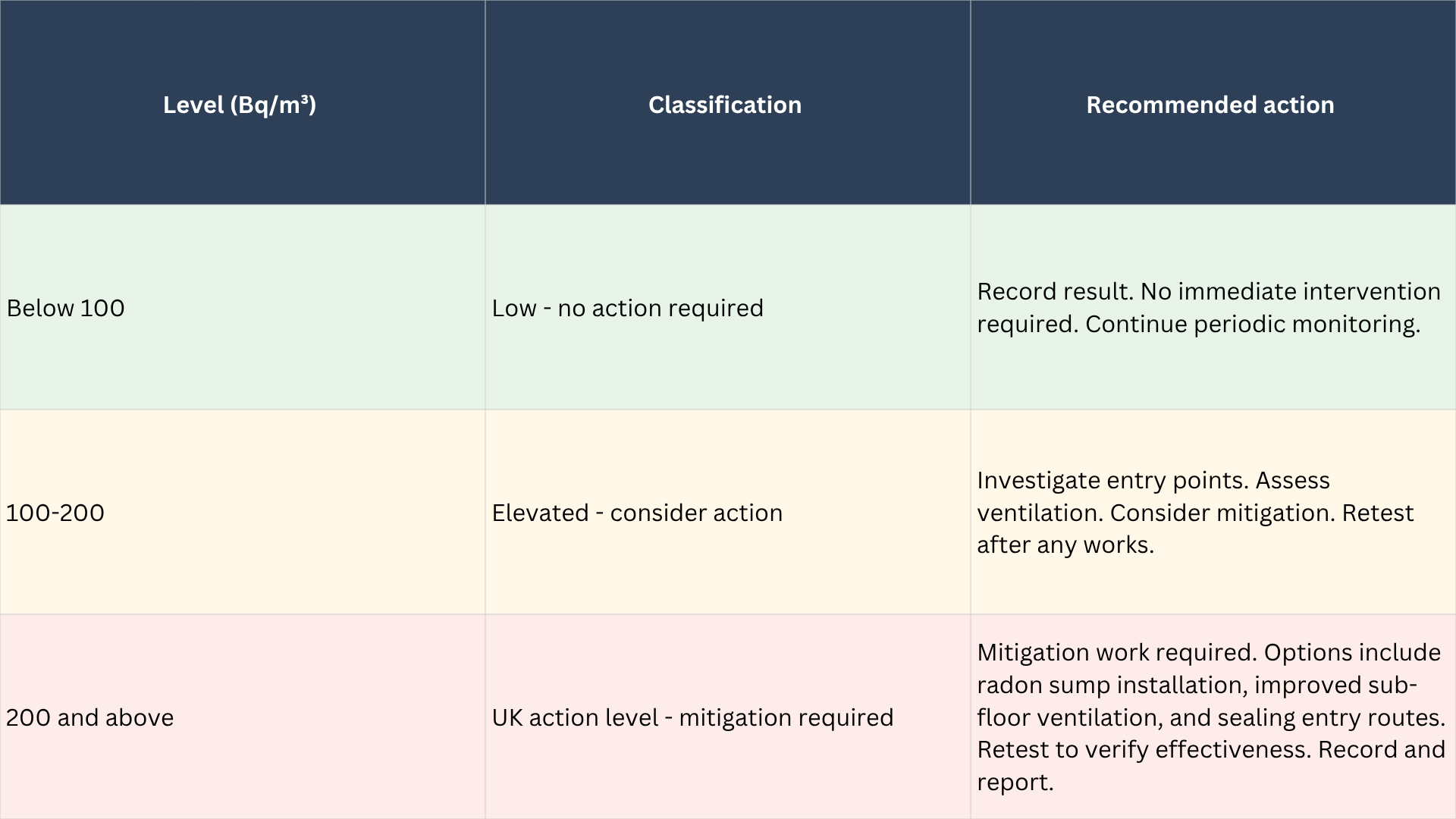
The UK action level is 200 Bq/m³, above which mitigation is required
Proportionate, accountable management matters more than assumption
What is radon and what are its key characteristics?
Radon is a naturally occurring radioactive gas formed by the breakdown of uranium in soil and rock. It rises from the ground and can enter buildings through cracks in floors, gaps around pipes, and wherever the structure meets the earth. It is colourless, odourless and tasteless, meaning it cannot be detected without testing.
Regional probability data can indicate whether an area carries higher risk, but it cannot determine the level in any individual property. Two homes on the same street can produce very different readings depending on ground conditions, floor construction and ventilation. The only way to be confident about a specific home is to test it.
The perception that radon is rare or only relevant in certain areas is not a reliable basis for managing risk.
What impact can radon have on our homes and the health of our residents?
Radon does not damage the fabric of a building. The concern is the long-term health of residents. Sustained exposure to elevated levels increases the risk of lung cancer, with radon being attributed as a contributing factor to around 1,100 lung cancer deaths in the UK each year. Because this harm develops gradually and without visible warning signs, it can often be overlooked.
Residents cannot reasonably identify or manage this risk themselves. Understanding whether radon is present is part of a landlord’s responsibility. As landlords improve airtightness through retrofit, airflow patterns can change and influence radon concentrations. A home can meet energy targets and still need environmental verification.
Where is radon prevalent today?
Radon potential is linked to geology. Parts of the Southwest, Derbyshire, Northamptonshire, and areas of Wales and Scotland carry higher probability levels. However, postcode-level data should only be used as a starting point. Radon levels and readings can vary significantly between neighbouring properties.
For portfolio managers, the practical step is to map stock against affected areas and move from probability to measured data.
What do landlords need to understand, and what are their legal duties?
Radon is recognized as a hazard under the Housing Health and Safety Rating System. From 2027, it is expected to fall within the scope of Awaab’s Law, placing a statutory duty on social landlords to investigate and remediate within defined timescales. This will move radon from a theoretical risk to a regulated compliance requirement.
In practice, that means landlords should map stock against affected areas, test where risk justifies it, record results, act where levels exceed the threshold and verify that mitigation works. Ownership must be clear, and radon should sit within a defined compliance framework, not between teams.
What are the UK threshold levels and what action should be taken?
Radon is measured in becquerels per cubic meter (Bq/m³). The UK action level for existing homes is 200 Bq/m³, above which mitigation is required. A target level of 100 Bq/m³ applies to new buildings and post-remediation verification.
Mitigation at 200 Bq/m³ or above is not optional. The organization responsible must act, verify the intervention has worked, and retain evidence of both.
How can radon be tested and addressed across housing portfolios?
Testing uses passive detectors placed in a property for a minimum of three months. Shorter periods are not considered valid, as three months is necessary to capture sufficient variation in conditions. This duration is necessary to account for natural fluctuations in radon levels caused by seasonal changes, weather, ventilation and occupancy.
Continuous monitoring through extended passive deployment or active electronic devices provides a more complete picture and can detect changes that a single test would miss.
If elevated levels are found, mitigation options include improving sub-floor ventilation, sealing entry routes or installing a radon sump. And always retest to verify effectiveness.
Across a portfolio: use competent providers, place detectors correctly, record results accurately, and confirm mitigation performance through follow-up testing.
Why is it now time to increase everyone’s knowledge about radon?
Housing Association Boards expect evidence of risk control, not just reassurance, and from 2027, under Awaab’s Law that expectation will become statutory for radon. As buildings become more airtight through retrofit, the interaction between energy performance and indoor air quality, including radon, becomes more significant. A well-insulated home that has never been tested is not a fully understood home.
We already apply structured thinking to fire safety, gas, electrical compliance and carbon monoxide. Radon belongs in that same conversation. Test where appropriate, act on the evidence, and manage it with the same discipline applied elsewhere.
By Luke Norcross-Evans, Product Development Executive, Aico.
Image credit: Aico
Unlock all content
This is the 1 of 3 articles you can access for free. Become a member to unlock unlimited access to our full content library.
Author