

Heating for Health: Why Radiators, Placement and Temperature Matter More Than We Think
11th February 2026
Jenny Danson
When we talk about healthy homes, we often jump straight to ventilation, insulation or retrofit measures. All critical, of course. But heating, particularly how we design and deliver it, plays a far bigger role in health, comfort and building performance than it’s often given credit for.
At a recent Zehnder Academy session on Heating for Form and Function, one message came through loud and clear: ventilation alone will not prevent condensation or mould. Heating is not just about warmth, it’s about wellbeing.
Indoor Environment Quality is Really About Comfort
People rarely comment when their home feels “fine”. They speak up when something feels wrong. Too cold. Too stuffy. Too damp.
Internal temperature is a core part of Indoor Environment Quality. When heat is delivered inconsistently, or surfaces remain cold, moisture lingers. That moisture becomes condensation. Condensation becomes mould. And mould becomes a health issue, particularly for those with respiratory conditions, older people and young children.
A steady, consistent background temperature is one of the most effective ways to reduce condensation risk. Not overheating. Not peaks and troughs. Just calm, reliable warmth working alongside good ventilation.
“Picking a Radiator Is Easy”… Isn’t It?
Radiators are often treated as an afterthought. Something you pick once the “important” design decisions are done.
In reality, radiators are a long-term investment. They stay in place far longer than décor or furniture, and if they’re wrong, residents live with the consequences for years.
Good heating design balances form and function. It considers how people actually live in their homes, not just what looks neat on a plan.
A few simple but often overlooked questions make a huge difference:
Where will the sofa go?
How will the space be used day to day?
Is this a circulation space or a living space?
Is wall space precious?
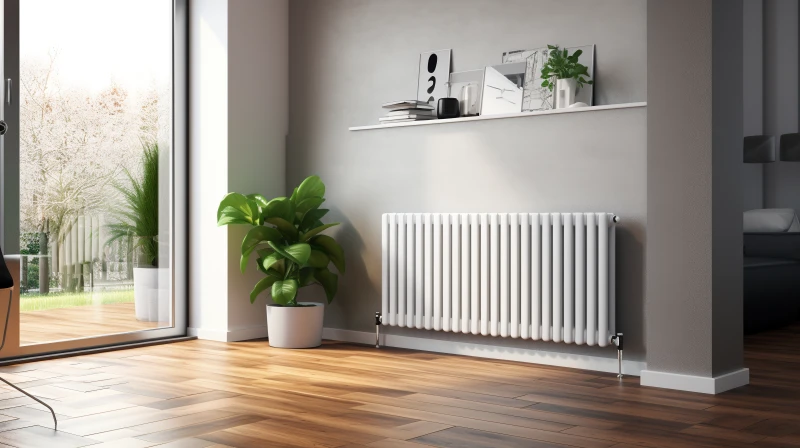
Radiators hidden behind furniture don’t heat rooms properly. Slimline or vertical radiators can free up space, improve usability and still deliver the heat required. In smaller hallways or entrances, shallow radiators reduce obstruction and improve safety. In some cases, radiators can even become design features rather than something to disguise.
Getting the Size Right Is a Health Issue
Every home has a heat loss requirement. That’s the amount of heat needed to keep rooms at a comfortable temperature, typically around 21°C.
When radiators are undersized:
Rooms feel cold
Systems run harder for longer
Energy bills increase
Condensation risk rises
Mould becomes more likely
Oversizing isn’t the answer either, particularly without proper controls. Overheating reduces comfort and wastes energy.
Correct sizing, paired with thermostatic room controls, allows residents to manage comfort room by room. This isn’t just good engineering practice, it’s fundamental to healthy living.
It’s also increasingly important as we move towards lower-temperature systems. Modern heating design standards now assume much lower flow temperatures, especially for homes using heat pumps. Radiators must be specified to perform effectively in that context.
Retrofit: Sometimes the Simple Wins
Replacing radiators alone can improve system efficiency by up to 30 percent. Over time, sludge and debris build up inside older radiators, reducing their effective output.
In retrofit projects, radiator replacement can often deliver better value than more disruptive solutions, particularly where existing pipework can be reused. It’s also worth being cautious. If a system hasn’t been disturbed for years and is still performing reasonably well, aggressive intervention can sometimes expose hidden weaknesses.
As ever, context matters.
The Environmental Side of the Story
Heating decisions also have a carbon impact.
Metal production is energy intensive, but not all materials are equal. Aluminium radiators manufactured from recycled aluminium have significantly lower embodied carbon and require less water content to operate. They heat up quickly, which can work well with modern heating systems.
There’s also a persistent myth that underfloor heating is always the best solution for low-temperature systems. It can be appropriate in some settings, but it’s not a universal answer. Radiators, particularly modern designs, remain a flexible, recyclable and effective option.
Beyond Homes: Commercial and Community Spaces
Many commercial buildings across the UK are highly inefficient, contributing significantly to carbon emissions and operational costs.
Radiant heating systems, which warm people and surfaces directly rather than heating air, offer an interesting alternative in larger or more complex spaces such as healthcare, education and offices. When zoned properly, they allow buildings to heat only the areas in use, reducing waste while maintaining comfort.
The principle is the same whether we’re talking about homes or workplaces: comfort comes from thoughtful design, not just more energy.
A Whole-Home Approach
The biggest takeaway is simple.
You cannot treat heating, ventilation and building fabric as separate conversations. Airtight homes need ventilation. Ventilation without adequate heating leaves cold surfaces. Cold surfaces invite moisture. Moisture invites mould.
Healthy homes come from balance.
A steady background temperature, effective ventilation, good insulation and moisture management must work together. When they do, homes are not just warmer or more efficient, they actively support health and wellbeing.
And that, ultimately, is what good housing should do.
Unlock all content
This is the 1 of 3 articles you can access for free. Become a member to unlock unlimited access to our full content library.