
Damp and Mould Is Everyone’s Problem
27th May 2026
Jenny Danson
How organisational culture and cross-departmental ownership, not faster repairs, will determine whether the sector meets the standard Awaab’s law demands.
At a glance
Damp and mould reports have risen by around 25 to 30 per cent year on year across multiple housing associations, driven by energy costs, under-investment in stock and increased awareness.
A cross-departmental programme at one housing association involved around 300 people to achieve the organisational alignment required for effective response.
The sector’s misreading of Awaab’s law is compounding the problem, with blanket emergency responses and fear-driven behaviour displacing proportionate, evidence-based practice.
Damp and mould has moved from a persistent operational challenge to a national regulatory priority. Awaab’s law, which came into force in 2025, has sharpened focus across the sector, but evidence from those working closest to the issue suggests the sector’s problems are as much cultural and structural as they are operational.
Reports of damp and mould have risen by around 25 to 30 per cent year on year across a number of housing associations, a pattern traceable to the period following the energy crisis of 2020 to 2022. Wholesale electricity prices rose by around 60 per cent over that period. Under-investment in stock, driven partly by rent caps, compounded the effect. Awareness campaigns, while necessary, added further volume. The picture is one of multiple pressures converging, not a sudden spike.
Misreading the law
A significant part of the sector’s difficulty lies in how Awaab’s law is understood. The legislation is more nuanced than the fear it has generated might suggest. Not every report of damp and mould carries the same obligation. The HHSRS framework, which weighs the severity of the hazard against the vulnerability of the household, is the intended basis for triage and resource allocation.
Where that framework is understood, responses can be proportionate and well-targeted. Where it is not, the result is blanket emergency treatment of every case, regardless of risk level, which places unsustainable demand on front-line teams and does not serve residents more effectively.
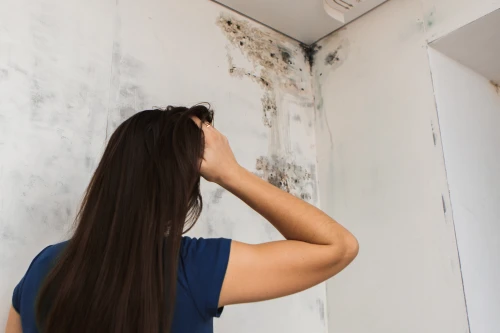
The distinction matters at the level of individual households. The appropriate response to a small patch of surface mould in a bathroom used by a healthy adult is different from the response required where a young child or someone with respiratory illness is living in a space with persistent black mould. Proportionality is not a route to lower standards; it is the mechanism for applying resource where it is most needed.
Organisational structure as a barrier
One of the clearest patterns in organisations that have struggled to respond effectively is the isolation of damp and mould within the repairs function. The repairs team cannot resolve a problem that has structural, behavioural, data and investment dimensions. Effective response requires IT, procurement, finance, HR and communications working in concert with those delivering the service directly.
Evidence from one large-scale transformation programme indicates that around 300 individuals across every level of a single organisation were involved to achieve genuine alignment. That figure reflects the breadth of change required, across case management systems, contractor frameworks, IT infrastructure, data architecture and staff development, not the complexity of the technical problem.
Organisations still managing damp and mould through job management systems or spreadsheets carry significant operational risk. These tools provide neither the end-to-end visibility nor the case progression tracking that effective management requires. A case missed at one stage continues; without a system designed to capture and escalate that, it falls through.
Pressure on front-line teams
Front-line teams are operating under sustained pressure. High volumes, complaint escalations and MP inquiries sit alongside the day-to-day work of case management. Without robust systems and adequate time for reflection, the risk of error and inconsistency increases.
Tightening performance monitoring in that environment tends to make outcomes worse, not better. The job of leadership is to ensure that teams have the tools, the clarity and the headspace to make judgements with care. A leadership response focused on KPI scores rather than on enabling good practice serves neither teams nor residents.
The Healthy Homes Hub perspective is that the wellbeing of front-line staff and the health outcomes of residents are closely linked. Teams that are well-supported and clear about their purpose are more likely to act consistently and with appropriate judgement, particularly at the triage stage where proportionality matters most.
The HHSRS shift
The extension of compliance requirements beyond damp and mould to the wider HHSRS hazard set introduces complexity that most organisations are not yet equipped to manage. Hazards including excess cold, overheating, noise and falls each require a different response pathway, and many are not currently being captured or tracked systematically.
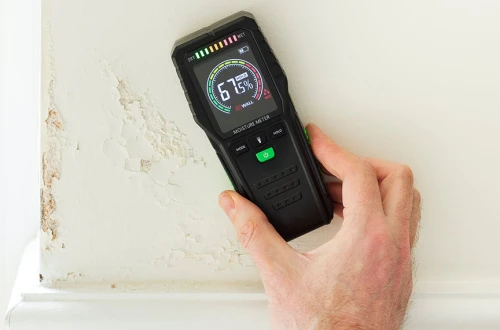
The principle of measurement as a precondition for improvement applies directly here. Where there are no sensors, no monitoring and no structured assessment, organisations are operating without the data needed to understand exposure or direct resource. Strategic asset management, often positioned as a peripheral function, will need to sit closer to the centre of operational decision-making if the wider HHSRS obligations are to be met.
A proactive model
The trajectory that is emerging from organisations with the most advanced approaches involves sensor data triggering proactive resident contact before problems escalate, with investment decisions shaped by live property data. That model is not universal yet, and its implementation requires infrastructure, procurement frameworks and organisational culture that support it.
Direct resident conversation remains a critical strand alongside technology. Housing officers and other resident-facing staff need sufficient understanding of the HHSRS framework to identify and escalate risk during routine contact. A blended approach, combining data monitoring with human interaction, is likely to produce better outcomes than either in isolation.
Practical steps for housing providers
Audit whether damp and mould ownership sits across your whole organisation or primarily within the repairs team, and identify which departments, including IT, procurement, HR and finance, need to understand their role.
Review how Awaab’s law obligations are communicated internally; ensure teams understand the HHSRS risk-rating framework and can apply proportionate, evidence-based triage.
Assess your case management infrastructure for end-to-end visibility; if damp and mould is being managed through a repairs system or spreadsheet, evaluate what a dedicated approach would require.
Create structured time and space for front-line teams to reflect on process, not just manage volume; embed review mechanisms that allow learning to feed back into practice improvements.
Examine how investment decisions in planned maintenance are informed by damp and mould data, and whether procurement and asset management teams are aligned to that process.
Explore where sensor technology and smart monitoring could support proactive resident contact, and develop a framework for how data-led outreach would work within your operating model.
Bring direct resident conversation back as a formal strand of your damp and mould approach; ensure housing officers and other resident-facing staff have sufficient understanding of HHSRS to identify and escalate risk during routine contact.
Unlock all content
This is the 1 of 3 articles you can access for free. Become a member to unlock unlimited access to our full content library.