Why We Need an Open Mind and a Collaborative Approach to Addressing Damp and Mould
23rd October 2026
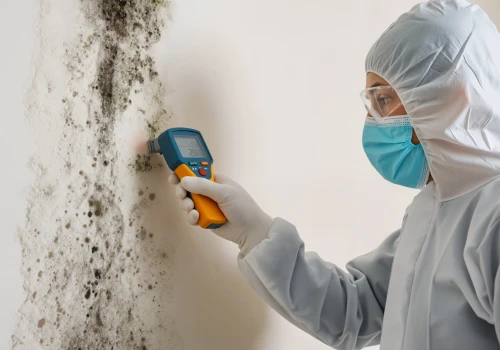
Damp and mould remain one of the most persistent challenges facing the built environment. Across the sector, organisations are working to better understand the problem, improve their processes and develop more effective ways of protecting the health and wellbeing of residents and occupants.
But this is not a challenge that any one organisation or sector can solve alone.
The causes and consequences of damp and mould cross organisational, professional and sector boundaries. So too must the knowledge and expertise we use to address them.
If we are going to make meaningful, long-term progress, we need to look beyond individual organisations and individual interventions. We need to share what we know, learn from one another and create partnerships that allow knowledge and experience to move more freely across the built environment.
A collective challenge needs collective solutions
Damp and mould are not simply a housing-provider issue. They are a challenge that exists across the built environment, affecting properties of different ages, construction types and tenures.
That means there is an opportunity to bring together the experience of housing providers, manufacturers, contractors, installers, building professionals, researchers, policymakers and, importantly, residents.
Each brings a different perspective.
A housing provider may have valuable insight into managing damp and mould across a large portfolio. A manufacturer may understand the capabilities and limitations of particular products or technologies. Contractors and installers bring practical experience from working within properties, while researchers can provide evidence and new insight. Residents themselves have an essential perspective on the experience of living with damp and mould and the effectiveness of the interventions put in place.
Individually, these perspectives are valuable. Together, they can provide a much more complete understanding of the challenge.
Sharing knowledge is part of the solution
We need to become better at sharing what we know about damp and mould, including what works, what does not, and what we are still learning.
There is no single intervention that will solve every damp and mould problem. Different properties and circumstances require different approaches, and understanding the reasons behind a problem is essential to determining the appropriate response.
That makes knowledge-sharing particularly important.
Lessons learned from one property or organisation can potentially help another. Evidence from research can inform practical decision-making. Data can highlight emerging patterns, while the experience of those working directly with properties and residents can help put that information into context.
But knowledge can only have an impact when it is accessible and shared.
We should be creating more opportunities to bring different types of expertise together, challenge assumptions and learn from one another. That means being prepared to look beyond established approaches and consider new evidence, technologies and ways of working where they can demonstrate value.
It also means being honest about what we do not yet know.
An open-minded approach is not about accepting every new idea. It is about being willing to ask questions, examine the evidence and learn from experience.
Breaking down the silos
One of the biggest opportunities for the sector is to break down the silos in which knowledge can exist.
Technical knowledge, operational experience, strategic decision-making, research, technology and resident experience can all sit in separate conversations. When those conversations do not connect, opportunities to learn can be missed.
Breaking down these silos does not mean that everyone needs to become an expert in every aspect of damp and mould. It means creating stronger connections between those who hold different pieces of the knowledge.
For example, what can a housing provider's experience tell a manufacturer about the challenges faced in real homes? What can emerging research tell those managing property portfolios? What can resident experiences tell us about whether an intervention is working in practice?
These conversations can help turn individual experiences into shared learning.
From individual action to collective learning
The sector has already generated a significant amount of knowledge and experience around damp and mould. The opportunity now is to make better use of it.
Rather than each organisation continually developing its own response in isolation, we should be asking what can be shared, what can be learned and where collaboration could accelerate progress.
This is particularly important as the sector continues to respond to changing expectations, regulation, technology and environmental conditions.
The aim should not be to create a single approach that everyone must follow. Instead, it should be to develop a stronger collective understanding of the challenge, supported by evidence, experience and open discussion.
Damp and Mould Awareness Week: creating connections
Awareness should be about more than highlighting the scale of the problem. It should provide an opportunity to bring people together, share knowledge and create conversations that might not otherwise happen.
At Healthy Homes Hub, we want the week to encourage organisations and individuals across the built environment to share their experiences, insights and approaches. We want to encourage new partnerships between people who may traditionally have worked in separate areas and create opportunities for knowledge to move between them.
That could mean sharing research, discussing practical experiences, exploring new technologies, learning from case studies or simply being open about the challenges that remain.
Every conversation can contribute to a broader understanding of what works and where further work is needed.
An open mind for a healthier future
There is unlikely to be a single answer to the damp and mould challenge.
But there is an opportunity to become collectively better at understanding it and responding to it.
That means remaining open to new evidence, listening to different perspectives and recognising the expertise that exists across the built environment. It means breaking down the barriers between organisations, disciplines and sectors so that knowledge can be shared rather than kept in silos.
Most importantly, it means recognising that collaboration is not an optional extra. It is an important part of tackling a challenge that affects us all.
Damp and mould may be a collective challenge, but so is the opportunity to address it.
By Kirstie McIntosh, Product Campaign Marketing Lead, Aico
Image credit: Aico
Unlock all content
This is the 1 of 3 articles you can access for free. Become a member to unlock unlimited access to our full content library.
Author