
Buildings Are More Complicated Than Stars
26th January 2026
Jenny Danson

What Dr Adam Hardy’s RS2 Presentation Really Tells Us About Retrofit, Risk, Heat Pumps and Reality
Across housing, there is growing recognition that we cannot deliver healthier, more efficient homes on intent alone. Retrofit, decarbonisation and asset investment decisions are increasingly high-stakes, both financially and reputationally. Measurement, done well, provides the evidence base that allows organisations to move forward with confidence. Done poorly, or not at all, it can mask risk, reinforce false assumptions and lead to decisions that fail residents and providers alike.
This session focused on why measurement matters, what it can reveal that models and assumptions often miss, and how senior leaders should think about interpreting data without becoming lost in technical detail.
Why measurement matters now
The drive to move away from natural gas is unavoidable. Domestic heating remains the largest single use of gas in the UK, exposing households to price volatility while contributing significantly to carbon emissions. Fabric efficiency and electrification are essential, but the way in which these changes are delivered matters enormously. Poorly designed or poorly understood retrofit can result in higher bills, uncomfortable homes, increased damp and mould, underperforming heat pumps and frustrated residents. Measurement is one of the few tools that allows organisations to distinguish between retrofit that looks good on paper and retrofit that genuinely works in practice.
There is also a compelling health case. Cold, inefficient homes are strongly associated with respiratory illness, cardiovascular disease, poor mental health and excess winter deaths. The estimated indirect cost of cold homes to the public purse is around £18.5 billion per year, a figure comparable to the annual budget of an entire devolved nation. Seen through this lens, housing investment is not simply an asset or carbon issue, it is a preventative health intervention at scale. Measurement helps demonstrate whether that intervention is succeeding.
What measurement reveals that models often miss
Much of the sector still relies heavily on modelled performance, particularly EPCs, to inform investment decisions. However, measured energy use frequently diverges significantly from predicted performance, especially in lower-rated homes. In many cases, so-called inefficient homes are already under-heated, with residents limiting their energy use because the home does not retain heat effectively. This means that projected savings from retrofit can be overstated, creating fragile business cases and unrealistic expectations.
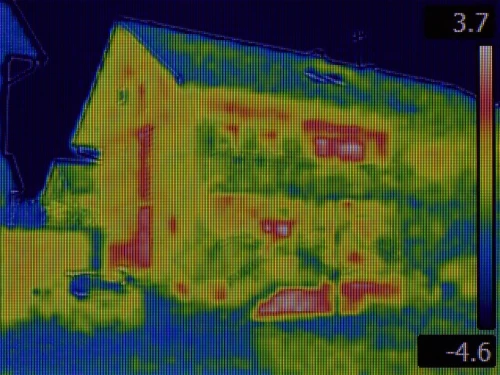
Measurement brings these realities into focus. It also exposes design issues that would otherwise remain hidden. Small details, such as a strip of uninsulated wall left due to a roof junction, can result in disproportionately high heat loss and create ideal conditions for condensation and mould. Without measurement, these risks are often only discovered once residents start reporting problems, by which point the cost and complexity of remediation is far greater.
Quality issues post-retrofit are another recurring theme. Even relatively minor installation failures, such as poorly sealed ventilation units, can undermine the intended performance of a home and introduce new health risks. Measurement provides assurance that investment has delivered what was promised, rather than relying solely on specifications and sign-off documents.
People are part of the system
A recurring lesson from measurement studies is that buildings do not operate in isolation from the people who live in them. In one large-scale heat pump installation, fewer than half of residents were using the system as intended. Many reverted to secondary electric heaters, significantly increasing costs and reducing system efficiency. The root cause was not faulty technology, but insufficient explanation, support and understanding.
This highlights a critical point for senior leaders: retrofit is not just a technical upgrade, it is a service change. Measurement that ignores behaviour and lived experience will always give an incomplete picture. Asking residents how a home feels, how easy systems are to use and whether bills are affordable is not “soft” data. It is essential intelligence.
When retrofit is done well
Measurement is not only about identifying problems. It can also provide powerful evidence of success. In one example, a comprehensive but conventional retrofit achieved dramatic reductions in heat loss across walls, floors, roofs and windows. There were no experimental products involved and no breakthrough technologies. The success came from good design, attention to detail, and a strong focus on quality during delivery.
For providers and funders alike, this kind of evidence is invaluable. It builds confidence that retrofit can deliver predictable, repeatable outcomes when approached properly.
Making sense of measurement
For housing leaders, the challenge is not becoming technical experts, but asking the right questions of data and those who present it. Any meaningful measurement should be accompanied by a clear explanation of uncertainty. A single figure without an indication of how precise it is offers little value and can be actively misleading.
Validation is equally important. Measurement methods and tools should be supported by independent studies that demonstrate how and where they work, and just as importantly, where they do not. Organisations should be wary of approaches that are heavily marketed but lightly evidenced.
Context also matters. Some measurements are designed to be repeatable and comparable under controlled conditions, while others capture the messiness of real life in lived-in homes. Both have a role, but they answer different questions. Smart meter and sensor data, for example, can be extremely useful for understanding trends across a portfolio, but are less reliable for designing bespoke interventions in individual homes without additional insight.
Implications for senior leaders
Measurement should be seen as a strategic tool rather than a technical add-on. It supports better investment decisions, reduces risk, strengthens the case for funding, and helps ensure that improvements to homes translate into real benefits for residents. Most importantly, it helps organisations move from well-intentioned action to demonstrable impact.
Practical reflections
For senior teams, the starting point is clarity. Be clear about what you are trying to improve, whether that is health outcomes, energy affordability, carbon reduction or resident experience. Understand what data you already hold and how it can be used to identify risk and prioritise action. Use measurement to inform decisions at scale, and then deploy more detailed approaches where they add genuine value.
Above all, treat measurement as a means to improve outcomes, not simply to prove activity. When evidence is used thoughtfully, it becomes a powerful enabler of healthier homes and more resilient organisations.
Unlock all content
This is the 1 of 3 articles you can access for free. Become a member to unlock unlimited access to our full content library.