
When Drones Reveal What EPCs Cannot
4th May 2026
How independent thermal verification is exposing the gap between modelled retrofit assumptions and real-world outcomes in social housing.
Peabody and Kestrix have completed one of the first independent retrofit verification trials in the sector, using drone thermography to confirm what actually happened to homes after works were done, not what modelling predicted. The results raise important questions about how housing providers plan, procure and evidence retrofit investment.
At a glance
The retrofit sector still operates largely on trust and assumptions. Modelling is around 80% accurate, and that gap is widely accepted as normal, yet it drives wrong priorities, wasted spend and residents whose expectations do not match what was delivered.
Kestrix correctly identified the retrofit measures installed across a sample of Peabody homes through before and after data collection and analysis alone, confirming both what had been done and how well it was performing. Scanning thousands of homes in the time it would take to manually assess a handful, the same process also surfaced thermal bridging issues on 45% of properties that no existing model would have caught.
Showing residents a thermal image of their own home, with the heat leaking out in red, opened doors that letters and leaflets never could.
This episode examines how Peabody partnered with Kestrix to independently verify the outcomes of a residential retrofit programme using drone thermography and physics-based artificial intelligence.
Richard Ellis explains why the organisation sought a third data source alongside its existing EPC and modelled asset data. Peabody’s retrofit planning carries approximately 80% accuracy, and the remaining gap has real consequences: misallocated resources, abortive contractor costs and resident expectations that do not match delivery.
Lucy Lyons describes how the approach analyses thermal imagery at wall, property and portfolio level without requiring internal access or in-home sensors, covering thousands of homes in the time it would take to manually assess a handful. She references the National Audit Office’s findings on defective external wall insulation under the Energy Company Obligation scheme and the government’s planned investment of more than £2 billion in social housing retrofits over the next five years, arguing that scalable, independent verification is essential to rebuilding sector trust and demonstrating value for money to funders.
Ellis describes how thermal imagery also transformed resident engagement. Showing a property-level image of heat loss proved significantly more effective in securing loft access than written communication, and opened wider conversations about heating behaviour, including the common but counterproductive practice of running heating at high temperature for short periods.
USING PHYSICS & AI TO VERIFY RETROFIT OUTCOMES CASE STUDY
Practical steps for housing providers
Commission thermal surveys before and after retrofit works, not just to validate outcomes but to stress-test EPC and asset data at the planning stage.
Quantify the cost of your modelling margin of error. Abortive contractor costs, disrupted residents and misdirected investment often exceed the cost of better baseline data.
Build outcome verification into procurement. Ask contractors, before appointing them, how they will evidence that measures are correctly installed and performing as specified.
Share thermal and defect data across asset management, planned maintenance and sustainability teams so issues identified outside retrofit scope can be picked up in future works programmes.
Use thermal imagery in resident communications. Visual evidence of heat loss improves access rates, reduces resistance and supports conversations about heating behaviour.
Develop a portfolio-level thermal baseline to inform heat pump feasibility, decarbonisation pathways and long-term investment planning beyond EPC bandings
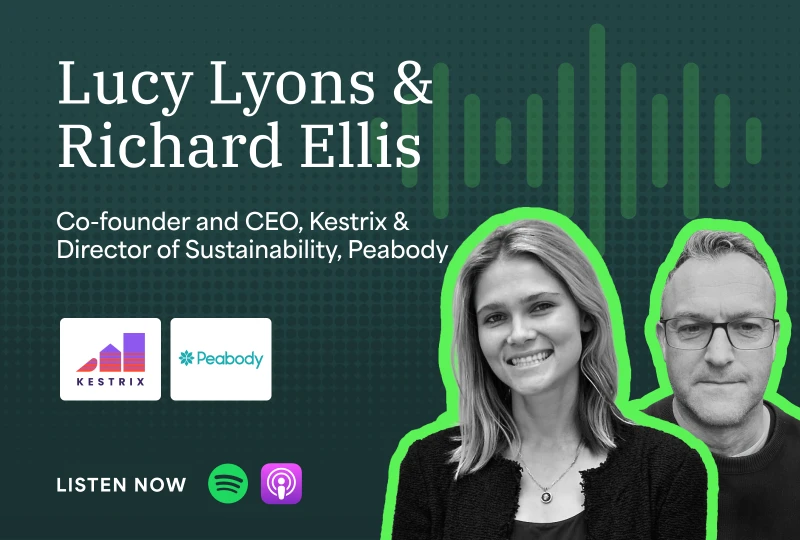
Hosted by Jenny Danson, CEO and Co-Founder, Healthy Homes Hub.
Guests: Richard Ellis, Director of Sustainability, Peabody; Lucy Lyons, Co-founder and CEO, Kestrix.