Trust and the Human in the Loop: Giving Residents Years of Notice
3rd November 2026

How a shared view of housing data is letting SNG and Spotr plan retrofit and compliance work years ahead, without losing sight of the resident in the home.
At a Glance
Development, repairs and forward maintenance plans often sit in systems that do not reconcile, so a team can turn up to fit a heat pump and find a brand new gas boiler already there, because a different system held the real answer. A single asset view removes that blind spot and cuts weeks of manual reconciliation to minutes.
Regulatory requirements do not replace each other, they stack. Wave 2.1, Wave 3 and MEES all land on top of one another, so the system holding that unified view has to absorb new rules without a rebuild each time.
AI is used to build what if investment scenarios, not to make the final call. Social housing decisions on divestment or retrofit carry social weight a purely commercial calculation would miss, so a human stays in the loop throughout.
SNG manages around 85,000 homes across development, repairs, planned works and forward maintenance, and until recently those functions each held their own version of the truth. A retrofit team could arrive to install an air source heat pump and find a brand new gas boiler already fitted, because responsive repairs worked from a different system entirely. Bringing those records into one place, a single asset view built with Spotr, means a retrofit or maintenance plan that once took weeks to compile can now be produced in minutes, and conflicts between systems surface before they cause wasted site visits or misdirected capital.
The requirements sitting on top of that data have not stayed still. Wave 2.1 set one set of parameters, Wave 3 brought another, and Minimum Energy Efficiency Standards changes have added further conditions on top of both. None of these has replaced what came before. Each has landed alongside the last, so a system built to reflect a single moment in time is out of date within days. The single asset view is designed to absorb each new requirement as it lands, rather than needing to be rebuilt around it.
Trust in the new system was built by first matching, not improving on, what SNG's existing spreadsheet process already produced. Only once that output was proven consistent did the scope extend further, moving from an initial 700 homes to the full 65,000 home general needs portfolio. That sequencing gave supply chains visibility too. A loft insulation contractor working from a confirmed ten year pipeline of expiring EPCs can plan capacity and pricing in a way an annual, uncertain order book never allowed.
Where the system is used to shape investment decisions, the analysis stops short of making them. Spotr is used to model what if scenarios, what happens if more properties are sold, what the cost is of achieving full compliance by a given date, so that the reasoning behind a decision can be shown to a board, a regulator or a tenant before it is taken. Decisions on divestment or retrofit in social housing are not purely commercial. A sale can make financial sense and still be the wrong outcome for a community, so the human judgement applied to those scenarios remains the deciding factor, not the modelling itself.
Longer planning horizons change what a housing provider can tell a resident. Rather than a letter arriving once a repair or replacement is imminent, a household can be told years ahead that a kitchen or boiler is due for renewal, and engaged with as that date approaches. It replaces a single, often unwelcome notice with an ongoing conversation about what is happening to the home someone lives in.
Practical steps for housing providers
Map which systems, development, repairs, forward maintenance and planned works, hold conflicting records, and where those conflicts have caused rework or delay.
Test whether a system that pulls your existing data together reproduces the outcomes of your current processes before trusting it with anything more complex.
Set out clearly where human sign off sits in any AI supported investment decision, particularly where social and commercial outcomes may not align.
Use scenario modelling to make the reasoning behind investment choices visible to boards, regulators and residents, rather than presenting a single recommendation.
Build resident facing communication that gives years, not months, of notice on planned work to a home.
Trial a unified view over your existing systems on a small, contained slice of stock before extending it across the full portfolio.
Review whether upcoming interventions could be sequenced together, for example at the point of an emergency repair, rather than tackled across separate visits.
Host: Paul Norman
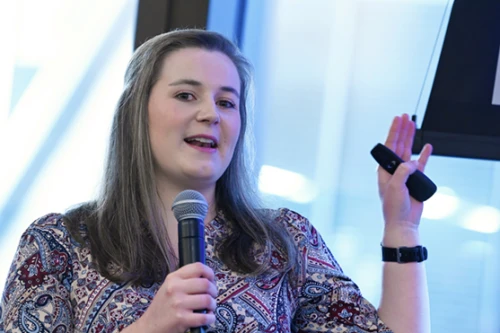
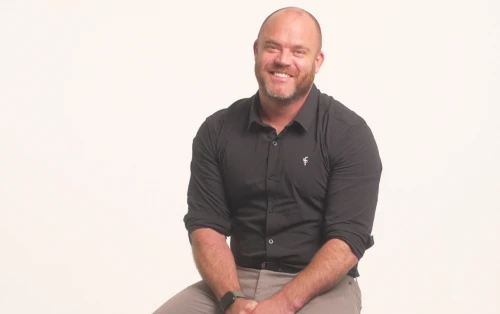
Guests: Richard Young, Technical Director, Built Environment, SNG, and Dirk Huibers, Co-founder and CEO, Spotr