
Let Residents Defend the Asset Investment for You
8th September 2026
How Birmingham City Council is transforming one of the country's largest social housing portfolios by treating resident knowledge as indispensable to investment design.
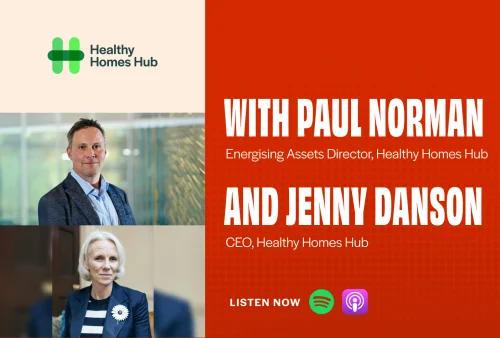
Host: Jenny Danson, CEO and Co-Founder, Healthy Homes Hub
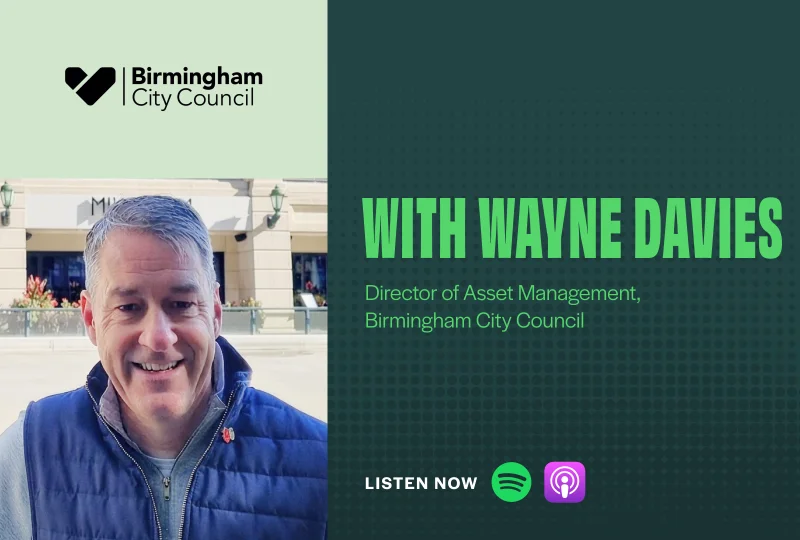
Guest: Wayne Davies, Director of Asset Management, Birmingham City Council
At a Glance
Residents who help shape investment become its most effective advocates. Birmingham's programme shows physical improvement and resident engagement are not separate workstreams, they are the same one.
Birmingham entered 2023 with decency at 28%, an ombudsman intervention and a regulatory breach; £600m+ invested has brought decency to 45%, with a committed trajectory to 100% by 2032.
Modular extensions are clearing disabled adaptation backlogs in 14 weeks at comparable cost to traditional build, with pilots now expanding to full modular bungalows on vacant garage sites.
The most defensible investment in housing is one residents choose to defend themselves. When Birmingham City Council's refurbishment programme reached completed blocks, residents stopped needing housing officers to explain the value of what had been done. They photographed their buildings and sent the pictures to family in other cities. They told visitors their estate was no longer what people assumed it was. That shift, from reluctant tolerance of disruption to unsolicited pride, is the practical outcome of an asset management approach built around resident engagement from the outset.
Birmingham's housing portfolio sits at around 58,000 homes, including 185 high-rise blocks. In February 2023, the service was operating under an ombudsman intervention and a regulatory breach, with decency recorded at 28%. The programme since has required capital investment of over £600m across three years, alongside more than 30,000 stock condition surveys to establisha reliable evidence base. Decency now stands at 45%, with a committed trajectory to 100% by 2032 under social housing regulator oversight.
Contract design is a material factor in what the programme has been able to achieve. A move from fragmented arrangements to a 10+5 year term alliance contract with three partners, Equans, Wates Property Services and Mears, addresses the structural weakness of feast or famine procurement cycles. Continuity of workload enables contractors to invest in directly employed staff, reduce reliance on subcontract labour and build the supply chain stability that sustained delivery at this scale requires. Shellforce, a window and door manufacturer owned by Birmingham City Council, is embedded in the alliance as a partner, securing forward order books alongside the main programme.
Fabric first remains the investment principle. Roofing programmes now include integrated solar panels as standard, regardless of grant availability, on the basis that a roof installed today will remain in place for 70 years. The Social Housing Decarbonisation Fund programme, worth £25m in grant against a total programme of approximately £190m, tested monitoring technology and resident outcome data alongside energy efficiency measures. For disabled adaptations, a modular extension pilot completed in 14 weeks at comparable cost to traditional build is now being extended to full modular bungalows on vacant garage sites, addressing waiting lists for families who cannot, and do not want to, move from their communities.
The argument for resident engagement is not only ethical, it is operational. Designs shaped around how residents actually live produce better outcomes than specifications applied uniformly.Patch sizes for housing officers have been reduced to rebuild locality relationships eroded during years of centralisation and austerity. Where that work has been done, residents approaching major refurbishment programmes do so with a clear framework for what to expect, supported by neighbours who have already been through it.
The investment case no longer needs asset managers to make it. Where residents have been engaged from design through to completion, they carry the argument themselves.
Practical steps for housing providers
Treat resident engagement as a design input, not a communications task. Involve residents before specifications are fixed, not after.
Review the contract model before the next procurement. Alliance arrangements over the long term reduce the feast or famine dynamic and enable contractors to invest in people and supply chain stability.
Set a credible baseline before committing to programmes. Stock condition surveys at scale give you the evidence base the regulator expects and the business plan requires.
Apply fabric first as a default investment principle. External wall insulation, windows and roofing done well reduce the need for repeated intervention.
Combine programmes where possible. Adding solar panels to a roofing programme at point of installation costs less and outlasts retrofit at a later date.
Review the disabled adaptations waiting list against modular options. Where traditional build timescales are failing families, modular extensions may offer a faster, similarly priced alternative.
Rebuild locality in housing management. Reducing patch sizes and investing in estate and caretaking staff creates the resident relationships that make large-scale programmes workable.