
Strategic Procurement: Long-term Solutions for Long-term Assets
15th June 2026

Why housing providers that treat procurement as a transactional function are leaving value, safety and long-term asset performance on the table.
Host: Andy Cameron-Smith, Healthy Homes Hub
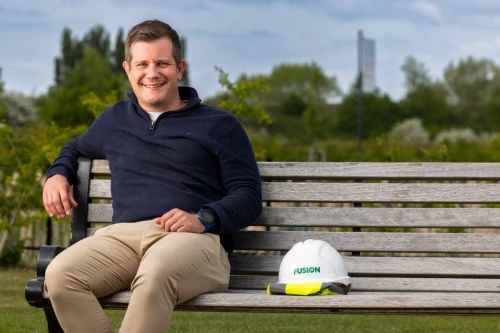
Guest: Oliver Mooney, Head of Category, Fusion21
At a glance
Strategic procurement only delivers value when it is structurally aligned to an organisation’s asset management strategy, not treated as a stand-alone tendering function.
Short-term funding cycles, cost pressures and shifting regulatory standards make long-term procurement planning practically impossible for many housing providers.
Data collection embedded within contract delivery, including building information modelling protocols, is emerging as a critical tool for predictive asset management and whole-life costing.
Strategic procurement in housing is widely discussed at a sector level but frequently reduced to transactional contract-letting under delivery pressure. The gap between principle and practice is significant: the upstream work of market engagement, risk identification, procedural design and supply chain relationship-building is regularly deferred or omitted when timescales tighten.
Effective strategic procurement requires direct alignment with an organisation’s asset management strategy. Where work streams sit across different buildings, different budgets and different departments without a unifying strategic direction, procurement cannot coordinate spend toward shared outcomes. The relationship between asset management and procurement must be active and continuous rather than sequential.
Fusion21’s involvement in the Matrix Partnership, a collaborative retrofit programme across housing associations in the West Midlands using wave two Social Housing Decarbonisation Fund financing, illustrates what place-based, aggregated procurement can achieve. By coordinating a single supply arrangement across multiple organisations and a defined geography, the programme delivered above-average social value outcomes, including employment creation in underrepresented communities. Standardisation of product and method, combined with supply chain certainty, enabled contractor investment that short-term, isolated contracts cannot support.
A separate example, involving a local authority in the south of England facing a regulatory downgrade, demonstrates how procurement can be restructured to address organisational failure directly. Consolidating fragmented contracts into longer-term partnerships with suppliers strong in resident engagement and communication contributed to an improved regulatory position within a short period.
Whole-life costing remains underdeveloped across the sector. The current approach tends to calculate the lifespan of individual components rather than the full cost profile of the asset across its intended life. Decisions taken for short-term cost efficiency, particularly in retrofit, risk creating long-term maintenance liability. Peabody is among the organisations now modelling future climate scenarios to test whether today’s investment decisions remain sound under changed conditions, including the risk of overheating from external wall insulation in a warming climate.
Data collected through contract delivery is increasingly central to the procurement conversation. Embedding building information modelling protocols and structured data collection requirements within contracts creates the conditions for predictive asset management, building safety compliance and more informed whole-life decisions. Frameworks, by contrast, are fixed instruments with limited scope for modification: the assumption that they offer flexibility is frequently incorrect, and the transparency requirements of the Procurement Act 2023 will make non-compliant or poorly justified call-offs more visible.
Practical steps for housing providers
Review whether your procurement function has a direct, working relationship with asset management, or whether the two operate separately; where they are disconnected, identify the structural changes needed to bring them into alignment.
Before initiating any procurement, complete the upstream work: market engagement, risk identification and procedural design should happen before documents are issued, not after a contract is needed urgently.
Assess whether your current contracts include data collection requirements, and whether the data being gathered is structured, standardised and usable for future asset management decisions.
Consider whether a collaborative or place-based procurement approach with neighbouring or peer organisations could aggregate spend, reduce market pressure on price, and unlock better social value outcomes than individual programmes allow.
When evaluating retrofit or improvement works, model the full asset life cycle rather than the lifespan of the component being installed, and test investment decisions against a range of future scenarios including climate change.
When using a procurement framework, take advice on its actual limits rather than assuming flexibility; the Procurement Act 2023 requires contract award notices that place framework usage in the public domain, increasing scrutiny of poorly justified call-offs.
Use the design of contracts to set clear expectations around resident engagement, communication and relationship-building, particularly where organisational capacity to manage those functions directly is constrained.