
Masterclass: Understanding Air Quality in Housing #2
8th January 2025
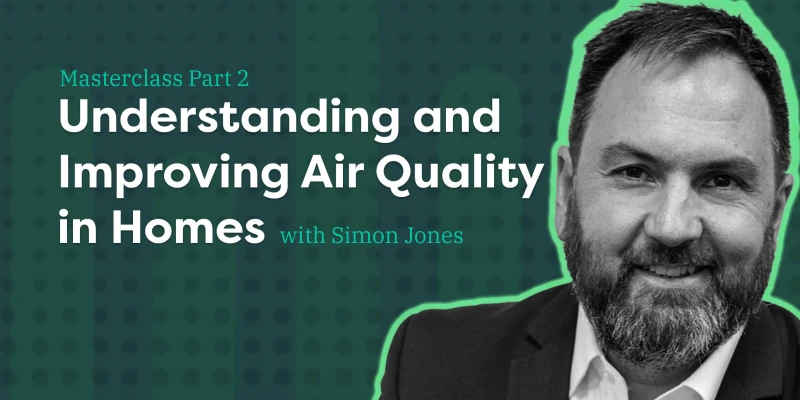
The Healthy Homes Hub presented the second part of the Understanding Air Quality Masterclass, featuring Simon Jones, founder of Air Quality Matters.
Simon Jones, founder of Air Quality Matters, recently delivered an engaging presentation on improving air quality and ventilation in housing. Building on the foundation laid in his first talk, Simon shifted focus to defining and measuring ventilation performance outcomes, and assigning responsibilities to ensure healthy indoor environments. Here are the key takeaways from his insightful session:
Understanding Ventilation
Background Ventilation: Ensures consistent air renewal to prevent pollutant build-up from the building and its occupants. Calculated as air changes per hour, or in litres per second, background ventilation should operate 24/7.
Local Exhaust Ventilation: Targets specific rooms like kitchens and bathrooms, removing pollutants at their source before they spread.
Purge Ventilation: Temporary, rapid ventilation by opening windows or doors, used during activities like painting or airing out the home.
Challenges with Natural Ventilation
Natural ventilation, dependent on external factors like wind and temperature, can result in unpredictable outcomes. Simon illustrated how inconsistent airflow in terraced housing leads to some homes being over-ventilated and others under-ventilated. Such variability underscores the need for a shift towards mechanical systems to ensure reliable air movement.
The Case for Mechanical Ventilation
Mechanical systems offer control over air movement, reducing reliance on external factors. From continuous extract fans to whole-house heat recovery systems, these solutions ensure consistent performance. Simon emphasised the importance of using decentralised mechanical extract ventilation (DMEV) to maintain a steady airflow.
Designing for Performance
Based on activity | Based on building size |
Determined by the number of rooms or occupants. | 0.3 litres per second per square metre is the standard calculation. |
By using the higher value from these two calculations, housing organisations can ensure adequate ventilation. He highlighted the necessity of incorporating capacity into design, recommending at least 25% more than the calculated airflow to account for real-world variability.
Measuring Ventilation Performance
Unconditional Testing | Conditional Testing |
Using powered flow hoods for accurate, reliable readings. | Cheaper but less reliable, often yielding ballpark figures due to unaccounted factors like ducting resistance. |
Accountability and Quality Assurance
Design Accountability | Validation |
Competent designers must take responsibility for system performance, documenting calculations, capacities, and specifications. | Systems must be tested post-installation to ensure compliance with design specifications. |
Incorporating Indoor Air Quality Monitoring
The rise of indoor air quality (IAQ) monitors allows housing organisations to track pollutants in real-time. These devices provide valuable insights but also highlight underperforming ventilation systems, reinforcing the need for proactive design and maintenance.
Practical Steps for Improvement
Optimise ventilation | Empower residents |
Ensure robust background and local exhaust ventilation. | Provide guidance on managing moisture, cooking habits, and understanding air quality. |
Eliminate risks | Substitute high-risk items |
Reduce indoor pollutants by promoting electrification, avoiding high-emission materials, and educating residents on healthier choices. | Replace gas hobs with electric ones and use low-VOC materials. |
Closing Thoughts
Simon stressed the importance of adopting a strategic approach to ventilation. By embedding performance standards into workflows and holding supply chains accountable, housing organisations can break the cycle of inadequate air quality management and focus on delivering healthier homes.
For more insights, check out Simon's Air Quality Matters podcast, which delves deeper into these critical topics. His expertise and practical advice can help transform housing ventilation systems, ensuring long-lasting benefits for residents and organisations alike.
Unlock all content
This is the 1 of 3 articles you can access for free. Become a member to unlock unlimited access to our full content library.