
Why Retrofit Can Future-Proof Social Housing
7th May 2026

By Jason Smith, UK Sector Solutions Director: Retrofit and Refurbishment, Saint-Gobain
The social housing sector is confronted by numerous challenges at present. These include heightened legislative and regulatory requirements, constraints on limited budgets, an increasing necessity to build additional social homes, and a critical need to recruit new talent into the industry.
Furthermore, broader geopolitical factors are impacting the overall economy and adding complexity to these issues. Alongside this residents increasingly expect higher standards from their social housing providers because the home now serves not only as a place of shelter, but also as an environment where individuals live, work, and recover.
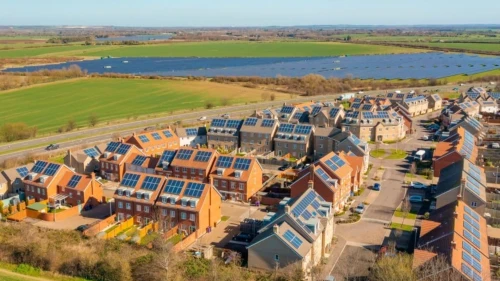
Looking ahead, a major factor shaping the sector will be a commitment to delivering homes that are healthy, safe, and sustainable. This is really a transition story given the current state of a large proportion of social housing across the UK. Retrofit becomes central to the success of any such transition.
Retrofit must become business as usual
The sector has made a positive start to its retrofit journey. Over the last five years it has been learning about the retrofit process, what is working and what is not. Many pilots have been completed, and it is now moving into larger programme management, but the learning process continues. Given the extensive number of properties requiring retrofitting, it becomes necessary to move this activity from being regarded as a special project to one of an integral component of “business as usual” operational procedures for housing providers.
Retrofit is a journey that the whole sector is on. It is not just housing providers, it is architects, contractors and the wider supply chain. We ourselves are part of this process and we are learning from and with our clients across the sector, because this is a collective challenge that will require collective solutions and input from all.
Health, comfort and sustainability are now inseparable
We have the opportunity to coalesce behind an aim to provide healthier living environments for social housing that benefits communities, landlords and residents alike. It will not be easy, but it is important that we get this right on so many levels, and this is why retrofit is central to future-proofing our social housing.
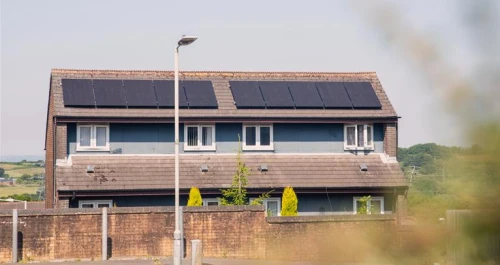
Retrofit is important because most of our existing social housing stock was built before modern energy standards and residents today expect more from their homes and how they heat them. Simply put retrofit can help reduce bills, increase comfort and reduce carbon emissions.
A lot of the debate today is around cost, but it is not everyone’s prime motivation and more emphasis needs to be placed on the comfort aspect. Residents want to enjoy their home. If it is done properly retrofit can deliver healthier, more comfortable homes which produce lower carbon emissions. Retrofit is more than a technical exercise. It is a personal process for the residents involved and we should never lose sight of that aspect. If we can get the process right and make the benefits obvious, we can help move it to an aspirational activity.
The retrofit of our existing homes is a major part of the country’s journey towards net zero. Although political discussions have become fragmented recently, many housing providers are already experiencing the advantages of their retrofit initiatives. These improvements help maintain property value amidst a changing climate and helps to address broader concerns such as damp and mould. Additionally, retrofitting reduces the cost of planned repairs and maintenance by proactively resolving issues during the process. It becomes an investment rather than a cost.
Why collaboration will determine retrofit success
Experience to date has seen the sector focus on a whole-house retrofit process, linked to the central funding programmes that support the sector's efforts in this space. This is producing meaningful and measurable results in improved energy performance and carbon reduction. However, a whole house focus can provide challenges as each building is unique but this approach lends itself to retrofit becoming front and centre of a strategic asset management strategy.
Retrofit is not simple; it is a complex process. You are managing funding requirements, supply chain pressures and the need to satisfy residents requirements. It is the ultimate team sport. The scale is too big for it not to be delivered through collaboration and partnership and that stretches to the engagement with residents, so they feel part of the solution, not just on the receiving end of a home intervention.
No organisation can deliver this effectively in isolation.
Skills, innovation and the future retrofit workforce
The demand for trained installers and specialists in ventilation and low-carbon heating systems to deliver good quality retrofit continues to grow and this can place constraints on delivery pace and consistency, especially where funding programmes are time limited. Ourselves alongside the wider industry are investing and upskilling. We are doing this through our own training centres but also with colleges and accreditation bodies with a collective vision to improve competency standards and learning from each other to build a longer-term skilled workforce capacity.
Innovation will help deliver retrofit. Improvements in operational efficiency and cost-effectiveness are all welcome, but we should be aware that the technologies to deliver on the net zero transition are already known, they are just under deployed. In the heating of the home, we know through the Warm Homes Plan and the work of bodies like the Climate Change Committee the future is electric and this will be the driver for government funding support in the coming years. But for technology to succeed in delivering electric heat and perform to expectations we also need to ensure the foundations and fabric of the building provides them with the right environment in which to perform. Whilst we talk about collaboration of partners to succeed it is also important that technology and fabric foundations collaborate effectively.
Measuring retrofit by resident outcomes
For fear of repeating myself this is why collaboration and partnership is so important. One clear vision that brings together those responsible for design and delivery helps to avoid delays and inefficiencies.
But retrofit success will be measured by the end results. Will residents feel better in their homes? Will they benefit from warmer spaces, improved air quality and lower energy bills? If we can’t say yes to all three, can we truly say retrofit will have succeeded.
To allow us to say yes to these three simple measures we need to make sure that retrofit becomes the engine that drives this desired outcome of healthier, safer and more sustainable homes for residents to live and grow within whilst helping future-proof the sector.
Unlock all content
This is the 1 of 3 articles you can access for free. Become a member to unlock unlimited access to our full content library.
Author