
Technology, Behaviour and Health – Where Do We Go Next?
19th November 2025
Jenny Danson
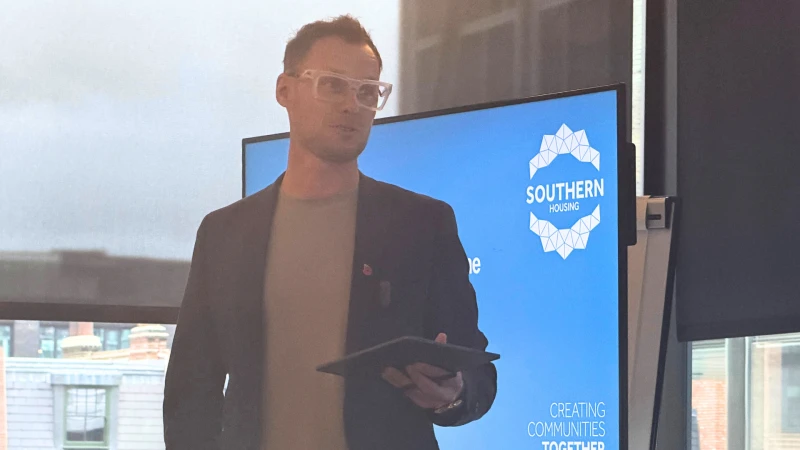
This was lively, thought-provoking discussion about the relationship between technology, data and behaviour in creating healthier homes with Andrew Cameron Smith and Nathan Woods.
When science meets housing
This was lively, thought-provoking discussion about the relationship between technology, data and behaviour in creating healthier homes with Andrew Cameron Smith and Nathan Woods. Nathan noted that technology alone can’t fix the housing crisis. The real challenge, he said, lies in how people interact with it. “You can have the best sensors and analytics in the world, but if people don’t understand or trust the data, nothing changes.”
Tracking or managing?
Andy then steered the room into the heart of the issue: the housing sector’s obsession with tracking data rather than managing outcomes. “We’re absolutely obsessed with logging information... but where’s the action?” he asked.
The conversation turned to behaviour. Residents often know when something’s wrong in their homes, yet systems don’t enable them to act. Andy argued for smarter, more adaptive technologies, homes that respond automatically to conditions instead of relying on landlords to react later.
The retrofit reality
The group agreed that retrofit remains one of the sector’s biggest challenges. Most homes standing today will still be in use by 2050, yet retrofit delivery often lacks coordination and consistency.
Andy shared examples where installations had gone wrong, missing ventilation, poorly integrated systems, or over-promised outcomes. The lesson? We need less marketing spin and more practical delivery, grounded in accountability and learning.
Integrating human and digital intelligence
The conversation returned to the point that data on its own means little unless it’s structured and interpreted by people who understand the context. He called for integration, environmental data, IT systems, and human experience working together.
Andy agreed, suggesting that the sector must learn to orchestrate information intelligently, rather than drowning in it. “It’s not about how many dashboards you’ve got.... it’s about what you actually do with them.”
Putting residents at the centre
Andy then posed the question that shifted the conversation: “Where’s the resident in all this?”
He used smart meters as the perfect example, rolled out nationally, yet rarely used as intended. “Most end up in the kitchen drawer after two weeks,” he joked.
The point was serious though. Residents should receive clear, meaningful alerts about their home environment - whether that’s a humidity spike, a heating fault, or energy use drifting up. When people are informed and trusted, they take responsibility. Treating residents like adults, Andy said, could change the game entirely.
Reconnecting people and their homes
Lisa closed the discussion with a reflection that brought everything full circle. She spoke about how disconnected people have become from their homes. New tenants are rarely told how ventilation works, or why it matters. Lifestyle plays a huge role in home health, yet we’ve removed that conversation from housing altogether.
She called for a return to education, giving people the knowledge and confidence to live well in their homes. “When you buy a home, you’re not just buying walls and a roof. You’re buying the thing that keeps your family safe. We’ve lost sight of that connection.”
A collective responsibility
Andy wrapped up by reflecting on the passion in the room. “We all care deeply about this, but passion has to turn into action. None of us can fix this alone.”
He emphasised that progress will come only through collaboration between landlords, engineers, designers, technologists, and residents.
Key message:
Healthier, smarter homes aren’t just about technology. They’re about people understanding behaviour, building trust, and designing systems that empower rather than overwhelm.
Unlock all content
This is the 1 of 3 articles you can access for free. Become a member to unlock unlimited access to our full content library.