
Solar Isn’t About Saving Money Anymore, It’s About Generating It
23rd April 2026
Julian wiley
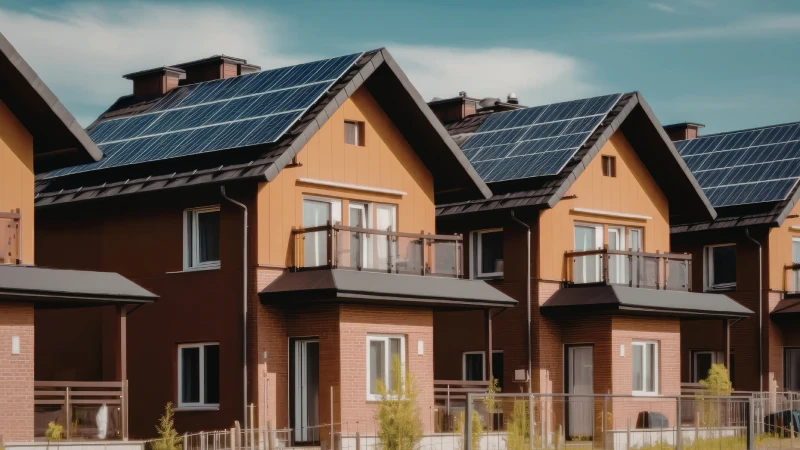
Most people still think solar is about cutting electricity bills. That’s outdated. Solar today is infrastructure that produces income and for social housing, that changes everything.
The shift that’s been missed
Panel costs have collapsed. Batteries now work commercially. The grid is paying for flexibility. Put those together and you get something new:
Homes that don’t just use energy, they produce, store, trade it and get paid to balance national and local grid.
Individually, it’s modest. Across thousands of social homes, it becomes something much more powerful:
A distributed power station.
Imagine a solar farm but decentralised across thousands of properties.
So where does the value actually come from?
There are three simple drivers.
Replacing expensive electricity
Grid power costs around 27p per kWh. Solar generates electricity for a fraction of that, more like 2p. That gap is real, immediate value.
Using energy at the right time (battery)
Store energy when it’s cheap or generated. Use it and export it when prices are high. That’s where control starts to matter.
Scale
One home doesn’t move the needle. A portfolio does. At scale, you’re not installing solar panels, you’re managing energy like a utility and it can be done automatically with ease now numerous energy management systems are available.
Why this matters for housing providers
Most retrofit programmes have the same problem:
High upfront cost
Long payback
Constant reliance on grants
This can change all that.
Solar with smart controlled batteries creates a recurring income stream inside the housing stock. That income can be used to fund the solar install itself but also improvements that landlords are already under pressure to deliver.
From energy to healthier homes - this is where it becomes practical.
That revenue can fund:
Ventilation systems and/ or Far Infra Red to tackle damp and mould
Insulation and fabric improvements
Heating upgrades
Better controls and monitoring
Instead of waiting for funding, you start generating it.
The mistake most people have made or will make
They’ll install solar, reduce a few bills, and stop there, but that misses the point.
The real value only appears when:
Homes are connected
Systems are controlled
Energy is actively managed
Grid is balanced to unlock revenue and energy resilience
Without that, you’re leaving most of the value on the table.
What this looks like in reality
At portfolio scale:
Energy is generated across thousands of roofs
Stored across thousands of batteries
Optimised as one system
And can now access the wholesale markets and grid flexibility revenues like the Capacity market auctions.
That’s when income becomes predictable and fundable.
The bigger picture
We’re moving toward an energy system where:
Homes are electrified
Prices are volatile
The grid is under pressure
In that world, passive buildings become a liability, however active buildings become ones that generate and control energy, which becomes an asset.
The bottom line
Solar is no longer just about reducing costs. It’s about creating value.
This is imperative for landlords trying to improve homes, manage budgets and deliver better outcomes for residents. I think it’s the only retrofit measure that helps pay for the rest.
(Zenergy works with housing providers to turn solar and battery systems into managed, revenue-generating assets across entire portfolios — not just individual installations.)
Unlock all content
This is the 1 of 3 articles you can access for free. Become a member to unlock unlimited access to our full content library.