


Halving Energy Bills with Rooftop Solar in Social Housing
24th June 2025
Trina Chakravarti
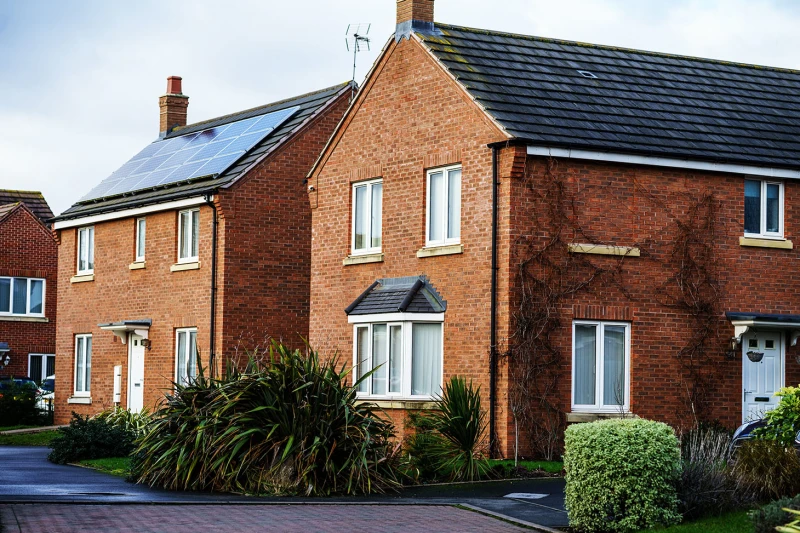
What if energy bills for social housing tenants could be cut in half, without costing landlords, local authorities, or the government a penny?
This isn’t speculation. It’s already happening in homes across the UK.
By combining rooftop solar panels with smart home battery storage, it's possible to generate clean energy, store it for when it’s most needed, and tap into revenues from grid balancing services. In real-world applications, this approach has slashed tenant energy bills by over 70%, and now offers a blueprint for what’s possible at scale across the social housing sector.
Why solar should start at home
There are more than 4 million social homes across the UK. Each one represents not just a place to live but an opportunity to generate and store renewable energy close to where it’s consumed. Instead of developing new greenfield solar farms, why not turn rooftops into community-scale power assets?
This decentralised model not only reduces carbon and pressure on the grid - it delivers direct social impact. Even tenants on prepayment meters, or those who have fallen into arrears, can benefit from access to free night-time electricity. That’s not just energy security, it’s dignity and wellbeing.
And landlords benefit too. Revenues from grid services can be redirected into retrofit and decarbonisation plans, supporting long-term goals and unlocking the potential to improve housing stock - without relying solely on public grants like SHDF.
A missed opportunity for private finance?
Despite the clear benefits, social housing has historically struggled to attract private capital for energy upgrades. Risk concerns have dominated, and the sector has often been overlooked - even with its strong ESG credentials.
But momentum is building. Government rhetoric is increasingly focused on tackling fuel poverty, improving energy efficiency in homes, and recognising the link between housing and health outcomes. Initiatives like the Social Housing Decarbonisation Fund (SHDF) are beginning to address this, but the scale of the challenge is far greater than public subsidy alone can solve.
We also know that cold, damp, and inefficient homes are directly linked to poor health outcomes,especially for vulnerable residents. NHS data shows that housing-related health issues place a significant burden on public services. Cutting energy bills and improving indoor warmth and comfort isn't just good environmental or economic policy - it's a public health intervention.
There’s a real opportunity here to bring private finance into the mix, not just to meet net zero goals, but to advance health and wellbeing outcomes in social housing. That’s why unlocking regulatory and financial levers - such as auction reform or targeted tax incentives - is so urgent.
No more dark nights
The core promise of this approach is simple and powerful:
No cost to landlords or tenants
Energy bills halved
Improved comfort, warmth, and health
Revenue to reinvest in housing upgrades
Reduced reliance on public retrofit funding
Cleaner grid, fewer greenfield developments
Greater resilience for vulnerable residents
As policymakers increasingly call for integrated solutions that span climate, energy, health and housing, decentralised solar and storage is a model that meets the moment. It offers a route to deliver on net zero, alleviate poverty, and reduce pressure on the NHS—all while modernising the UK’s social housing stock.
It’s not just technically possible. It’s already happening.
Zenergy Solar is one of the organisations already demonstrating this model at scale.
Unlock all content
This is the 1 of 3 articles you can access for free. Become a member to unlock unlimited access to our full content library.