
Reframing Co-Benefits as Core Benefits: Health and Wellbeing in Ultra-Low Energy Homes
24th November 2025
Jill Zhao

Ultra-low energy and Passivhaus homes are leading the way in sustainable housing, delivering significant reductions in energy use and carbon emissions. Yet, the associated health and wellbeing improvements—such as lower energy bills, enhanced comfort, and better indoor environments—are often treated as secondary ‘co-benefits’. This framing is not only misleading, but it also risks sidelining the very aspects of housing that matter most to people.
Recognising these outcomes as core benefits is vital for engaging residents in the transition to low-carbon living. It centres people in the conversation about sustainable housing and helps align housing policy with broader public health and social equity goals. It also opens the door to new forms of evidence and evaluation that prioritise human experience alongside energy metrics.
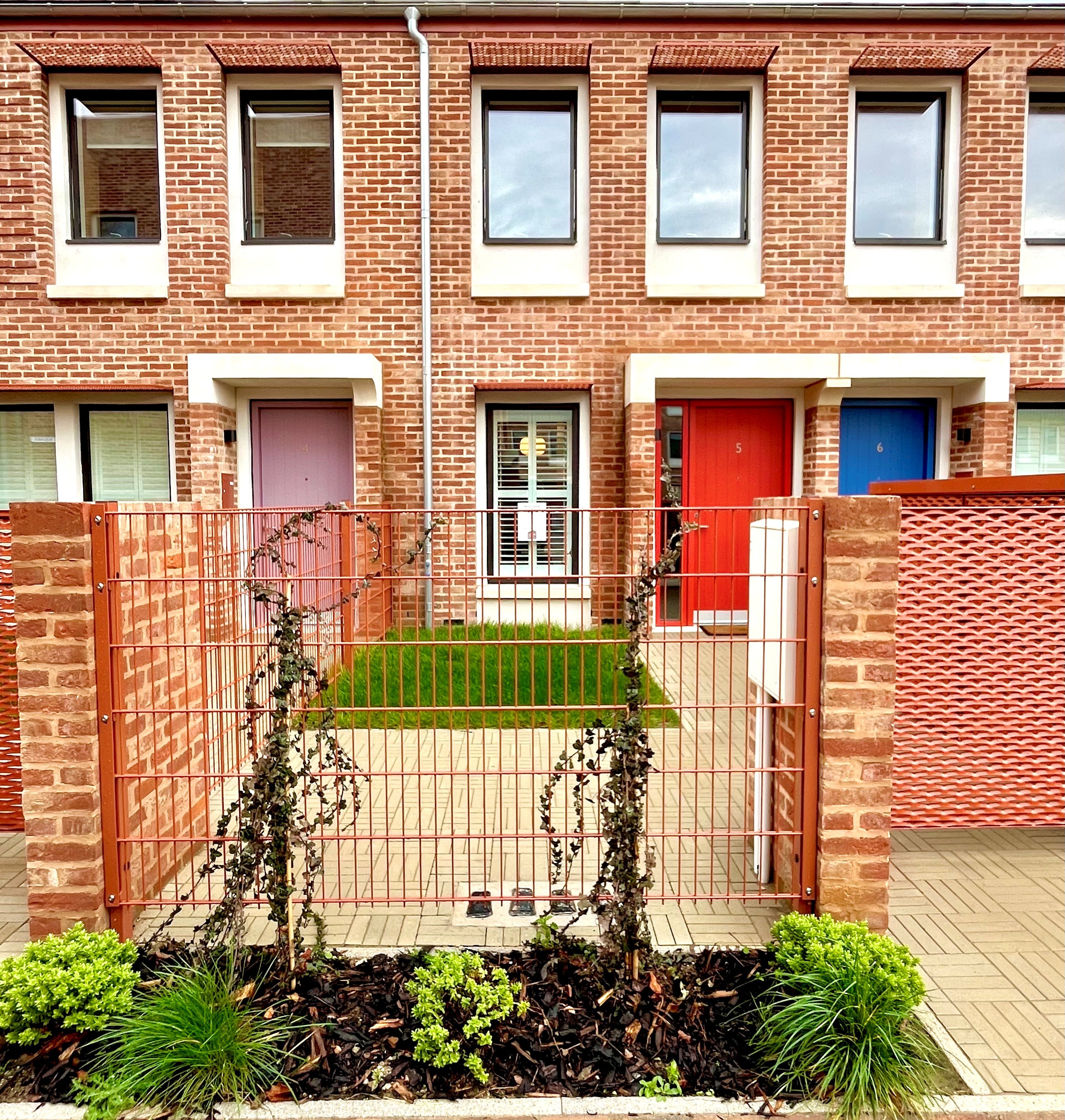
What Are Ultra-Low Energy and Passivhaus Homes?
Ultra-low energy homes are designed to minimize energy use through high levels of insulation, airtight construction, and efficient ventilation. The Passivhaus (or Passive House) standard is one of the most rigorous frameworks, requiring buildings to meet strict criteria for energy demand, thermal comfort, and air quality. These homes often feature mechanical ventilation with heat recovery (MVHR), triple glazing, and careful attention to thermal bridging and airtightness.
Health and Wellbeing: The Evidence So Far
Thermal Comfort
Residents of Passivhaus and ultra-low energy homes consistently report higher levels of thermal comfort. Indoor temperatures remain stable throughout the year, reducing the need to ration heating or endure cold spots. This is especially critical for vulnerable groups—such as older adults or those with chronic illnesses—who are more susceptible to cold-related health issues.
Indoor Air Quality (IAQ)
Properly designed and maintained MVHR systems can significantly improve indoor air quality by reducing pollutants like PM2.5, CO₂ and volatile organic compounds (VOCs), as well as lowering radon levels. Studies from the UK, Scotland, and Latin America have shown that Passivhaus homes often outperform conventional homes in this regard, contributing to healthier respiratory outcomes and fewer allergy triggers.
Mental Health and Subjective Wellbeing
While physical health improvements may take time to manifest, many residents report immediate gains in mental wellbeing. Reduced stress, greater control over the home environment, and a sense of pride in living in a sustainable home all contribute to improved quality of life.
Financial and Social Wellbeing
Lower energy bills reduce financial stress and free up income for other essentials. Some residents also report improved social wellbeing—feeling more comfortable inviting friends and family into their homes, which can reduce isolation and support social wellbeing.
Short-Term and Long-Term Health Impacts
While subjective wellbeing often improves quickly, measurable physical health outcomes may take longer to emerge. Some studies find only modest short-term improvements, but suggest that better living conditions are likely to yield long-term health benefits.
Challenges and Considerations
Overheating is a growing concern in ultra-low energy homes, especially during summer and in bedrooms. As climate change intensifies, design strategies like shading and night-time ventilation are essential—but occupant behaviour is just as critical. Simple actions, such as closing blinds or ventilating at night, can significantly reduce overheating risks. Similarly, the benefits of MVHR systems rely on proper installation and regular maintenance. Without cleaning filters or adjusting settings, air quality can decline. Residents need clear guidance and support to manage these systems effectively.
Empowering occupants through a human-centred Post-Occupancy Evaluation and engagement framework is key to ensuring these homes deliver on their promise of comfort and wellbeing.
A Human-centred Post-Occupancy Evaluation and Engagement Framework
To fully understand and communicate the health and wellbeing benefits of ultra-low energy homes, we need more robust, human-centred post-occupancy evaluation (POE). Traditional POE methods often focus on technical performance—energy use, air tightness, and system efficiency. While important, these metrics don’t capture the full picture.
A human-centred POE framework would include:
Resident narratives and lived experience
Measurable change in physical health
Subjective wellbeing and mental health indicators
Indoor environmental quality (IEQ) monitoring
Behavioural insights and user engagement
Such an approach not only provides richer data but also helps identify design and operational improvements that can enhance health outcomes. It also empowers residents as co-creators of knowledge, rather than passive subjects of study.
To support this, POE should be embedded within a participatory engagement strategy that includes: onboarding workshops, interactive feedback tools (e.g. digital diaries, sensors with user dashboards), regular check-ins, and co-analysis sessions. This strategy ensures that POE is not just about measuring performance, but about fostering a shared understanding of how homes support health, comfort, and sustainable living.
Looking Ahead
Reframing health and wellbeing as core benefits has significant implications for policy. It strengthens the case for investing in ultra-low energy housing—not just as a climate solution, but as a public health intervention. It also supports the integration of housing, health, and social care agendas.
Policy recommendations could include:
Mandating human-centred POE for new builds and retrofits
Incentivising health-focused design in building standards
Embedding wellbeing metrics in housing performance frameworks
Embedding an inclusive engagement strategy within POE
As we transition to a net-zero future, housing must deliver more than just energy efficiency—it must also ensure healthy, comfortable living environments. Recognising health and wellbeing as fundamental outcomes, rather than secondary benefits, is essential. This requires designing with users in mind, evaluating performance through human-centred methods, and shaping policies that prioritise residents’ needs.
Reframing co-benefits as core benefits is a strategic shift. It aligns housing policy and practice with broader goals of public health, equity, and long-term sustainability. To support this shift, future research should focus on developing systematic, scalable approaches to Post-Occupancy Evaluation that capture health and wellbeing outcomes across diverse populations and housing types. By building a stronger evidence base, we can influence how housing is valued, regulated, and delivered. We can also shift the conversation from ‘how much energy does this home save?’ to ‘how does this home support the people who live in it’.
Table 1: Literature summary of health and wellbeing impacts in Passivhaus and ultra-low energy homes and POE
Outcome | Typical Impact in Passivhaus/Ultra-Low Energy Homes | Citations |
Thermal comfort | Improved, stable temperatures | [3] [4] [5] [1] [20] [28] |
Indoor air quality (IAQ) | Generally better, if ventilation is adequate | [8] [4] [5] [9] [10] [11] [19] [20] [24] [23] [28] |
Overheating risk | Higher, especially in bedrooms, if not controlled with design and behaviour | [5] [14] [15] [12] [11 [16] [17] [21] [22] |
Financial wellbeing | Lower energy bills, reduced stress | [2] [3] [12] [6] [18] |
Social wellbeing | Reduced isolation, improved satisfaction | [2] [8] [12] [6] |
Short-term physical health | Small improvements | [2] [3] [6] [7] [13] |
Long-term physical health | Evidence emerging, more research needed | [2] [3] [8] [4] [5] [6] [7] [13] |
Human-centred POE | Occupant health and comfort focus | [25] [26] [27] |
References
1. Moreno-Rangel, A. Passivhaus. Encyclopedia. 2020 https://doi.org/10.5040/9781350122741.1001771
2. Grey, C., Jiang, S., Nascimento, C., Rodgers, S., Johnson, R., Lyons, R., & Poortinga, W. The short-term health and psychosocial impacts of domestic energy efficiency investments in low-income areas: a controlled before and after study. BMC Public Health. 2017; 17. https://doi.org/10.1186/s12889-017-4075-4
3. Maidment, C., Jones, C., Webb, T., Hathway, E., & Gilbertson, J. The impact of household energy efficiency measures on health: A meta-analysis. Energy Policy. 2014; 65. https://doi.org/10.1016/j.enpol.2013.10.054
4. Moreno-Rangel, A., Sharpe, T., McGill, G., & Musau, F. Indoor Air Quality and Thermal Environment Assessment of Scottish Homes with Different Building Fabrics. Buildings. 2023 https://doi.org/10.3390/buildings13061518
5. Rodríguez-Vidal, I., Hernández-Minguillón, R., & Otaegi, J. Long-Term Analysis of Energy Consumption and Thermal Comfort in a Passivhaus Apartment in Spain. Buildings. 2024 https://doi.org/10.3390/buildings14040878
6. Willand, N., Ridley, I., & Maller, C. Towards explaining the health impacts of residential energy efficiency interventions - A realist review. Part 1: Pathways.. Social science & medicine. 2015; 133. https://doi.org/10.1016/j.socscimed.2015.02.005
7. Symonds, P., Verschoor, N., Chalabi, Z., Taylor, J., & Davies, M. Home Energy Efficiency and Subjective Health in Greater London. Journal of Urban Health : Bulletin of the New York Academy of Medicine. 2021; 98. https://doi.org/10.1007/s11524-021-00513-6
8. Moreno-Rangel, A., Sharpe, T., McGill, G., & Musau, F. Indoor Air Quality in Passivhaus Dwellings: A Literature Review. International Journal of Environmental Research and Public Health. 2020; 17. https://doi.org/10.3390/ijerph17134749
9. Moreno-Rangel, A., Musau, F., Sharpe, T., & McGill, G. Indoor Air Quality Assessment of Latin America’s First Passivhaus Home. Atmosphere. 2021 https://doi.org/10.3390/atmos12111477
10. McGill, G., Oyedele, L., & Keeffe, G. Indoor air-quality investigation in code for sustainable homes and passivhaus dwellings. World Journal of Science, Technology and Sustainable Development. 2015; 12. https://doi.org/10.1108/wjstsd-08-2014-0021
11. Figueroa-Lopez, A., Arias, A., Oregi, X., & Rodríguez, I. Evaluation of passive strategies, natural ventilation and shading systems, to reduce overheating risk in a passive house tower in the north of Spain during the warm season. Journal of building engineering. 2021; 43. https://doi.org/10.1016/j.jobe.2021.102607
12. Zhao, J., & Carter, K. Do passive houses need passive people? Evaluating the active occupancy of Passivhaus homes in the United Kingdom. Energy Research & Social Science. 2020 https://doi.org/10.1016/j.erss.2020.101448
13. Tonn, B., Hawkins, B., Rose, E., Marincic, M., Pigg, S., & Cowan, C. Saving lives by saving energy? Examining the health benefits of energy efficiency in multifamily buildings in the United States. Building and Environment. 2022 https://doi.org/10.1016/j.buildenv.2022.109716
14. Foster, J., Sharpe, T., Poston, A., Morgan, C., & Musau, F. Scottish Passive House: Insights into Environmental Conditions in Monitored Passive Houses. Sustainability. 2016; 8. https://doi.org/10.3390/su8050412
15. Mitchell, R., & Natarajan, S. Overheating risk in Passivhaus dwellings. Building Services Engineering Research & Technology. 2019; 40. https://doi.org/10.1177/0143624419842006
16. Fletcher, M., Johnston, D., Glew, D., & Parker, J. An empirical evaluation of temporal overheating in an assisted living Passivhaus dwelling in the UK. Building and Environment. 2017; 121. https://doi.org/10.1016/J.BUILDENV.2017.05.024
17. Santin, O., Grave, A., Jiang, S., Tweed, C., & Mohammadi, M. Monitoring the performance of a Passivhaus care home: lessons for user-centric design. Journal of building engineering. 2021; 43. https://doi.org/10.1016/j.jobe.2021.102565
18. Panchalingam, K., Rasheed, E., & Rotimi, J. Cost-Related Drivers and Barriers of Passivhaus: A Systematic Literature Review. Sustainability. 2024 https://doi.org/10.3390/su16156510
19. CARRON, B.M., MENG, X. and COLCLOUGH, S., 2020. An Investigation into Indoor Radon Concentrations in Certified Passive House Homes. International Journal of Environmental Research and Public Health, 17(11), pp. 4149. https://www.proquest.com/scholarly-journals/investigation-into-indoor-radon-concentrations/docview/2413120991/se-2?accountid=14785
20. Basaly, L. G., Hashemi, A., Elsharkawy, H., Newport, D., & Badawy, N. M. (2024). Effects of Retrofit Strategies on Thermal Comfort and Energy Performance in Social Housing for Current and Future Weather Scenarios. Buildings 2025, Vol. 15, Page 80, 15(1), 80. https://doi.org/10.3390/BUILDINGS15010080
21. Colclough, S., & Salaris, C. (2024). Quantifying overheating in nZEB Irish residential buildings. An analysis of recorded interior temperatures of Irish newbuild and retrofit residential buildings against CIBSE, Passive House and WHO overheating criteria and recorded occupant satisfaction. Energy and Buildings, 303, 113571. https://doi.org/10.1016/J.ENBUILD.2023.113571
22. Sajadirad, F., O’Hegarty, R., & Kinnane, O. (2025). Assessing Overheating Risks in Moderately Insulated Irish Social Housing: Analysis of Building Energy Ratings and Indoor Temperature Profiles. Energies 2025, Vol. 18, Page 1381, 18(6), 1381. https://doi.org/10.3390/EN18061381
23. Szabados, M., Magyar, D., Tischner, Z., & Szigeti, T. (2023). Indoor air quality in Hungarian Passive Houses. Atmospheric Environment, 307, 119857. https://doi.org/10.1016/J.ATMOSENV.2023.119857
24. Xue, Q., Wang, Z., Liu, J., & Dong, J. (2020). Indoor PM2.5 concentrations during winter in a severe cold region of China: A comparison of passive and conventional residential buildings. Building and Environment, 180, 106857. https://doi.org/10.1016/J.BUILDENV.2020.106857
25. Zhao, J., Fieldson, R., & Duran, O. (2025). Towards a methodology for private rental residential retrofit occupant satisfaction in socio-technical post occupancy evaluation. In C. Tsang, W. Swan, & R. Fitton (Eds.), International Retrofit Conference 2025 (p. 92). The University of Salford. https://uwe-repository.worktribe.com/output/15087323 https://doi.org/10.17866/6xrn-cx50
26. Chiu, L. F., Lowe, R., Raslan, R., Altamirano, Medina, H., & Wingfield, J. (2014). A socio-technical approach to Post-occupancy evaluation: interactive adaptability in domestic retrofit. Building Research & Information, 42(5), 574-590. https://doi.org/10.1080/09613218.2014.912539
27. Elsayed, Mohamed,. Pelsmakers, Sofie.,Pistore, Raúl., Castaño-Rosa, Lorenza Romagnoni, Piercarlo. (2023) Post-occupancy evaluation in residential buildings: A systematic literature review of current practices in the EU, Building and Environment, Volume 236. https://doi.org/10.1016/j.buildenv.2023.110307
28. Selincourt, K. de, & Palme, J. (2023). Health, wellbeing and people performance Passivhaus benefits supplementary paper. Passivhaus Trust. Health, wellbeing & people performance • Passivhaus Trust
Unlock all content
This is the 1 of 3 articles you can access for free. Become a member to unlock unlimited access to our full content library.