
Putting Health First: Insights from the Housing Ombudsman
19th November 2025
Jenny Danson
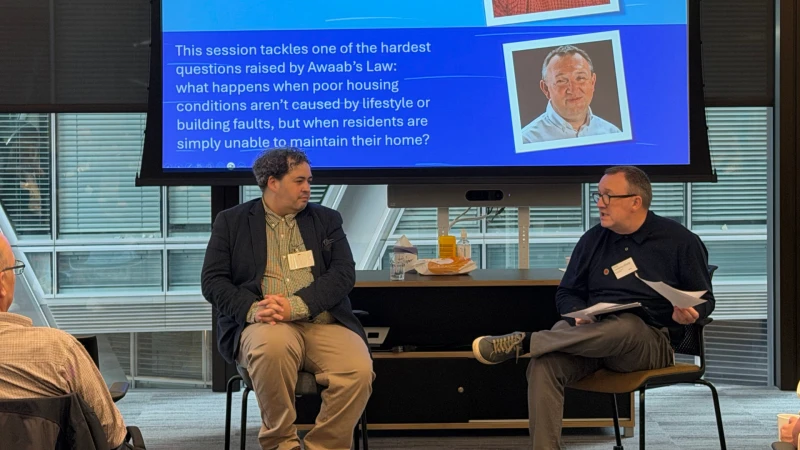
Andrew Cameron-Smith from the Healthy Homes Hub had a fireside conversation with John Hoarey from the Housing Ombudsman to explore the connections between housing conditions, air quality, and health, and how our sector can work together to act earlier and prevent harm. The discussion highlighted a shared goal: to make healthy, safe homes the norm, not the exception.
1. The Ombudsman’s perspective: when poor housing affects health
The Housing Ombudsman’s office sees the human impact of poor housing every day. Many of the complaints it investigates are linked to health from damp, mould, and poor air quality to the stress and anxiety caused when problems go unresolved.
What’s often most striking is that many of these issues are known long before tragedy strikes. Systemic failings, slow responses, and inconsistent follow-through mean that preventable harm still occurs. The Ombudsman’s message was clear: we must act earlier, and we must act together.
2. Seeing what’s happening on the ground
The Ombudsman values the role of organisations like Healthy Homes Hub in shining a light on real experiences, not just the policies and procedures that look good on paper.
Understanding how decisions, maintenance programmes, and communication processes affect people’s daily lives is critical. Sharing case studies, research, and best practice helps bridge the gap between policy intent and lived reality.
3. From reaction to prevention
The conversation reflected on lessons from high-profile cases such as Awaab Ishak’s, heartbreaking reminders of what happens when warning signs are missed.
The Ombudsman’s call to action is to move from a reactive to a proactive approach: tackling the root causes before they escalate into complaints, crises, or tragedies. As John put it, “We don’t want to wait for something to go wrong before change happens.”
4. Investigations, learning, and awareness
Every November, the Housing Ombudsman runs awareness campaigns to help both landlords and tenants understand their rights, responsibilities, and how to resolve issues effectively. Alongside this, the Ombudsman’s thematic investigations - such as those focused on damp and mould, dig deeper into recurring sector-wide problems, leading to clear recommendations for change.
These initiatives are vital, but as John acknowledged, the reach to residents is still limited. Many people only discover the Ombudsman’s role when things have already gone badly wrong.
5. Overcoming communication and access barriers
A key challenge is accessibility. Not everyone has the confidence, trust, or digital skills to navigate complaints systems. Many residents live with issues for far too long before seeking help.
The Ombudsman publishes findings and guidance online, but more needs to be done to connect with those most affected, the people living in poor housing conditions. The discussion underlined the importance of more creative, community-based communication methods that meet residents where they are.
6. Collaboration and shared responsibility
The Ombudsman’s team is working closely with landlords to embed learning from investigations and promote better day-to-day practice. Training sessions are being developed to help frontline teams understand and apply findings in real situations.
A recurring theme in the discussion was shared ownership. Healthy homes are a collective responsibility, not just the Ombudsman’s or the landlord’s. Collaboration across housing, health, and community sectors is essential if we are to build systems that prevent problems, not just react to them.
7. Clarity on legal accountability
John also reminded attendees that the legal relationship in housing sits between the tenant and the landlord, not the contractor. This distinction matters. When maintenance and improvement work involves multiple organisations, clarity of responsibility is crucial to ensure accountability doesn’t get lost in the chain.
8. Looking ahead: a partnership for prevention
Both the Ombudsman and Healthy Homes Hub agreed that stronger collaboration could help drive sector-wide learning and prevention-first thinking.
Opportunities include joint education campaigns, shared messaging, and the use of real-life case studies to help landlords and residents alike understand how to maintain healthy, safe homes.
The conversation ended on a unifying note: improving air quality, tackling damp and mould, and creating healthy homes isn’t just about housing, it’s about public health.
Final thoughts
This ideas exchange reaffirmed what many of us already know: the evidence, data, and stories are all there. What’s needed now is the will and coordination to act consistently. before residents are put at risk.
Healthy Homes Hub will continue working with partners like the Housing Ombudsman to make prevention the default and ensure every home supports good health and well-being.
Unlock all content
This is the 1 of 3 articles you can access for free. Become a member to unlock unlimited access to our full content library.