
Intergenerational Living and the Future of Healthy Homes
14th April 2026
Jenny Danson
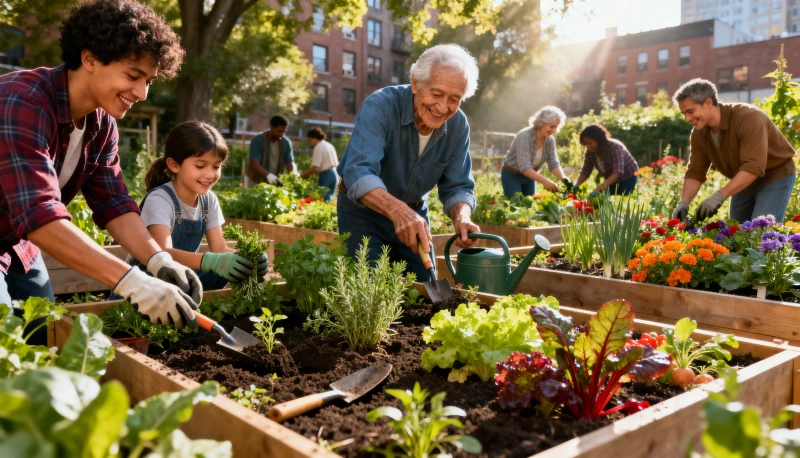
Intergenerational communal living is often described as an idealistic fringe movement, but Savannah Fishel’s work shows it is anything but. After visiting 54 communities across the US and Australia as part of her Churchill Fellowship, she brings back lessons that reach far beyond architecture and into the very heart of how we live together. What emerges is a compelling argument for treating housing as social infrastructure, something that can strengthen health, reduce loneliness and reshape the quality of life in ways our current systems rarely achieve.
Her report, Beyond the White Picket Fence, published with Housing LIN, outlines the opportunities for the UK to learn from global practice. For the Healthy Homes Hub, her insights resonate deeply. They challenge our sector to rethink what ‘quality’ in housing truly means and to acknowledge that the social fabric of a neighbourhood is as important as the building fabric of a home.
Communities as catalysts, not islands
A striking theme across Savannah’s research is that successful communal living environments are outward facing. Instead of becoming closed bubbles, they operate as catalysts for local engagement, environmental stewardship and civic participation. Whether in an eco-village in Los Angeles or a low-income collective on the outskirts of Melbourne, the communities she visited played active roles within their wider neighbourhoods.
This matters for social housing. Too many estates have been designed to minimise interaction: direct-to-door parking, isolated walkways and layouts that encourage people to pass one another without connection. The communities Savannah observed took the opposite approach. Shared gardens, communal laundries and pedestrian-first design created natural bump-in moments. Over time, these repeated, informal interactions strengthen trust, belonging and resilience, qualities that underpin healthier homes and healthier places.
The importance of everyday support
One of Savannah’s most resonant contributions is the concept of “neighbourisms”, the small, everyday acts of care that quietly sustain communal life. These include checking in on someone who is unwell, watering a neighbour’s plants or helping with a late-night emergency. In many of the communities she visited, these behaviours emerged naturally from the environment rather than through formal interventions.
Neighbourisms are not sentimental extras. They underpin wellbeing, reduce loneliness and prevent issues from escalating into crises. For social housing providers, this is a reminder that the structures we create influence how people care for one another. Designing for connection is not only a social good; it is preventative public health.
Understanding conflict: the seven P’s
Savannah’s graphic framework identifies seven recurring areas where conflict tends to arise when people live closely together. They appear across continents, cultures and income levels, which suggests they are part of the universal human experience of shared living. The seven P’s are:
Pets
Parenting
Power and privilege
Partners
Possessions and privacy
Purpose and principles
Participation
What differentiates thriving communities from failing ones is not the absence of conflict but the willingness to engage with it constructively. Some communities had formal mediators, while others relied on shared agreements, regular check-ins or simply a culture of openness. For the social housing sector, which often encounters conflict only after it has escalated, Savannah’s work highlights the value of proactive, relational approaches that build capacity rather than dependence on crisis intervention.
Learning from international models
Savannah selected the US and Australia because their cultural and structural challenges mirror those in the UK: rising loneliness, pressures on mental health, declining affordability, and a deeply embedded narrative that equates success with single-family home ownership. In both places, she found communities that had created workable alternatives to this model.
One strong example is Bridge Meadows in Oregon, which brings together older adults on low incomes with families and young people affected by the foster system. By combining relational support with affordable housing, the community offers stability, belonging and mutual benefit across generations. The model has been replicated several times and continues to demonstrate strong social value. More information is available at https://bridgemeadows.org.
The ten opportunities for the UK
Savannah’s report identifies ten opportunity areas for strengthening intergenerational and communal housing in the UK. These are grounded in international evidence but tailored to the practical constraints of our policy and planning environment. They are:
Integrating intergenerational design and relational principles into housing.
Investing in community-led pilot projects.
Tackling systemic and regulatory barriers that prevent shared living.
Repurposing existing and empty spaces as community assets.
Investing in the capacity to capture social impact.
Prioritising economic inclusion and long-term affordability.
Growing the capacity of intermediaries, facilitators and champions.
Cultivating cross-sector collaboration across housing, health, ageing and loneliness.
Reviving loneliness on the political and policy agenda.
Shifting cultural narratives about home, family and what it means to ‘live well’.
Her full report is available on Housing LIN:
https://www.housinglin.org.uk/Topics/type/Beyond-the-White-Picket-Fence-A-companion-for-intergenerational-communal-housing/
Project resources and background are available at:
https://www.thinkitforward.net
Rethinking what quality means
Savannah argues that the UK’s focus on building more homes must be matched with a focus on building better ones. Quality cannot be defined only in terms of insulation, space standards or energy performance, vital as these are. It must also include the potential for connection, neighbourliness and long-term wellbeing.
This sits firmly within the Healthy Homes Hub’s values. If every home is to be a healthy one, then every neighbourhood must be a place where relationships can form, where people feel seen and supported, and where the built environment reinforces the sort of community we want to be.
Practical steps for housing providers
Review upcoming new-build schemes for opportunities to incorporate intentional connection points such as shared walkways or communal facilities.
Identify unused or under-used buildings that could become pilots for intergenerational or communal living.
Frame resident engagement around relational wellbeing, not only repairs and compliance.
Incorporate the seven P’s into tenancy sustainment conversations to normalise healthy approaches to conflict.
Work with health partners to capture and evidence the social value of connected communities.
If we take these ideas seriously, the future of healthy housing could look very different, and far more connected, than the models we rely on today.
Unlock all content
This is the 1 of 3 articles you can access for free. Become a member to unlock unlimited access to our full content library.