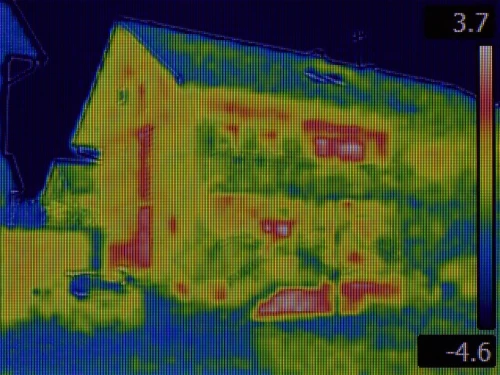

Heat loss data in social housing: challenges and opportunities
11th December 2024
Lucy Lyons,
Kestrix
The UK faces a formidable retrofit challenge: 1.8m homes must be retrofitted every minute between now and 2050 to meet national net-zero goals.
However, data deficiencies – especially in the social housing sector, which makes up 20% of the UK’s housing stock – are slowing progress.
Insights gathered from 10+ workshops with asset managers, surveyors, and sustainability teams, for our latest whitepaper, Heat Loss Data in Social Housing: 2024 Status Quo, highlight how poor data increases inefficiency, inflates project costs, and diminishes resident trust - all at a time when speed and precision in retrofit are critical to success.
The current state of heat loss data
The research identified four primary sources of data used in retrofit planning:
Public data: Widely accessible but often overly generalised, such as Energy Performance Certificates (EPCs) and regional-level statistics like Lower Super Output Area (LSOA) data.
Modelled data: Software-generated estimates that combine various datasets but rely on outdated or inaccurate inputs.
Surveyor data: Stock condition surveys conducted on site, offering higher accuracy but requiring significant time and resources.
Proprietary data: Internal records maintained by housing providers, with quality and usability varying greatly across organisations.
What’s problematic here? Energy Performance Certificates (EPCs), the most common starting point for retrofit planning, were cited as a key issue by participants. Often, these assessments are as much as 50% inaccurate in terms of their ability to estimate real world energy performance, and sometimes worse, leading to flawed project designs.
On the other hand, on site surveys, while more accurate, can cost between £60 and £600 per property, which can be a prohibitive expense for collecting data at meaningful scale.
The impact of poor data
The consequences of incomplete or inaccurate data are hard to understate:
Funding shortfalls: The dropout rate for homes included within a bid for retrofit funds, such as the Social Housing Decarbonisation Fund (SHDF) Wave 2.2, can be up to 50%, primarily due to errors in initial EPC data.
Inefficient program design: Asset managers resort to one-size-fits-all solutions, which can result in unnecessary or redundant retrofit measures.
Increased costs: One housing provider estimated that data inaccuracies added an average of £15,000 per property in avoidable expenses.
Resident frustration: Late-stage property disqualifications for homes that went into a bid but didn’t qualify due to inaccurate data erode tenant trust and strain housing provider relationships by giving residents ‘false hope’.
These inefficiencies were also found to hinder opportunities to align retrofit work with routine maintenance, further escalating costs and reducing operational efficiency.
Better data for smarter retrofit programmes
The whitepaper emphasises the need for more precise metrics, such as U-values and real-world energy use per square meter, to replace outdated benchmarks based on frozen assumptions. Improved data accuracy could significantly reduce costs, optimise project planning, and improve resident satisfaction.
And the technology to overcome these challenges very much exists.
For more information or to download the whitepaper, visit kestrix.io or contact Lucy Lyons directly at lucy@kestrix.io.
Unlock all content
This is the 1 of 3 articles you can access for free. Become a member to unlock unlimited access to our full content library.
Author