
Why Healthy Homes Isn’t a Campaign - It’s the Strategic Framework Housing Needs
7th April 2026
Jenny Danson
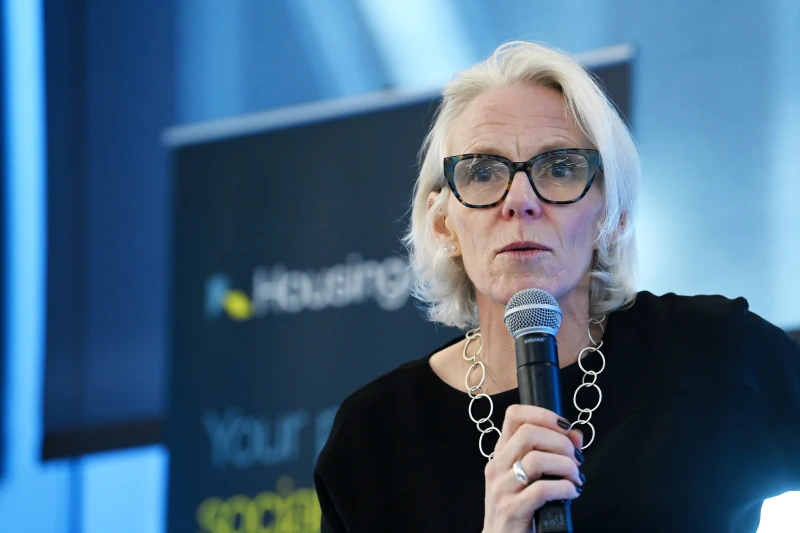
Let me start with something I said at the opening of my session at the Housing Horizons conference in March: healthy homes isn’t a campaign. It isn’t a badge to earn or a label to stick on your housing strategy. For me, it’s about recognising that housing is now being viewed through a completely different lens.
Regulators, residents, housing providers, investors, government - none of them are separating safety from energy performance, damp complaints from value for money anymore. They’re all converging on one question: does this home support the health and wellbeing of the person living in it?
That shift changes everything about how we should be making decisions.
The Numbers That Should Change Everything
Before anyone dives into asset strategies and business plans, I think it’s worth reflecting on a fundamental question: what does the condition of our housing stock matter beyond compliance?
The answer is measured in billions.
Poor housing costs the NHS at least £1.4 billion every year. But the NHS bill is only part of the story. When you factor in lost productivity - people unable to work, children missing school, families trapped in a cycle that their home is actively making worse - the total societal cost reaches £18.6 billion annually.
These aren’t abstract statistics. They describe the households we serve.
Right now, 3.6 million people in the UK are living in poor quality housing that is actively harming their health. Five million people, including many of our residents, live with asthma. One in three social housing residents lives with a long-term health condition, compared to one in five in the general population. We are consistently designing systems around an idealised resident journey - and not taking that reality into account.
Housing is now part of the public health system, whether we label it that way or not.
The Case of Children - The Most Compelling Evidence
I always start with children because, for me, the evidence here is the most compelling - and frankly, the most disturbing.
When we talk about poor housing conditions, we are not talking about cosmetic problems. We are talking about permanent damage to developing bodies.
Children living in homes with damp and mould are 50% more likely to develop asthma. Not a little bit more likely - 50%. And we’re not talking about temporary symptoms either. Children exposed to poor air quality from an early age develop smaller lung capacity. That is lifelong damage. Forty percent of childhood asthma is directly attributed to damp and mould in the home. That is preventable disease, caused by housing conditions.
Then there’s the daily reality: the repeated chest infections that become normalised, the school days missed, the parent who can’t go to work, the family stuck in a vicious cycle. Most of these families already know that their home is making their child ill. But they don’t have the knowledge, power, or resources to escalate that effectively. In too many cases, they’re trapped.
Adults Aren’t Exempt
Adults living in cold homes face a 41% increased risk of respiratory illness. Cold homes contribute to excess winter deaths - and we see this every single year. Damp and mould don’t just cause physical health problems; they carry significant cardiovascular and mental health impacts too.
Think about what it’s like to live in a home that you’re ashamed to invite people into. A home you know is making you ill, but that you can’t fix. The mental health toll of that is real, and it belongs in our conversations about housing quality just as much as structural surveys do.
Making It Practical: Three Areas for Action
So, given all of this, and knowing that we’re all working with constrained budgets and competing priorities - how do we make health a genuine driver of investment decisions, not just a nice side benefit?
At the conference, I broke this down into three areas.
Data-driven decisions. Combine stock condition data with health impact data. Overlay which properties have Category 1 hazards or inadequate heating with which properties have vulnerable residents - families with young children, older people, people with existing health conditions. When you start doing this, you often end up with a very different investment priority list.
Financial alignment. Decent Homes standards are explicitly designed to reduce poor housing quality, and landlords should be prioritising heat and insulation for elderly and vulnerable residents. But we need to connect retrofit programmes directly to health outcomes. Imagine being able to show that a planned improvement programme will eliminate specific health problems for residents. And think about the investment in reduced tenancy breakdown costs - families who move into healthy homes are more likely to stay, and that stability has real financial value.
Resident wellbeing metrics. This isn’t compliance measurement - it’s something new. What if we started looking at hospital admission rates among our residents? GP visits for housing-related conditions? Resident satisfaction tied directly to health and wellbeing? There’s a lot we could start measuring that would fundamentally change how we understand the impact of our decisions.
The session I spoke at was about balancing financial performance, sustainability, and resident wellbeing in our strategies. My argument is that health is the thread connecting all three.
Good quality housing keeps people well. Keeping people well reduces costs across the whole system. Reducing costs makes business plans sustainable. And sustainable business plans let us keep providing good quality housing.
That’s not a trade-off. It’s a virtuous cycle.
With £1.4 billion in annual NHS costs, 3.6 million people affected, and preventable hospital admissions happening every day - we simply can’t afford to treat health as an afterthought in our investment decisions.
Jenny Danson, Healthy Homes Hub | Housing Horizons Conference, March 2026
Unlock all content
This is the 1 of 3 articles you can access for free. Become a member to unlock unlimited access to our full content library.