

Eliminating Childhood Respiratory Illness in Social Housing
19th November 2025
Jenny Danson
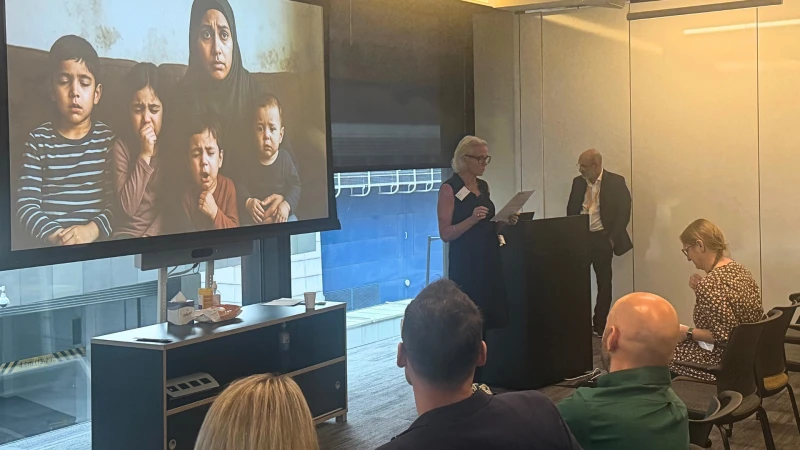
Across the UK, thousands of children are growing up in homes that make them ill. Damp, mould, and poor indoor air quality contribute to high rates of respiratory illness, placing a heavy burden on both families and the NHS. Social housing providers face the challenge daily, balancing limited budgets, ageing housing stock, and increasing expectations for health and environmental standards.
In this session, Dr Andrew Jones, Dr Abi Whitehouse, and Jenny Danson explored a bold new initiative designed to tackle this issue head-on. The goal? To eliminate childhood respiratory illness caused by poor housing conditions starting with a pilot in Tower Hamlets, one of the areas most affected by poor housing and health inequality.
Setting the Challenge
Jenny Danson opened the session by explaining the origins of the project. Through many conversations across the housing and health sectors, it became clear that while both were tackling the symptoms of poor housing, no one was truly addressing the root causes together.
Dr Abi Whitehouse’s analysis of national data revealed a striking pattern: areas with high levels of poor-quality social housing also showed elevated rates of childhood respiratory illness. Tower Hamlets stood out as one of the worst-affected boroughs. That insight prompted a simple but ambitious question:
“Could we eliminate childhood respiratory illness in Tower Hamlets’ social housing?”
From that starting point, a coalition began to form...housing providers, local health teams, data specialists, industry colleagues and the Healthy Homes Hub, united by a shared mission to prove that housing and health can be truly integrated to change lives.
A Joined-Up, Data-Led Solution
Dr Andrew Jones described how the project combines resident data, IoT sensor insights, and hospital admission records to create a single, shared picture of risk. This integration allows early warning signs to be detected before they escalate into crises.
IoT sensors within homes monitor environmental factors such as humidity, temperature, and CO₂ data that can flag potential damp and mould risks. When combined with anonymised health data and housing information, patterns emerge. These insights make it possible to identify vulnerable families earlier and direct interventions more effectively.
The approach offers four key benefits:
Early Identification: Recognising homes on the damp and mould pathway before visible problems develop, especially where children already have respiratory conditions.
Targeted Interventions: Taking action before issues worsen, both medically (preventing hospital admissions) and environmentally (tackling root causes within the property).
Smarter Resource Allocation: Using live data to prioritise which homes, estates, or building types need attention, allowing housing teams to direct limited budgets where they will have the greatest impact.
Stronger Partnerships: Breaking down silos between housing and health professionals, creating shared accountability and enabling proactive prevention.
Abi highlighted that this represents a shift from the traditional “referral loop”, where GPs report concerns to housing teams and then step back. Instead, the project builds a collaborative prevention model in which everyone, from clinicians to asset managers, works from the same data to keep residents healthy.
The Pilot: Tower Hamlets
Tower Hamlets has been selected as the first test area for this integrated model. The borough provides a complex and diverse environment in which to trial new approaches: high-density housing, mixed tenure types, and significant health inequalities.
The team is currently finalising funding, with the aim of launching the pilot phase in January. Once underway, it will test how the “playbooks” - the standardised approaches for integrating data and responding to early warnings - work in practice. These playbooks will then be refined, adapted, and shared across other local authorities and housing providers.
The ambition is for Tower Hamlets to become a proof of concept, demonstrating that through shared data, joint governance, and resident-centred design, the UK can move from reacting to health crises to preventing them altogether.
Building the Right Partnerships
The project is being developed through collaboration between housing providers, NHS partners, and local authority public health teams. Each partner brings vital expertise:
Housing providers understand the buildings, repairs, and resident engagement.
Health professionals understand the clinical impact and data needed for prevention.
Technology and data specialists make the connections possible through IoT and analytics.
Abi emphasised that the partnership model is built on shared responsibility, not hand-offs. “Traditionally, doctors refer patients and think the problem is passed on, and housing teams receive alerts but often have already acted. This project is about changing that narrative... working side by side, not one after the other.”
She noted that public health involvement is key, ensuring that interventions align with both clinical priorities and the wider determinants of health.
Resident Voice and Co-Design
While data sits at the heart of the project, Abi was clear that resident experience must guide its design. The team plans to work directly with families in Tower Hamlets to understand the daily realities of managing damp, mould, and respiratory illness.
Looking Ahead
Once the Tower Hamlets pilot is established and evaluated, the team intends to expand the model nationally, creating a playbook that can be replicated by housing providers and local health systems across the UK. The Healthy Homes Hub will play a key role in sharing learning, connecting partners, and supporting scale-up.
Abi closed the session by reaffirming the ambition:
“We want to reach a point where no child becomes ill because of the home they live in. By linking housing and health data, acting early, and working together, we can make that a reality.”
The project is still evolving, but its direction is clear... turning data into prevention, partnerships into action, and unhealthy housing into a thing of the past.
Unlock all content
This is the 1 of 3 articles you can access for free. Become a member to unlock unlimited access to our full content library.