How Early Planning And Procurement Can Help Create Healthier Homes
30th October 2026
Oliver Mooney,
Fusion21
When we talk about improving the quality of social housing, we need to consider how the quality of a home affects far more than life within its four walls. It shapes the physical and mental wellbeing of the people who live in it, the life chances of children raised within it, the sustainability of local communities and the long-term resilience of public services.
Investment in healthier homes can create value far beyond the property itself. The impact of a home and its condition does not stay behind its own front door. When a home is cold, damp or poorly ventilated, the consequences can be felt in GP surgeries and hospital wards, in school attendance registers, in household budgets and, ultimately, in the public purse.
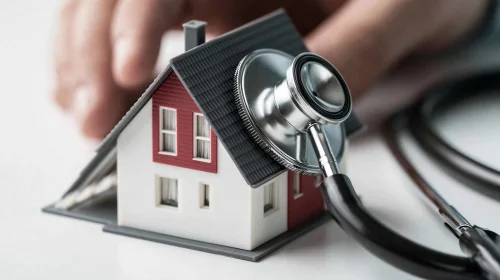
Recognising housing as a determinant of health rather than simply a place to live should influence not only where landlords invest, but how improvement programmes are planned, procured and delivered.
The wider cost of poor-quality homes
Poor-quality housing is linked to respiratory illness, cardiovascular strain, mental health decline and childhood development problems. Every one of those health outcomes has a cost for the NHS through admissions, treatment and repeat GP visits. It affects schools through lost learning. It affects landlords through repeat repairs, disrepair claims and void losses. And it affects residents, whose ability to work, parent and manage a household is undermined by a home that is working against them rather than for them.
Some figures put this in perspective. Research by BRE cited in the government’s Fuel Poverty Strategy for England (2026) estimated that poor-quality housing costs the NHS up to £1.4 billion a year in treatment costs, of which £895 million is directly attributed to cold and damp homes.
This is why we need to think about the role housing plays as a form of healthcare.
With every pound invested in improving housing conditions, evidence points towards returns in health outcomes, educational attainment, economic productivity and community cohesion. Seen in this way, a healthy home is not a cost to be managed but an investment capable of creating value across multiple budgets and services.
Poor housing conditions can affect far more than physical health. Cold, damp conditions contribute to respiratory infections, and research into underheated homes has demonstrated links to acute respiratory illness, particularly in young children. Persistent illness leads to missed school days. Disrupted sleep and associated anxiety also make it harder for children to concentrate at school. An overcrowded home leaves limited space to study. Improving housing quality can help to tackle educational inequality and improve long-term life prospects.
Disruption in the early years of school can shape a child's long-term prospects well beyond the years spent in that home. Improving the condition of a home is an intervention in a child's education, even though it is rarely viewed as such.
The stress of living somewhere that feels unsafe can erode mental health and resilience over time. A safe, warm and stable home helps to form the foundation on which physical health, mental resilience and life chances can be built. If these core foundations are missing, the burden does not disappear; instead, it transfers to the NHS, bringing costs with it.
We have also seen first-hand the value of bringing housing and health together. Through our Fusion21 Foundation, we have funded a pilot led by Prima Group and Mersey Care NHS Foundation Trust exploring how housing data – including information on living conditions, accessibility and locality – could be securely integrated with NHS health records. The aim is to identify links between housing conditions and health outcomes earlier, helping services intervene more proactively and target support where it can have the greatest impact.
It is a useful example of why better outcomes often start with earlier insight, collaboration and planning, rather than treating housing, health and investment decisions in isolation.
Why early planning matters
The same principle applies when landlords move from understanding the problem to deciding where and how to invest. Challenges such as fuel poverty, poor energy performance and deteriorating asset condition are closely connected to health outcomes, which means they need to be considered together rather than tackled in isolation.
Around 13% of social housing tenants are considered to be in fuel poverty. If landlords are clear from the outset about the outcomes they want to achieve for residents and their homes, they are better placed to shape programmes that address energy performance, affordability, asset condition and health together rather than in isolation.
Initiatives like the Warm Homes Plan and the Warm Homes Social Housing Fund can help accelerate investment, but funding alone does not determine outcomes.
Early engagement with procurement partners and the supply chain can help landlords understand the market, test what is achievable and shape specifications around the needs of their stock and residents rather than starting with a predetermined solution. It can also help ensure that the right delivery route is in place when funding and investment decisions are made.
Improving insulation and heating can reduce bills while helping to tackle associated health risks. Bringing procurement expertise in earlier can also help landlords to identify the right route to market and ensure that wider outcomes are considered alongside cost and programme.
That means looking not only at delivery, but also at resident wellbeing, energy affordability, asset performance, resilience and wider social value.
Building homes that are resilient for the future
Healthier homes also carry environmental benefits that matter for the communities being built now and those that will need to adapt to a changing climate.
Homes that perform well thermally tend to be cheaper to heat, place less strain on energy systems and be better equipped to cope with both cold winters and the increasingly extreme heat that we are witnessing in our summers.
A well-insulated, properly ventilated home that is adapted to the realities of a changing climate protects its residents today and for decades to come. In turn, this can help reduce pressure on the NHS during periods of extreme heat and cold weather.
Climate resilience and housing quality should increasingly be seen as part of the same challenge rather than treated as separate priorities.
Looking beyond the immediate cost
So, how should the wider value of healthier homes be understood?
It can be seen in reduced pressure on public services, improved outcomes for residents, lower long-term costs for landlords, greater energy affordability and homes that are more resilient to a changing climate.
The challenge is that these benefits rarely sit within a single budget or organisation, which is why they can be undervalued when considered in isolation.
Bringing health, asset performance, resident outcomes and wider social value together at the planning stage creates a stronger basis for investment and procurement decisions.
A home is not just where people live. It is where much of the country’s health, education and climate resilience is either built or undermined. The value of a healthy home matters to the residents who live in it, but it also benefits wider society in many ways.
By considering health and social outcomes earlier in the process, and using procurement strategically to support them, the sector has a greater opportunity to create homes that perform better for both residents and landlords over the long term.
By Oliver Mooney, Associate Director, Commercial, Fusion21
Image credit: Fusion21
Unlock all content
This is the 1 of 3 articles you can access for free. Become a member to unlock unlimited access to our full content library.
Author