
Connecting Homes to Improve Health
21st January 2026
Andy Cameron-Smith
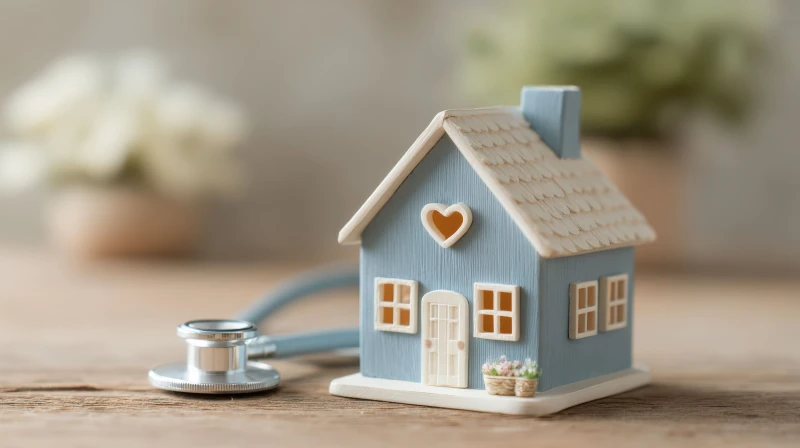
How Greater Manchester is building an ethical, resident centred model for connected homes that strengthens the link between housing, health and everyday living.
A shift in how we think about connection
Greater Manchester is reframing what it means to create connected homes. The Connected Homes Inclusive Places programme, known as CHIPPs, is not starting with devices or dashboards. It is starting with the lived reality of residents and the health challenges that play out inside the home.
John Duncan, Connected Places Lead at GMCA, described the programme’s core belief simply.
“The absolute heart of a connected place is the home.”
For housing providers, this is a familiar truth but one often obscured by the rush towards digital transformation. CHIPPs brings the focus back to outcomes that matter, including respiratory health, thermal comfort and safe, well managed environments.
From fragmented pilots to shared learning
CHIPPs emerged from a landscape many providers will recognise, multiple IoT pilots operating in isolation, each with its own data structures, suppliers and procurement challenges. GMCA’s response has been to create a unified regional framework that tackles duplication and encourages collaboration.
The first phase was funded through the Department for Science, Innovation and Technology’s 5G Innovation Region programme. It connected 125 homes across three landlords, linking environmental sensors to air source heat pumps. Residents were able to better understand how their systems performed, access fair tariffs and manage comfort in colder months.
This demonstrator was about more than technology. It tested how connected home data can help reduce fuel stress, improve indoor conditions and support people who are most vulnerable to cold homes or volatile energy costs. The learning is now being used to shape second phase work on damp and mould and on digital telecare.
A model built on trust, not surveillance
One of the strongest features of CHIPPs is its ethical foundation. Public trust in data is fragile and residents are acutely aware that monitoring inside the home can feel intrusive if mishandled.
GMCA has taken an approach rooted in transparency, clarity of purpose and co design. Residents were involved in shaping the demonstrator, given clear information on how their data would be used and supported to develop confidence in the technology.
This matters because connected homes only strengthen health outcomes when residents feel respected and informed. Without trust, even the best designed systems risk being rejected or misunderstood.
Connecting homes to the wider health agenda
The public health case for connected homes grows stronger every year. Damp and mould, cold homes and poor ventilation contribute to asthma attacks, chronic respiratory illness and hospital admissions. The NHS continues to call for upstream interventions that reduce avoidable illness and CHIPPs offers one of the clearest examples of how a city region can respond.
The programme aligns with national frameworks including the Social Housing Decarbonisation Fund, the Building Safety Act and the increasing adoption of Unique Property Reference Numbers (UPRNs) to support consistent data sharing. Taken together, these policies signal a sector that is being pushed towards proactive health focused housing practice.
“We are trying to show that technology is not the point. Better health and better homes are the point.”
This reflects Healthy Homes Hub’s own mission, to help organisations use insight, data and innovation to deliver sustainable health for residents, buildings and communities.
The value of a regional approach
CHIPPs demonstrates the power of a convening body to accelerate progress. Housing providers can access guidance, a shared problem solving forum and a support offer designed to help them choose suppliers, secure funding and avoid repeating mistakes made elsewhere.
This collective approach allows Greater Manchester to build sector wide competence rather than isolated pockets of expertise. It also creates the opportunity for repeatable models that can be adopted by other regions, reducing cost and complexity for landlords.
For suppliers, academia and local authorities, the programme offers a structured way to contribute expertise while ensuring residents remain at the centre of design and decision making.
Looking ahead
As housing providers face continuing scrutiny around damp and mould, rising repair volumes and the pressures of decarbonisation, connected home insight has a central role to play. CHIPPs is showing that it is possible to do this work in a way that is ethical, human and health led.
The prize is significant, more responsive services, fewer avoidable health harms and homes that support safe, comfortable living. The challenge, as ever, is cultural rather than technical, ensuring organisations commit to shared learning and long term thinking.
Practical steps for housing providers
Define a clear health outcome for every IoT deployment, whether that concerns mould risk, overheating, indoor air quality or thermal performance.
Embed ethical data practice, including co design, transparent consent processes and open communication about how data will be used.
Collaborate regionally, sharing specifications, learning and use cases to reduce cost and accelerate improvement.
Strengthen digital inclusion, ensuring residents can confidently use any system that affects their comfort or control of the home.
Align connected home work with national policy, including SHDF requirements, Building Safety Act duties and UPRN adoption.
Unlock all content
This is the 1 of 3 articles you can access for free. Become a member to unlock unlimited access to our full content library.