Heat: The Missing Piece In The Jigsaw Of Upgrading And Decarbonising Our Social Homes
9th November 2026
Decarbonising heat is arguably the UK’s biggest net zero challenge. Unlike transport or electricity generation which impact public spaces, the heating of our homes impacts us all right where we live and is intimately linked to the way we live and enjoy the comfort of home. Every home is different and every occupant is different. This makes it a very difficult nut to crack.
At the same time heating is responsible for the vast majority of our energy bills and carbon emissions. This makes it a nut we must crack.
For social housing providers, the puzzle is complex: how do we transition thousands of varied properties away from fossil fuels while keeping residents warm and energy bills affordable?
The answer lies in recognising that there is no single solution and changing how we think about heat. Ultimately, decarbonising our homes isn't just about reducing emissions; it’s about making them better places to live.
The challenge of decarbonising heat
The UK has made strong progress in greening electricity generation, but heating remains difficult. For decades, homes were built around fossil fuels and gas networks. Transitioning away isn't just swapping an energy source - it requires changing how energy is delivered, stored, and consumed across millions of unique properties.
The UK housing stock spans highly insulated modern builds to hard-to-heat older homes. To accelerate heat decarbonisation across social housing and beyond, we must provide solutions which solve the range of challenges faced by different archetypes. While heat pumps are a brilliant solution for many homes, they’re not the silver bullet they were once thought to be by some. .
Why consumer choice matters
Heat pumps are highly efficient and essential to reducing emissions, but they aren't the only way to electrify heating - nor are they right for every property. Space constraints, disruption, existing plumbing, and upfront costs all influence practical choices.
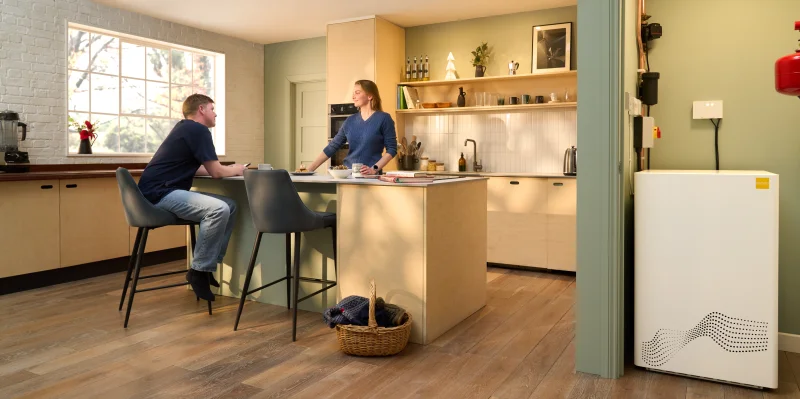
A successful transition will require more than one electric heating technology. At tepeo, we developed the ZEB heat battery boiler, which provides low-carbon heating via existing wet central heating systems using cheaper off-peak electricity. Heat batteries for central heating are a great option particularly for smaller homes without outdoor space for heat pumps or where people want to keep the same familiar heating experience of a gas or oil boiler, but save money and carbon.

Decarbonisation isn't just where energy comes from
As transport and heating electrify, power demand will grow, but renewable generation is growing faster. Historically, the grid matched supply to demand, but what happens when we no longer control the supply? The key question is increasingly: how do we maximise our use of renewable electricity rather than paying hundreds of millions of pounds each year to wind turbines to stop generating excess energy?
The answer is actually fairly simple - we store excess, low cost, renewable energy as heat.
Heat batteries convert electricity to heat and store it for later, decoupling energy consumption from immediate heating needs. The ZEB charges during lower-cost off-peak windows and releases heat when needed. For housing providers, evaluating heating options requires looking beyond generation efficiency to when a system draws electricity, helping reduce residents' bills and easing peak grid demand.
Better data drives better decisions
Historically, heating decisions relied on theoretical assumptions like Energy Performance Certificates (EPCs). However, EPCs don't always reveal how a home performs in practice - two identical properties can have vastly different real-world usage.
Access to real-world heat loss and energy data ensures appropriate system sizing and targeted investment. For social housing managers, an evidence-led approach enables tailored strategies for individual properties rather than a rigid, uniform roll-out.
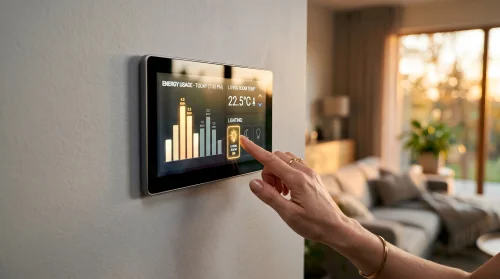
tepeo’s heat batteries monitor the heating and electricity use over time and use machine learning to create accurate forecasts of the actual heat requirements for a given property. Our platform then automatically calculates the optimum amounts and times to charge the heat battery to reduce the cost to the customer. In doing so we’re saving people money on their heating while they continue to experience the same warm radiators they used to.
Leveraging existing skills for a more rapid transition
It has always seemed to me that the boiler installer community has not been brought with us on the transition to low-carbon heat, when they should be our biggest asset. Installers are having conversations everyday with people in their homes about heating - they are arguably the most influential actor in the buying decision and therefore a critical part of the transition..
Swapping a gas boiler for a low-carbon alternative such as a heat pump or indeed heat battery is a fairly straightforward, a 1-2 day job for an engineer used to installing boilers for the latter. Through our tepeoPRO scheme, we provide free dedicated training so heating professionals can confidently install heat batteries into familiar wet central heating systems, minimising installation friction and resident disruption. A once in a generation opportunity to improve quality of life for people around the UK
With ongoing gas and oil price volatility, the electrification of heat is a massive opportunity to upgrade homes, lower costs, increase our energy security and reduce both local pollution and global emissions.
Government policy has recognised both the opportunity and imperative for change. Expanding support schemes like the Boiler Upgrade Scheme (BUS) to include heat batteries acknowledges that meeting the UK's diverse housing needs requires heat pumps for some homes and heat batteries for others.
The more pragmatic approach now being taken by the Government acknowledges the complexity of decarbonising our housing stock and the enormous opportunity cost of not getting on with the job as quickly as we possibly can.
By Johan du Plessis, Founder and CEO of tepeo
Image credit: Tepeo
Unlock all content
This is the 1 of 3 articles you can access for free. Become a member to unlock unlimited access to our full content library.
Author