
Boards That Ask Better Questions Create Healthier Homes
6th March 2026
Jenny Danson
Reflections from the NHF Board Leadership Conference – February 2026
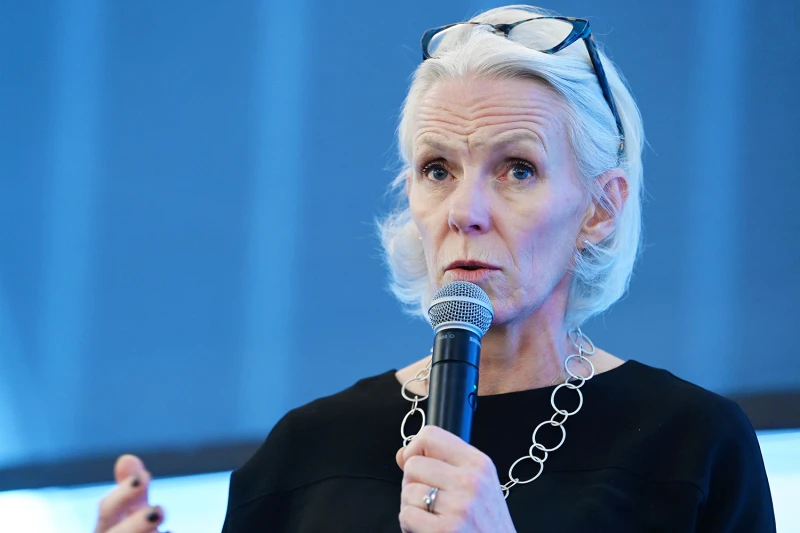
In February, I had the privilege of speaking on a panel at the NHF Board Leadership Conference, alongside colleagues from academia and AWS. It was one of those sessions where nobody was pretending this work is easy. Boards are being asked to juggle building safety, decarbonisation, stock condition, financial pressure and rising resident expectations, all at the same time. The conversation stayed grounded in that reality, but it didn’t let us off the hook either.
We talked about the issues we see again and again across UK housing stock: damp, condensation and mould, leaks, overcrowding, and the day to day strain residents experience when their home doesn’t support healthy living. We also talked about something that is often treated as secondary, but really shouldn’t be: resident satisfaction with the home. Because when you look properly at the evidence, satisfaction isn’t a fluffy measure. It is a strong predictor of health outcomes.
That’s the point that matters most. Housing quality isn’t a “nice to have” discussion. It is a public health intervention.
When we think about what predicts health, it isn’t only the things we naturally track in housing, compliance status, energy performance, or how many components have been replaced. It’s also whether people feel their home is safe, stable, workable and supportive of their life.
Poor quality housing is strongly associated with depression and anxiety, and it links just as clearly to physical health outcomes too, including cardiovascular and respiratory conditions. The scale is sobering. People living in poor quality housing can be up to seven times more likely to experience depression than those who are not.
The Hidden Cost of Poor Housing
We often talk about what this costs the NHS and the wider economy, and the figure that came up in the session was around £1.4 billion each year. But one of the myths I wanted to challenge is the idea that the costs of poor housing quality sit “somewhere else”. They don’t. Housing providers carry the burden directly through higher maintenance spend, repeat damp and mould interventions, disrepair cases, anti social behaviour impacts, and a constant drain of reactive crisis management.
There’s another misconception too, that any financial benefit from improving housing quality only shows up in the long term. What we’ve seen is that housing quality interventions can drive cost reductions for housing providers within 12 months of starting the intervention. That matters when budgets are tight and board papers are dominated by short term pressures. Health based investment is not only morally right, it is strategically smart.
When Health Is Left to Chance
The heart of my contribution to the panel was this: health outcomes shouldn’t be accidental. Most boards genuinely care about residents. Strategies are signed off with good intent. Risk is scrutinised and investment programmes are developed carefully.
Yet, in practice, health often becomes a by product rather than a deliberate outcome. If we want healthier homes, health has to be designed into decision making, and boards are the place where that design becomes real.
Five Questions Every Housing Board Should Ask
So I offered five questions I believe every housing board should be asking, not as a tick box exercise, but as a way to shift the organisation’s direction.
Number One
The first is about what success really looks like. We are strong on outputs because we are a compliance based sector. We count EPCs, boilers, insulation measures, programme delivery. But if success is meant to be healthier residents, we should also be asking what outcomes we are aiming for.
Reduced hospital admissions. Fewer respiratory symptoms. Improved mental wellbeing. Reduced fuel poverty.
Those outcomes have to be defined upfront, because if they are not, they will be the first thing to disappear when the budget tightens. And it’s worth saying plainly: warmth on its own doesn’t equal health. A warm home that is poorly ventilated can still harm residents, particularly children, whose lungs are small and whose exposure to mould can shape health across a lifetime.
Number Two
The second question is about what our data is really telling us. We remain, largely, a reactive sector. Board reports tend to be full of crisis signals: complaints, disrepair cases, damp and mould escalations, emergency repairs. By the time those reach the board, the harm has already happened.
The question boards should be asking is what we are doing to see problems earlier. Early warning indicators are there if we choose to use them, patterns in repair history, repeated “minor” issues in the same home, environmental sensor data where it exists, energy use anomalies, and resident feedback that never becomes a formal complaint but is still telling you something.
Housing organisations are data rich. Boards often don’t see the most useful parts of it. Better questions unlock better insight.
Number Three
The third question is uncomfortable, but necessary: where are we still responding to issues that could have been prevented? We are very good at firefighting, and firefighting is expensive. If the same problems return year after year, we should be asking why.
Are we paying twice by repeatedly treating symptoms instead of addressing causes? Are we washing mould off walls and calling it “resolved”, rather than designing out moisture risk? Healthy homes require a shift from fixing defects to preventing harm, and boards are the ones who can give the organisation permission to move upstream.
Number Four
The fourth question is about lived experience, and whether it genuinely shapes decisions. Compliance data tells us whether standards are met. Lived experience tells us whether homes actually work. A healthy home must be usable and supportive of daily life. People cook. They do washing. They dry clothes. Moisture is inevitable, so design and services have to account for that reality.
Too often the narrative slips into blaming “lifestyle”, which is both unfair and unhelpful. Boards should be asking how lived experience is shaping investment priorities, service models and definitions of success, not as an afterthought, but as part of the core evidence alongside technical and financial insight.
When you look at decisions through a health lens, much of the regulatory and decarbonisation agenda aligns naturally. A healthy home is more energy efficient, it manages moisture properly, and it supports wellbeing. Health isn’t an add on, it’s the integrating framework.
Number Five
The fifth question cuts through short termism: will this decision make residents healthier in five years’ time? Five years forces a different conversation. It moves us away from “what did we install” and towards “what changed”.
Will residents be healthier, or just living in newer homes? Will demand on services reduce, or simply shift somewhere else? Will this investment make future problems less likely, or just differently shaped?
Boards are stewards of long term value, financial value, yes, but also social value. If we can’t confidently articulate how decisions improve residents’ health in five years, something is missing.
Health as the Lens for Investment Decisions
One of the most practical questions from the room was about competing pressures. With decarbonisation, building safety, existing stock maintenance and limited capital, how can boards prioritise spending that protects health?
My answer was that health is not separate from those pressures. It sits across all of them. A healthy home is safer. It is more energy efficient. It is easier to maintain. It supports children’s attainment and keeps people well enough to work, which supports the wider economy too.
When we reframe investment around the question “will this make the home healthier”, decision making becomes clearer, because you stop treating health as a competing priority and start treating it as the test of whether your priorities are working.
Designing Homes That Prevent Harm
We also discussed the reality that homes which were healthy five years ago may not be healthy today, not because the building suddenly changed, but because the external context did. Fuel poverty is a powerful example. People cannot afford to heat their homes. Some are turning off extraction because electricity costs feel out of reach. Moisture builds, mould grows, health declines, and then the cycle of reactive interventions kicks in again.
At Healthy Homes Hub we have been exploring this directly through early work that tested the impact of the landlord paying to maintain adequate warmth for a defined period. The average cost came out at around £500 per home per year, which is less than two days in hospital.
I know £500 per home feels impossible in the current financial landscape, but the bigger point is that prevention is often cheaper than the consequences, and we need to be brave enough to design solutions that stop homes dropping into unhealthy conditions in the first place.
Some providers are now exploring estate based renewable generation linked to minimum temperature guarantees, and dual meter solutions that allow a landlord to keep a home above a safe baseline if a resident’s ability to pay collapses.
This is what it looks like to design out risk rather than repeatedly managing the fallout.
Where Real Change Begins
So why does all of this matter? Because boards shape organisational priorities. Priorities shape investment. Investment shapes lives.
Healthy homes don’t happen by accident. They happen when health is made explicit, debated openly and embedded into governance. The organisations that will thrive in the years ahead will be the ones that move beyond compliance and cost alone and start leading with prevention, long term outcomes and resident health. Because when boards ask better questions, the whole system responds differently.
And that is where real change begins.
Unlock all content
This is the 1 of 3 articles you can access for free. Become a member to unlock unlimited access to our full content library.