
Blocking the Heat Before It Gets In: What PhD Research Tells Us About External Shading
30th July 2026
Jenny Danson

When a room hits 32 degrees Celsius on a summer afternoon, something has already gone wrong. The solar gain has entered through the glass, been absorbed by surfaces, and is now radiating heat back into a space that people are trying to live in, and soon sleep in. The question researchers are increasingly asking is not how to cool a home once it is overheating, but how to stop the heat from entering in the first place.
That is exactly what Niloo Todeh Kharman is investigating. A second-year PhD researcher at Loughborough University, Niloo is conducting a rigorous, real-world experiment into how different types of external shading devices affect overheating in naturally ventilated UK homes. Healthy Homes Hub spoke with her about what she has found so far, and why it matters for social housing providers thinking seriously about overheating risk.
The research: real houses, real conditions
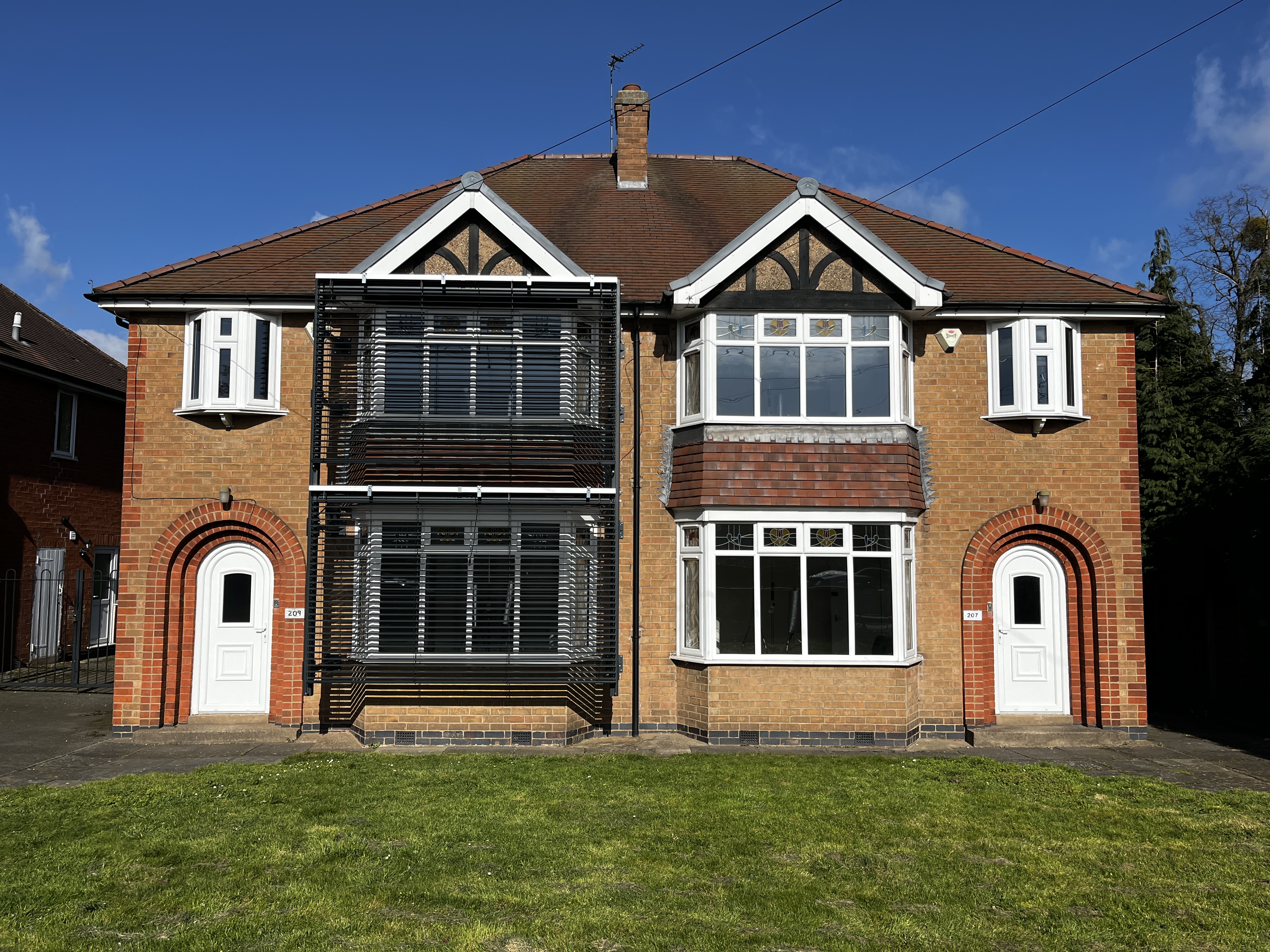
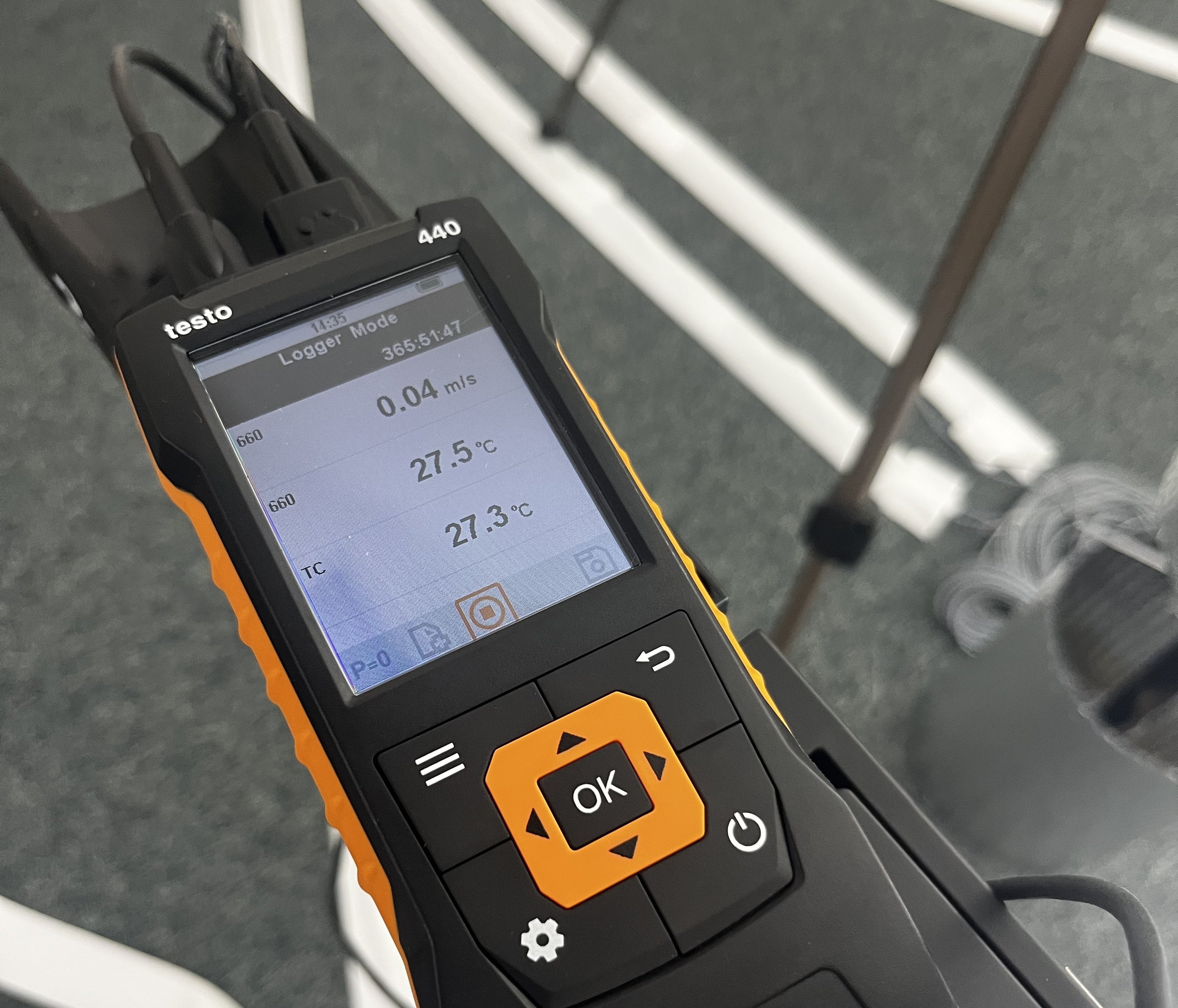
Niloo's study is built around two south-facing semi-detached houses on the Loughborough campus. The homes are fitted with sensors measuring temperature, and humidity. To make the data meaningful for real-world scenarios, Niloo replicates occupancy rather than leaving the houses empty.
"I didn't want to ignore the presence of people inside the house," she explains. "So we tried to replicate the internal heat gains as well. That's why we had these big light bulbs and floodlights inside to produce the heat of the human body."
The occupancy profile follows TM59, the industry standard for overheating assessment, and models a worst-case scenario: someone is always present, representing an elderly resident or a child at home during the day. Cooking is simulated once daily. Night ventilation follows sleeping hours, with windows opened after 10pm.
One house is fitted with external shading; the other is left unshaded. Both are monitored across the summer period, from May through September.
What Niloo is testing
Over two summers of data collection, Niloo has tested a wide range of external shading devices on the same two rooms, a south-facing bedroom and a south-facing living room, identified during a pilot study as the most thermally vulnerable spaces in the building.
Devices tested so far include:
Fabric applied directly to the glazing
External roller blinds
Venetian blinds at multiple angles (fully closed, 45 degrees, and horizontal position)
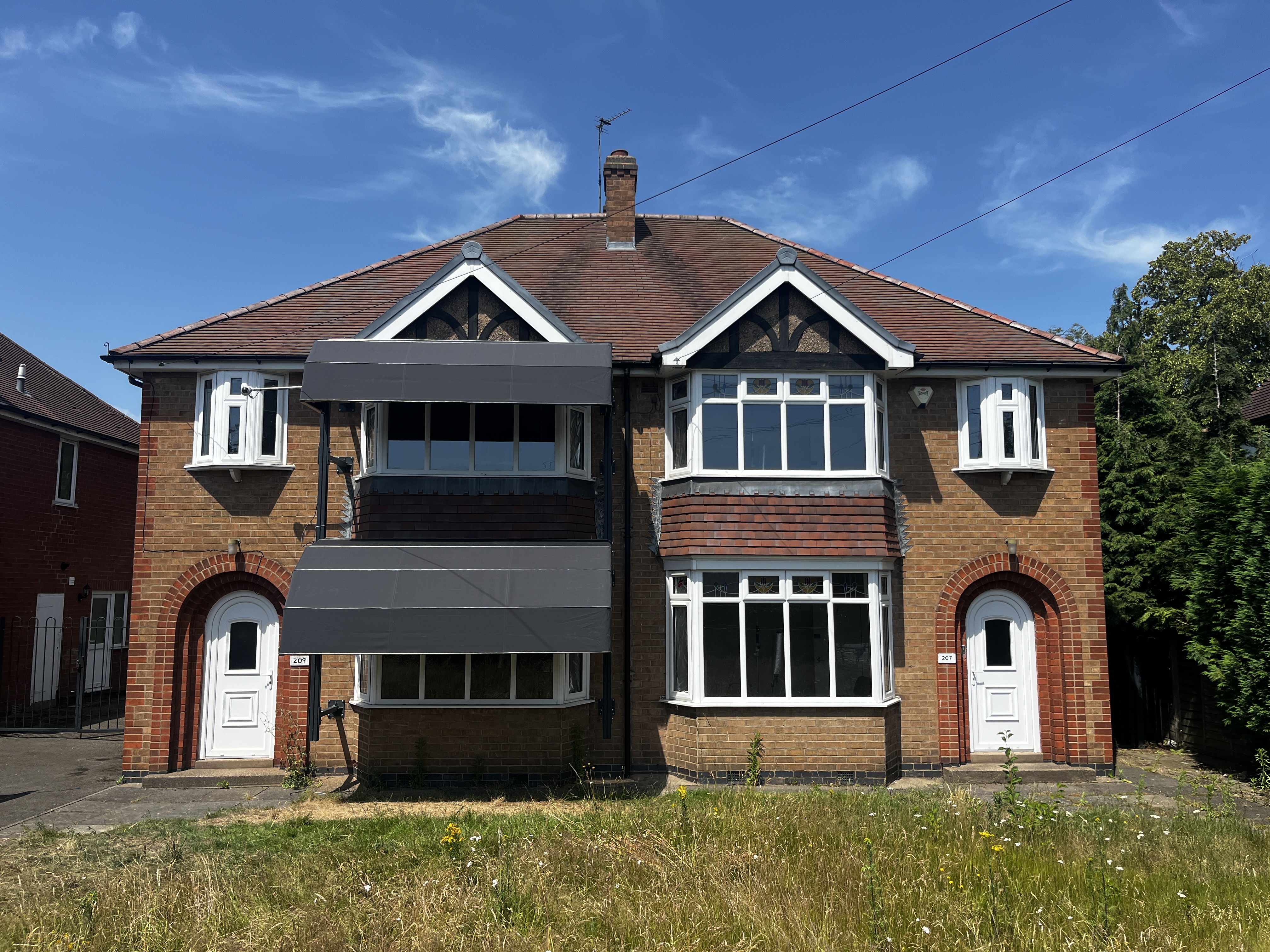
Folding arm awnings
Dutch canopies (the curved-fabric style familiar from European street scenes)
This summer, Niloo is also testing two types of shutters: rolling and folding. Each device is mounted at the same position to allow direct comparison, and several are tested both with and without night ventilation, and in comparison with internal rather than external equivalents.
The numbers
During the experiments, the temperature difference between the shaded and unshaded bedroom reached more than 6c. The unshaded bedroom peaked at around 32 degrees in the early afternoon, typically between 2pm and 4pm. Even with windows open overnight, temperatures in the unshaded house during a heat wave remained above 26 degrees, the threshold for sleeping discomfort set by TM591.
The living room, in some condition, ran even hotter. With cooking adding internal heat gains and windows kept closed during hot weather, temperatures in that space could exceed the bedroom.
The comparison between external and internal shading is quite significant. In a two-week monitoring exercise last summer, external roller blinds outperformed internal curtains.
"The external one was much more effective," Niloo says, "because with internal curtains the heat is already inside the house, so it's stuck there."
This reflects a principle that is straightforward but often overlooked in practice: intercepting solar gain before it passes through the glass is far more effective than trying to manage it once it is already inside.
The surprising finding
Despite the clear benefits of external shading, one of Niloo's key findings is that, while it can significantly reduce the number of overheating hours, it may not be enough on its own.
"Even with external shading, we cannot fully eliminate overheating," she says. "Even when we apply shading during heat waves, we still have temperatures higher than 26, sometimes higher than 28 degrees, during the afternoon hours."
This finding has important implications for housing providers. It suggests that no single intervention is sufficient on its own, and that shading needs to be understood as one component of a wider cooling strategy rather than a standalone solution.
"We should understand how to fully eliminate overheating by trying a combination of different interventions," Niloo explains, "or maybe by adding some cooling technologies alongside these adaptation strategies. You cannot say that just one thing will work."
Thinking about the future
One of the most forward-looking elements of Niloo's research is its use of future weather files. Drawing on climate projections, she plans to model how each shading device would perform during the kind of intense, prolonged heat waves expected by 2050.
This matters because shading solutions designed and installed today need to remain effective across the coming decades, as summers in the UK become hotter and heat waves more frequent. Whether the Venetian blind or roller shutter that reduces overheating risk now will still do so in a 2050 climate is a live and largely unanswered question, and Niloo's data set will help to address it.
What housing providers can take from this
Niloo's research is still in progress, and full findings will be published in due course. But even at this stage, the evidence points to some clear directions for social landlords.
External shading is not a marginal measure. A six-degree temperature reduction in a bedroom during a heat wave is the difference between a space that is uncomfortable and one that is dangerous particularly for older residents or those with respiratory or cardiovascular conditions. The positioning of shading matters too: a gap between the device and the glazing, even of 20 to 25 centimetres (as exists in Niloo's experiment due to outward-opening windows), reduces effectiveness, and this is worth considering when specifying and installing.
The finding that shading alone cannot eliminate overheating during severe heat waves is also an important observation for compliance with overheating assessment standards. TM591 assessments that rely on a single shading device without considering combined interventions may understate actual risk.
Questions for housing providers to reflect on
When your organisation assesses overheating risk in properties, are you considering the combined effect of shading, ventilation, and building fabric together, or treating each as a standalone measure?
Does your current specifications for external shading devices account for the difference in effectiveness between roller blinds, Venetian blinds, and awnings, particularly for bedrooms and south-facing living areas?
How are you planning for the increased overheating risk expected in future climate scenarios, and does your retrofit strategy reflect what the evidence is showing about the limits of any single intervention?
Key takeaways
External shading makes a measurable difference. A six-degree temperature reduction between shaded and unshaded bedrooms during a heat wave is significant, and external shading consistently outperforms internal curtains or blinds.
No single measure is enough. Even well-fitted external shading does not eliminate overheating during severe heat waves. Housing providers should plan for combinations of interventions rather than relying on shading alone.
The data will get more useful. Niloo's planned modelling against future climate projections will help the sector understand which shading devices remain effective as UK summers become more extreme, making this research a resource for long-term retrofit planning.
This article draws on a recorded conversation between Healthy Homes Hub Founder and CEO Jenny Danson and PhD researcher Niloo Todeh Kharman, conducted in June 2026. Niloo is in her second year at Loughborough University and is part of the ERBE (Energy and Resilient Built Environment) research group. The project is supervised by Dr Ben Roberts, Dr Arash Beizaee, and Dr Zoe De Grussa, and co-sponsored by British Blind and Shutter Association (BBSA).
Notes
¹ TM59 is a methodology published by the Chartered Institution of Building Services Engineers (CIBSE) in 2017 for assessing overheating risk in naturally ventilated residential buildings. It sets two key thresholds: living areas should not exceed 26°C for more than 3% of occupied hours, and bedrooms should not exceed 26°C after 10pm for more than 1% of sleeping hours, and should never exceed 28°C during those hours. TM59 uses a standardised occupancy profile to model realistic patterns of heat generation and window use across a typical household. It is the methodology most commonly used to demonstrate compliance with Part O of the Building Regulations (England), introduced in 2022, which for the first time made overheating assessment mandatory for new residential buildings. A companion methodology, TM52, applies to mechanically cooled buildings.
Image credits: Niloo Todeh Kharman
Unlock all content
This is the 1 of 3 articles you can access for free. Become a member to unlock unlimited access to our full content library.