
“All I Wanted Was to Go Home”: Why Listening to Residents Must Come First
9th December 2025
Jenny Danson
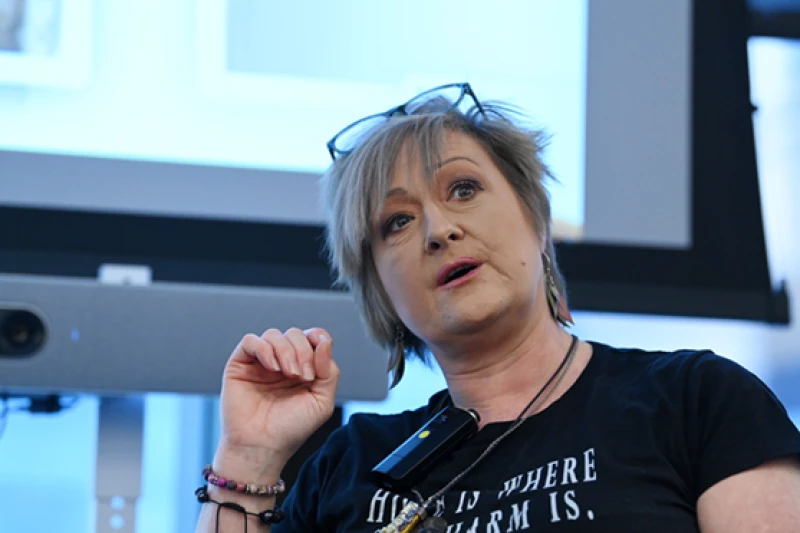
Before we begin, I want to acknowledge something important. What you’re about to read is one tenant’s story. We’re conscious this is only one side, and we are not naming the landlord involved as they can not have a right of response in this setting. The purpose here is not to litigate, but to hear.
I’m going to describe evidence Becky submitted about her home. It gives a glimpse of the reality she faced and helps us understand the human cost behind the reports and processes we so often discuss.
Becky’s case is extraordinary in its detail, but sadly not unique in its experience. She endured catastrophic disrepair.. repeated sewage flooding, contamination and asbestos. Despite providing extensive evidence of videos, photographs, expert reports, and even her own medical records, urgent action was not taken.
She was left street homeless for months, disabled and vulnerable, repeatedly asking for help but receiving little more than automated responses and endless delays. The toll on her physical and mental health, her family life, and her basic dignity has been immense.
Incredibly, Becky studied law herself so she could fight her own case and seek justice, a measure of just how far tenants sometimes have to go when the systems designed to protect them fail.
Today, Becky has agreed to share her experience with us. Not to re-live trauma, but to show what happens when residents are not heard, and to challenge us to think differently about how we treat the people who live in our homes.
We’ve spent today hearing about research, technology, and innovation. But Becky reminds us that none of it matters unless tenants feel safe, respected and heard.
This is not about blame. It’s about responsibility, about ensuring that when people speak up, they are met with humanity, dignity and action. Becky’s voice is a powerful reminder of why we are here, and why change cannot wait.
Living with Sewage and Silence
When the flooding began, Becky did exactly what she was told. She stayed home, kept everything packed in bin bags in case she needed to move quickly, and waited for the contractor her landlord promised would arrive.
No one came.
She waited another day. Still no one.
For nearly three days she remained in a property flooded with sewage. She couldn’t use the bathroom. She had to knock on neighbours’ doors just to use the toilet or wash. The humiliation and fear were overwhelming, and completely avoidable.
Eventually, she was moved into a hotel on a nightly basis. She packed a small overnight bags as she was asked to.
But the nightmare didn’t end.
“The problem’s fixed” - except it wasn’t
Becky returned home to find the property still unsafe. The door was swollen shut, sewage was backed up behind it, and every flush from neighbouring homes sent waste directly into her flat. The entire drainage system had collapsed.
She begged for sandbags. She reported the worsening conditions. She pleaded for anyone - landlord or local authority - to intervene.
Environmental health were called. Instead of inspecting the property, Becky watched them stand outside and declare the home “fit for habitation” through a doorbell camera.
Still, nothing changed.
Left Homeless, Disbelieved and Dismissed
By December, Becky was formally homeless. Yet each time she reached out for support, she was told:
On paper, you’re suitably housed.
Imagine hearing that when your reality is sewage coming through the floors, contamination, asbestos, infestation, and complete structural failure.
Between December and April, multiple expert reports confirmed the property was uninhabitable. Still, no suitable alternative accommodation was offered.
Becky was left on the streets.
This wasn’t a failure of a single process; it was a failure of humanity.
The Emotional Toll
The constant dismissals, the disbelief, and the sense of being invisible pushed Becky to breaking point.
All she wanted was to go home. To somewhere safe, somewhere she could rebuild her life.
Even when she was finally offered another flat, it came with no electricity, limited flooring, and no regard for her PTSD. It was presented as a solution, but it was nothing of the sort.
Her voice ,the one thing she should have been able to rely on, kept being muted.
Starting Again With Nothing
In September 2022, Becky moved into a new home. She was promised an inventory, reimbursements, and support to replace everything lost.
Everything she owned was deemed contaminated. Photographs, clothes, her son’s belongings - her life.
She moved in with the same overnight bag she’d packed the day the sewage first flooded in.
A small contribution helped cover basic appliances, but no mattress, no curtains, no everyday essentials. Rebuilding meant starting from zero.
What Becky Wants Everyone Working in Housing to Hear
Her message is simple, powerful and urgent:
Stop assuming the worst of people.
Stop dismissing residents because their stories feel inconvenient or expensive.
Listen, truly listen when someone says they don’t feel safe.
Not every resident is “after money”. Many are just desperate to be heard, treated with dignity, and kept safe in their own home.
And when someone comes forward with evidence, real, undeniable evidence, the response should never be silence.
Systems Only Work When They Let Voices Through
Becky’s biggest barrier wasn’t the collapsed drain. It wasn’t the contamination. It wasn’t even homelessness.
It was the culture of dismissal.
Complaints entered a system where the “customer voice” function had the power - and sometimes the intention - to mute them. Once the system decided Becky was “fine”, she became invisible.
And when residents become invisible, harm becomes inevitable.
A Final Reflection
At the event where Becky spoke, I asked the room a simple question:
“If Becky was your resident — what would you do differently?"
Everything we design from data models and IoT pilots to retrofit programmes and governance structures. is meaningless if people don’t feel safe in their homes.
This work isn’t about sewage, drains, sensors or surveys.
It’s about humanity.
Dignity.
Responsibility.
Becky’s story is not a cautionary tale.
It’s a call to action.
We must do better.
Unlock all content
This is the 1 of 3 articles you can access for free. Become a member to unlock unlimited access to our full content library.