Why Social Housing Needs Better Flooring
15th October 2026
Jenny Danson
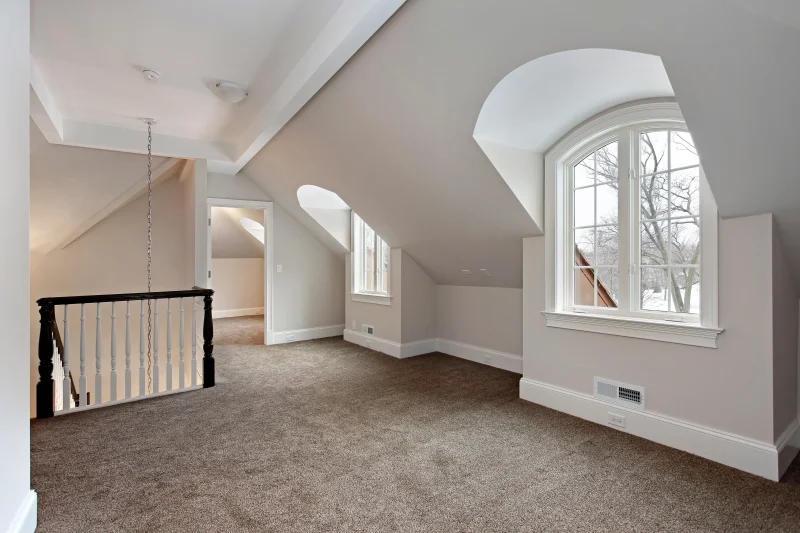
The absence of flooring at the start of a tenancy is rarely treated as a housing quality issue. In a recent sector discussion on the subject, it emerged as exactly that.
Many social housing tenants move into properties with bare concrete or subfloors and no means of covering them. For tenants moving in without savings, some already carrying debt, the cost of flooring a home is a further barrier at the point they can least afford it. Some take out loans simply to carpet a home.
The impact on residents goes beyond cost
The consequences go beyond cost. Bare floors create hazards for children, including exposed nails and damaged surfaces left after previous flooring was removed. They also raise accessibility problems that are often invisible until a tenant flags them. In one case discussed, a wheelchair user's concrete floor was breaking up under his wheels, unnoticed by both him and his landlord until it became a problem. In another, a mother caring for a disabled adult son had no option but to kneel on bare concrete in the living room, as there was no space in the undersized bathroom to change him safely. A double problem.
Landlords who already provide flooring as standard report tangible benefits: higher tenant satisfaction, more consistent standards across their stock, reduced noise transfer between homes, particularly in flats and multi-storey blocks, and improved tenancy sustainment. Supported and sheltered housing already tends to provide flooring by default. General needs housing, more often, does not, leaving some tenants embarrassed to have family or friends visit their home without floor coverings.
What's stopping landlords from providing flooring?
The barriers for landlords are practical rather than a rejection of the case. Finance and budget are the most frequently cited constraint, with flooring competing against other calls on already stretched capital programmes. Logistics matter too: fitting flooring into void periods alongside other works, and coordinating with contractors, adds time and cost to the re-let process. In some areas, particularly rural ones, finding contractors able to do the work reliably is itself a constraint. These I believe are all resolvable with easy solutions that I will share more of soon.
Communication was raised as a recurring weak point. Frontline housing staff are not always clear on who is responsible for maintaining or replacing flooring once it is fitted, and tenants are not always given guidance on how to care for it, including which cleaning products are safe to use. Where flooring has been provided, some tenants have also questioned the standard of installation, with often unskilled operatives being asked to fit the flooring.
Much of the discussion centred on cost assumptions around harder-wearing flooring such as luxury vinyl tile (LVT). Landlords have tended to treat it as too expensive for their tenant base. The counter-argument put forward was that unit costs can fall significantly with better sourcing, and potentially through landlords combining buying power, given that only a small number of manufacturers supply this type of flooring in the UK. Over a tenancy cycle, hard flooring was argued to cost less than carpet once replacement frequency and noise performance are taken into account, despite a higher upfront cost.
Making flooring a standard, not an exception
A recommendation on the issue had been expected to conclude in the near term. The group involved has instead chosen to take more time to build a broader evidence base across landlords of different sizes before finalising it. The ambition raised was a longer one: for flooring provision to become a standard expectation across the sector, rather than a decision left to individual landlords.
Open questions remain, including whether tenant care of flooring changes once it is provided as standard, and how landlords should specify flooring appropriately by room and household need. Both point to the same conclusion: this is a gap in current practice with a growing body of evidence behind closing it, and a live opportunity for landlords to get ahead of where the sector is heading.
Healthy Homes Hub, working with other key stakeholders, is looking to answer these questions and to make flooring provision the default for empty and new social and affordable homes.
This article is based on a presentation at The Housing Community Summit with Tapi and Sally Trueman a resident from Riverside and TPAS Cymru.
Image credit: Adobe Stock
Unlock all content
This is the 1 of 3 articles you can access for free. Become a member to unlock unlimited access to our full content library.