

Why Breakfast Might Be More Dangerous Than You Think
19th June 2025
Mark Trowers,
Zehnder
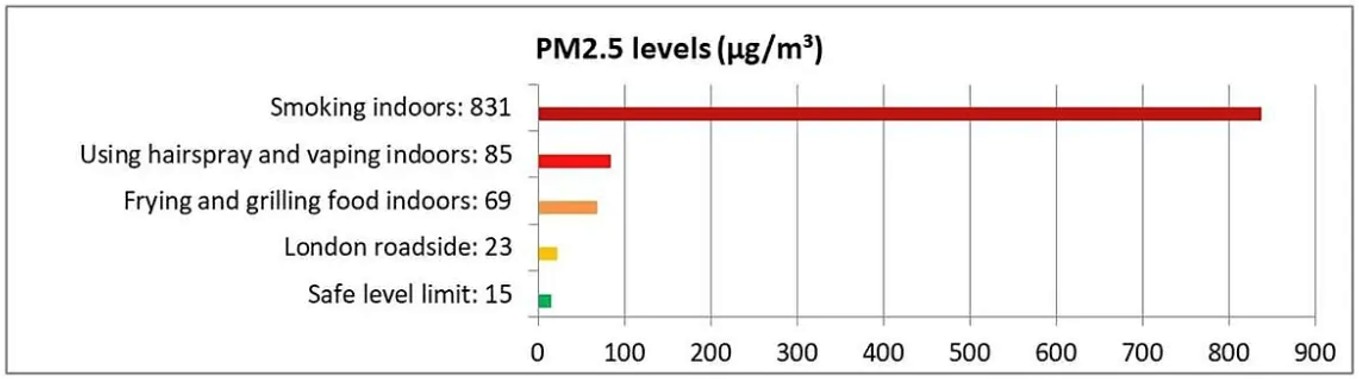
The simple act of cooking a fried egg on toast could, ironically, be doing significant harm to our health, as research shows that cooking fried and grilled foods can raise pollution levels in the kitchen to over three times that of a typical London Road.
We’re talking, of course, about indoor air quality (IAQ), which is dangerously compromised by seemingly mundane everyday tasks such as cooking, cleaning and spraying aerosols. Alongside more obvious causes of poor IAQ such as smoking and vaping indoors, these factors all have a significant impact on the levels of pollutants we breathe inside our homes.
The air inside our homes can be up to five times more polluted than the air outside.
We are constantly warned about outdoor pollution, but indoor air quality (IAQ) remains dangerously under the radar. In fact, the air inside our homes can be up to five times more polluted than the air outside. So, considering we spend as much as 90% of our time indoors, this is a problem we can’t afford to ignore.
Yesterday, Thursday 19th June, marked Clean Air Day. The UK’s largest campaign to raise awareness of air pollution and its impact on our health. As those responsible for the health and wellbeing of occupants in housing, it is important to understand the risks of poor air quality and explore ways to improve it for tenants.
To educate on these impacts a study was conducted by Zehnder with volunteers with different home environments and lifestyle habits. Over five days, air quality monitors were used to track levels of dust, chemicals and humidity in multiple rooms, including kitchens, bedrooms, and living spaces.
The result was eye-opening. We saw sharp spikes in PM2.5 particles, the fine dust molecules linked to serious health conditions such as respiratory diseases including asthma, allergies, dementia, mental health issues and insomnia.
This was caused from everyday activities such as cleaning, cooking and spraying aerosols which all release harmful pollutants into the air, including PM2.5 (fine particulate matter), volatile organic compounds (VOCs) and moisture – and this is happening in homes worldwide every day.
It may come as a surprise, but even cooking a simple fried egg on toast can significantly impact the air quality inside a home - over three times that of a typical London Road. And while it’s no surprise that indoor smoking pollutes the air, the data revealed just how extreme that pollution can be. Both cigarette and vape smoke pushed levels to over 65,000 times higher than is considered normal, even with an extractor fan in the same room. Using hairspray and deodorant when getting ready in the morning also caused a huge spike in harmful dust particles.
These everyday activities can all raise pollutant levels far beyond what is considered safe. The more we understand and tackle indoor pollution through education and smarter ventilation, the better protected occupants will be.
So, what can we do about it?
Whilst a tenant’s day-to-day habits significantly influence their indoor air quality, landlords also carry responsibility by ensuring their housing stock is optimised to promote fresh air flow through the property via proper ventilation design and ongoing maintenance.
The key to managing indoor air quality lies in making ventilation a priority. To achieve this, a good starting point is to ensure you have a continuous air circulation system comprising of trickle vents on windows, ample undercuts on doors and dMEV extractor fans with a humidity boost in wet rooms throughout the house.
Trickle vents are designed to work harmoniously with extractor fans, forming an effective whole-home ventilation system. By allowing a continuous flow of fresh air into a property, these vents work in tandem with the extractor fans, which efficiently remove the stale, particulate-laden air.
However, it is important to keep extractor fans in the kitchen and bathrooms running, even in the colder months. These modern fans work to reduce pollutants in the air and can cost less that £2 per year to run but be sure to check and clean the vents regularly – a hoover and dust once or twice a year should keep them in good working order. Otherwise, these systems won’t perform as they should! If the fans in the property are over ten years old, it is worth considering replacements - extractor fan technology has come a long way in recent years so will operate more efficiently.
Additionally, when fitting new extractor fans, make sure they are installed properly and not turned off by the tenant. Some modern fans, like Zehnder’s Unity CV2.1APP, are specifically designed to track usage for this reason. Through the use of this dedicated app, it is possible to access stored performance data on the fan to review functionality over a period of time, indicating how long a fan has been running, if there are any faults and whether the fan has been turned off. It enhances control and allows landlords to monitor usage of the fans in their properties to get a clearer picture of why problems occur - enabling them to have an open dialogue with their tenants and provide crucial education on how to keep the property healthy.
Also, check for clear air paths into the property for ventilation systems to work properly, bringing fresh air in, while extracting stale and humid air. Trickle vents in windows or undercuts on the doors are good natural ventilation points but make sure these aren’t blocked by new carpets or furnishings or closed by tenants.
Solving the IAQ challenge starts with knowledge.
Bridging the gap between tenants and landlords begins by understanding how daily habits affect their indoor environments. From cooking to spraying aerosols, small changes can have a big impact – and landlords too must assess the health of their properties. That includes identifying structural issues or upgrading outdated ventilation systems.
One of the biggest challenges we face is the disconnect between tenants and landlords. Part of this disconnect stems from a lack of trust and communication, but education also plays a significant role. For example, tenants may end up turning off their extractor fans and closing trickle vents - their only source of air flow through the property - because they worry about noise, cost, or heat loss.
We need to bust these myths and share the facts. By understanding how air should circulate within a home, tenants and landlords alike can take more informed steps to create healthier living environments.
Ultimately, building healthier homes requires three things: ventilation, trust and informed choices. And while Clean Air Day is a great moment to highlight the issue, our commitment to better indoor air quality must last all year round.
Unlock all content
This is the 1 of 3 articles you can access for free. Become a member to unlock unlimited access to our full content library.
Author