

The Increasing Role Of Technology In Creating Comfortable, Healthier Homes
15th September 2025
Mustafa Mustafa
As we move decisively toward a net zero future, the way we think about homes — how we heat them, live in them, and sustain them is undergoing a fundamental transformation. At Morgan Sindall Property Services (MSPS), we see every day how the right technology, when combined with a fabric-first approach and strong resident engagement, creates homes that are not only energy-efficient but also healthier and more comfortable to live in.
Our work on Wave 3 of the Warm Homes Social Housing Fund is a powerful example of how innovation can align with social purpose. With a focus on low-carbon heating and supporting residents most at risk of fuel poverty, the programme continues to demonstrate the impact of joined-up delivery that puts people first.
Leading the Shift to Low-Carbon Heating
Wave 3 places a clear emphasis on moving away from traditional, carbon-intensive heating systems. As a main contractor, we lead the design and installation of air source heat pumps, hybrid systems, and other renewable technologies across a diverse range of homes.
These systems are not only more sustainable — they also provide stable, consistent warmth and support better air quality when installed correctly. However, their performance depends heavily on the building fabric. That’s why we approach heating as part of a whole-home strategy, not in isolation.
Fabric-First, Tech-Enabled
A fabric-first approach — with quality insulation, airtightness, and ventilation — is the foundation of any successful decarbonisation project. Once that foundation is in place, technology becomes the enabler.
Smart heating controls, remote monitoring tools, and data-driven asset management platforms offer real-time insights, optimise energy use, and extend the life of systems and properties. They also give landlords greater oversight and enable proactive maintenance, reducing costs and avoiding system failures.
Through solutions like Knauf Energy Solutions’ in-situ performance testing and AICO’s HomeLINK environmental sensors, we gain a clear, real-time picture of how homes perform post-retrofit. These tools track heat loss, humidity, air quality, and temperature — ensuring that retrofit measures deliver not just energy savings, but healthier living environments.
AI and machine learning further enhance this value. By analysing sensor data at scale, we can detect trends, flag risks (like poor ventilation or underheating), and predict future maintenance needs. This enables a shift from reactive to predictive asset management, reduces costs, and supports long-term resilience. It also allows for more tailored interventions, ensuring residents experience the full benefit of retrofit works.
But installing technology alone isn’t enough. We must ensure it’s understood and used effectively — by both residents and landlords. This is key to future-proofing homes and protecting the value of retrofit investments.
Resident Engagement: A Non-Negotiable
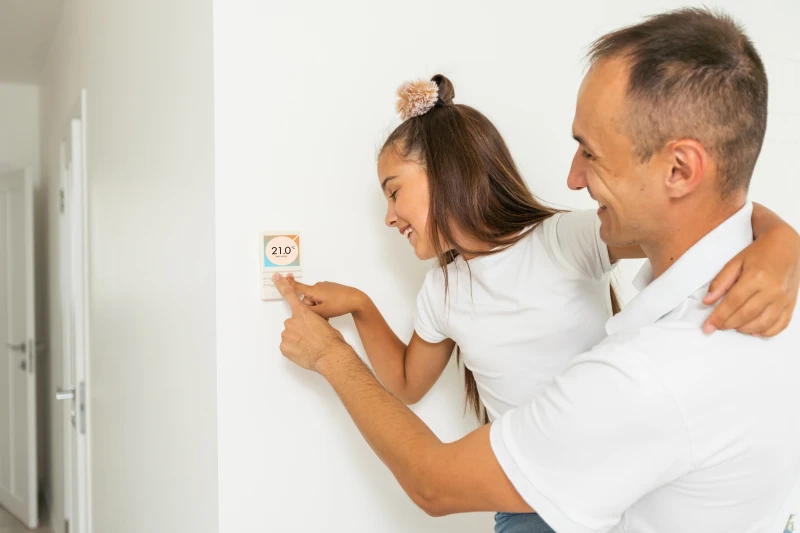
We’ve learned that even the most advanced systems will fall short without resident engagement. Many residents are accustomed to traditional boilers and manual controls — switching to lower-temperature, digitally managed systems represents a significant behavioural shift.
That’s why we embed resident engagement from the outset. Our teams deliver in-home visits, personalised demonstrations, and simple, tailored user guides. We often schedule follow-up visits to reinforce understanding and address concerns.
By helping residents feel confident using modern systems, we not only support the UK’s net zero goals — we also help deliver lower bills, healthier homes, and consistent comfort. For clients, this results in fewer avoidable callouts and greater operational efficiency.
Clear communication about how systems work — and why they were chosen — empowers residents to take ownership of their energy use. It builds trust, improves outcomes, and strengthens the relationship between housing providers and their communities.
Collaboration for a Shared Future
Technology will play an increasingly central role in delivering low-carbon, healthy, and efficient homes. But for that potential to be realised, it must be properly integrated, clearly explained, and supported by investment in skills, infrastructure, and education.
We also need to work together to counter public scepticism and misleading narratives. Headlines suggesting that low-carbon systems cost more to run than gas boilers can be damaging — especially when those claims overlook the importance of proper system design and fabric upgrades. These misperceptions risk undermining progress at a time when confidence and investment are critical.
The solution lies in collaboration. Contractors, local authorities, housing associations, and technology providers must come together to share evidence-based success stories, address concerns openly, and deliver consistent messaging that cuts through confusion.
At MSPS, we’re proud to be at the forefront of this transition. Through programmes like the Warm Homes Social Housing Fund, strong partnerships with social housing providers, and our commitment to a fabric-first, technology-enabled approach, we are showing that homes can be both sustainable and liveable.
Looking Ahead
The low-carbon, digitally connected home is no longer a future concept — it’s already here. With the right focus on integration, education, and resident support, we can ensure these homes meet the needs of today and are prepared for the challenges of tomorrow.
Unlock all content
This is the 1 of 3 articles you can access for free. Become a member to unlock unlimited access to our full content library.