

Panel on Fire Safety Innovations for Social Housing
10th May 2025
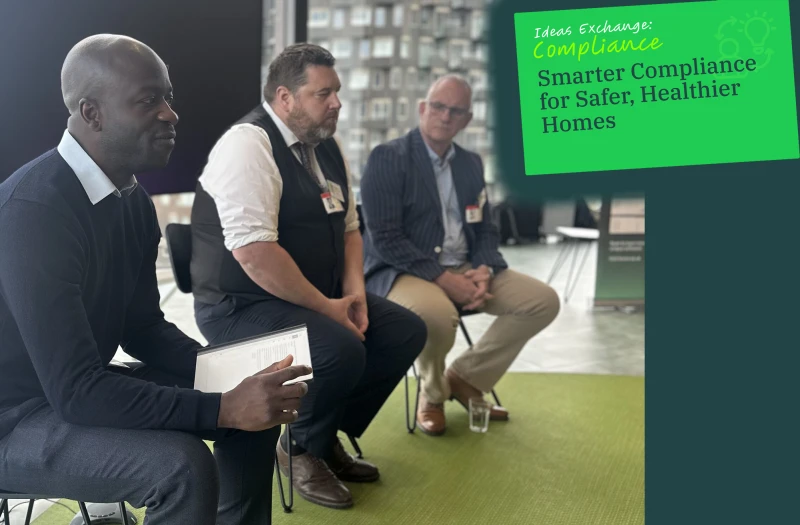
Fire safety remains a high priority in social housing, with providers under increasing pressure to innovate while maintaining compliance and trust. At a recent panel, Yusuf Mohammed led a focused discussion with Neil Yeomans and Nick Lacey, examining what genuine innovation looks like in practice and where the sector’s biggest challenges still lie.
Smarter Compliance: Beyond the Basics
The panel opened by addressing the shift from traditional compliance to “smarter” approaches. Instead of relying on static spreadsheets and routine box-ticking, the sector is moving towards:
Live data and analytics to inform risk assessments and prioritise interventions
Tailored solutions that reflect the specific risks of different buildings and resident groups
Better use of technology—from smart sensors to improved reporting systems—to support decision-making
The consensus: compliance is only effective when it leads to tangible improvements in resident safety.
Embedding Innovation in Everyday Practice
Innovation, the panel agreed, is not just about new gadgets or systems. It’s about integrating new thinking into daily operations. Examples discussed included:
Data-driven risk management: Using fire risk action data to spot trends and address issues proactively
Early detection and response: Leveraging new technologies to identify risks before they escalate
Human factors: Recognising that effective fire safety depends on the knowledge and confidence of both staff and residents
The message was clear: technology is valuable, but it must be combined with professional judgement and a strong organisational culture.
Clarifying Accountability
One recurring challenge is the complexity of accountability. The current regulatory landscape often leaves providers uncertain about where ultimate responsibility lies. The panel stressed:
Leadership accountability: Tasks can be delegated, but overall responsibility cannot
Clarity for teams: Everyone should understand their role in fire safety, supported by clear training and guidance
This clarity is especially important as new regulations place greater emphasis on the “responsible person” for building safety.
Looking Ahead: Continuous Improvement
The session concluded with a focus on continuous improvement. Effective fire safety requires:
Ongoing learning: Regularly reviewing processes and outcomes
Partnerships: Collaborating with fire services, suppliers, and residents to share best practice
Pragmatism: Balancing regulatory demands with available resources and local realities
Ultimately, the panel agreed that innovation in fire safety is about steady progress—combining new technology, professional expertise, and open communication to keep residents safe.
Unlock all content
This is the 1 of 3 articles you can access for free. Become a member to unlock unlimited access to our full content library.