
Fuel Poverty: Homes as Health Foundations
6th October 2025
Matt Chenery
A stubborn injustice with urgent consequences
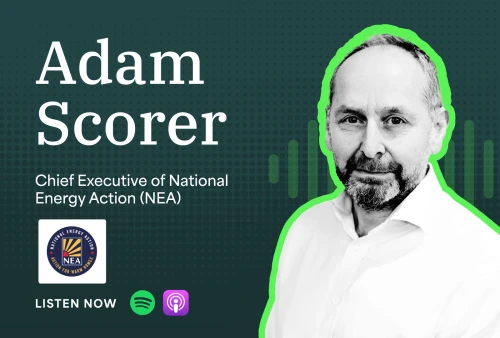
Over six million UK households remain trapped in fuel poverty, a crisis that has long been mischaracterised as simply a question of income. As Adam Scorer, Chief Executive of National Energy Action (NEA), argues, fuel poverty is “not about meter points or active consumers engaged in transactions with companies, but about human people with less consumer agency than others, greater need than others.”
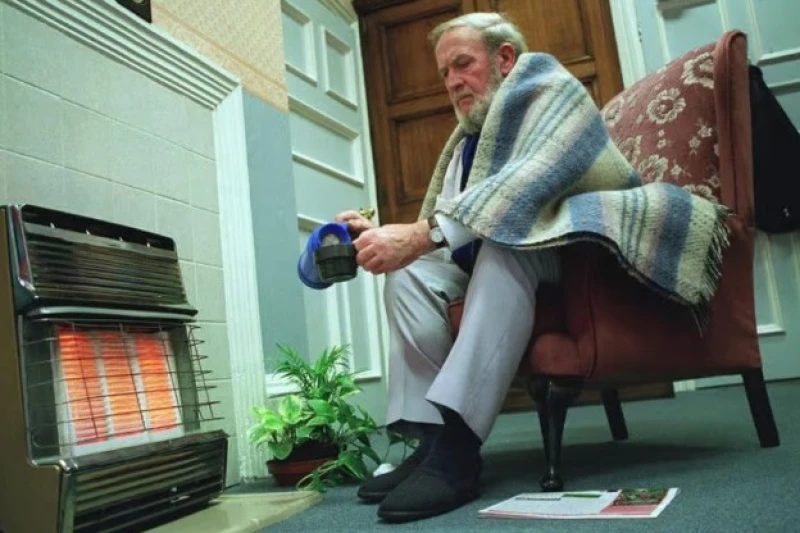
Cold, unsafe homes are a health emergency, fuelling respiratory illness, poor mental health, and avoidable deaths. For many, this is not a temporary cost‑of‑living issue but a permanent reality. Scorer recalls visiting a mother in Preston who made the painful decision to send her teenage daughter to live with relatives because of mould and damp so severe that she could not face raising her in that environment. “That was when it really raised the stakes for me,” he explains. “It’s not about transactions, it’s about safe, healthy homes.”
Beyond energy bills: a cross-government mission
The energy crisis may have forced fuel poverty up the political agenda, but short‑term subsidies and interventions have failed to address root causes. Scorer is clear: “Every one of our clients was in crisis before the energy crisis and is likely to be in crisis after.”
Instead of siloed initiatives, he calls for a mission‑based approach cutting across health, housing, welfare and local authorities. “You won’t resolve fuel poverty just by clean energy policy. Neither will you crack it by health prevention alone.”
Social housing: the crucible for solutions
If there is one sector with the potential to lead, it is social housing. “Landlords are uniquely placed,” Scorer notes, “owning assets at scale, serving the highest proportion of fuel‑poor households, and able to work with residents directly.”
The sector is already seeing significant investment. The Social Housing Decarbonisation Fund (SHDF) has supported Waves 1 and 2, delivering energy efficiency upgrades across thousands of homes - £179 million to around 20,000 homes via Wave 1, and a further £778 million via Wave 2.1 For current data on performance and delivery, the official SHDF statistics are regularly updated. Data.gov.uk+1.
Yet challenges remain - resident engagement is often weak, with projects framed around scaffolding and disruption rather than long‑term benefit. Scorer stresses: “Consumers have the veto on the low‑carbon transition. Unless residents feel the benefits, we risk grasping defeat from the jaws of victory.”
Measuring what matters
NEA’s lived‑experience work underscores that impact goes far beyond kilowatt‑hours saved. Families report pride in hosting Christmas for the first time in decades, grandparents feeling able to invite grandchildren to stay without shame, and children able to do homework at the kitchen table rather than a heated classroom.
“These are the measures by which we should assess interventions,” Scorer insists. “Homes shouldn’t be places of despair and anxiety, they should be places of warmth, respite, and joy.”
Aligning net zero and fuel poverty
A persistent risk is the separation of net zero programmes from fuel poverty strategies. Asset‑focused plans often prioritise poorly performing homes but not necessarily the residents most at risk. Scorer challenges the sector to flip this logic: “Go worse‑first with people, not just properties. Otherwise, the most vulnerable risk being left at the back of the queue.”
Existing schemes: immediate and structural help
1. Warm Home Discount Scheme
A one‑off £150 discount on electricity bills for eligible low‑income households, applied automatically in most cases in England and Wales; Scotland may require applications via suppliers Warm homes discount. The scheme is currently closed but will reopen in autumn 2025 for payments in winter 2025‑26 Citizens Advice.
2. Fuel poverty target and energy efficiency
England’s statutory target mandates that as many fuel‑poor homes as reasonably practicable should reach a minimum of Energy Performance Certificate (EPC) Band C by 2030 Expanding the Warm Homes scheme Impact Assessment.
3. Warm Homes: Social Housing Fund
This successor to the SHDF supports social housing providers to insulate homes, improve energy efficiency and upgrade heating systems aimed at tackling both carbon and fuel poverty NHF warm homes social housing fund.
Practical steps for housing providers
Conduct resident audits alongside asset surveys to capture lived experience and fuel poverty impacts.
Embed cross-mission outcomes: health, child poverty, energy transition into housing investment strategies.
Prioritise engagement: co-design retrofit programmes with residents, ensuring visible and immediate benefits.
Measure social value: capture outcomes like improved wellbeing, reduced health costs, and stronger community cohesion.
Align net zero with fuel poverty: retrofit and decarbonisation programmes must explicitly benefit those most in need.
Fuel poverty is not a secondary issue, it’s a public health scandal and a test of whether the housing sector can deliver on its social purpose. As Scorer reminds us, this is vocational work: “There’s no path to net zero that doesn’t pass through the homes of the poor.”
Unlock all content
This is the 1 of 3 articles you can access for free. Become a member to unlock unlimited access to our full content library.