
Food Poverty Starts At Home
24th August 2026
Jenny Danson
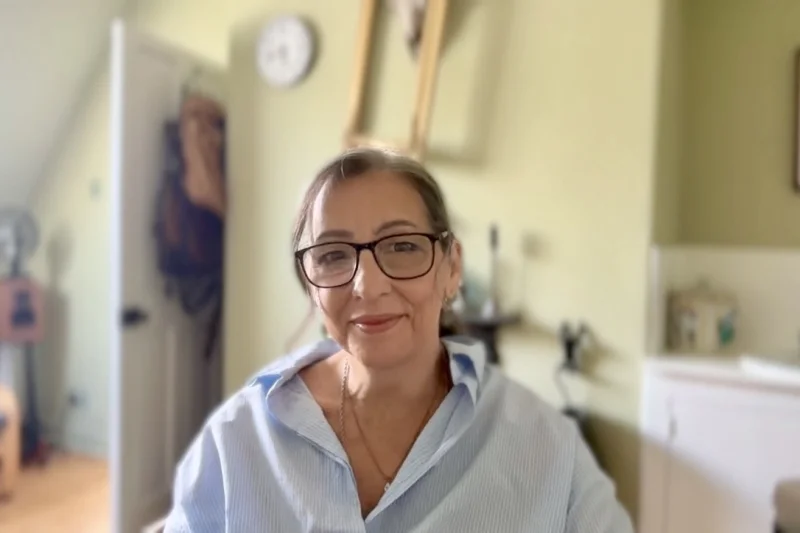
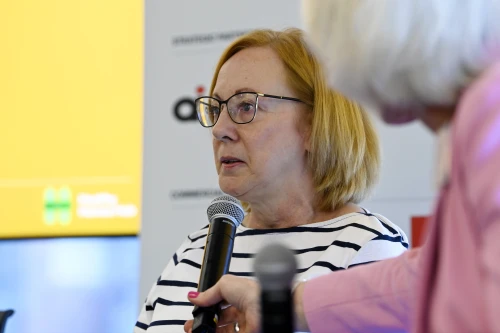
Ask most people where food poverty begins and they will point to wages, benefits, or the cost of food itself. Megan Blake, Senior Lecturer and Knowledge Exchange Lead at the University of Sheffield's School of Geography and Planning, argues that the picture is more complicated than that, and that housing sits closer to the centre of it than most people in the sector have yet understood.
Blake has spent 25 years researching the conditions that enable people and communities to flourish. Her work on food insecurity, developed in partnership with Comic Relief and Sainsbury's Nourish the Nation campaign, has produced one of the most detailed surveys of food access among lower-income households in the UK, drawing on responses from 14,000 people with household incomes below £40,000 a year. One of its findings will be familiar to anyone working in social housing: when other variables are held constant, living in social housing is statistically associated with a higher likelihood of food insecurity.
That is not an indictment of social landlords. It reflects the reality that social housing disproportionately houses people facing multiple, compounding pressures. But it does point to an opportunity. Social landlords, unlike private or small-scale landlords, have scale, existing relationships with residents, and the infrastructure to act. The question is how.
Beyond the food bank
Blake's framework for thinking about food support is called Food Ladders. It distinguishes three levels of response, each with a different relationship to the conditions that create food insecurity in the first place.
The first rung is emergency support: food banks, crisis parcels, immediate relief. This provision is necessary and has its place, but Blake is clear that it was never designed to address structural causes. It offers rest, not resolution.
The second rung is about building capability and connection. This includes initiatives that help people access healthier food on a constrained budget, community food projects, surplus redistribution schemes, and cooperative models that reduce individual cost. Crucially, it also means helping people navigate the wider systems around them, including the benefits, health, and employment services they may not know how to access.
The third rung is transformation: the conditions that make food insecurity structurally less likely. This might be a self-organised childcare group that frees a parent to work, or a WhatsApp network that checks on isolated neighbours, or a vendor willing to bring produce to a neighbourhood because demand has become reliable enough to justify it.
Blake's argument is that most investment in food support sits at the first rung, and that the second and third rungs remain underdeveloped. Her research, commissioned by Comic Relief after she made the case for a different approach, is an attempt to fill that gap.
The home as infrastructure
One of the less-examined dimensions of food insecurity, Blake suggests, is the home itself as a material constraint. People who cannot afford to run their appliances cannot cook the food they have. People in overcrowded homes or those with inadequate storage have nowhere to store bulk purchases, even when the economics of bulk buying would otherwise make sense. People whose homes make them ill are less likely to be in work, and less likely to have the income or energy to manage food well.
She puts it plainly: we tend to think of housing in terms of proximity to services, what is nearby, whether there is a supermarket within reasonable distance. But the home itself shapes what is possible. And in many of the neighbourhoods where social housing is concentrated, the surrounding environment compounds the problem. As Dominic Waters describes one such community, with living experience (rather than lived experience): "You can get blueberry vapes, but you can't get blueberries."
The Fresh Street project, which Blake was part of, run by Clare Relton, ran across several locations, tested whether targeted incentives could shift that dynamic. Households were given five pounds a week in vouchers redeemable at local markets for fruit and vegetables. The incentive was deliberately narrow: it covered transport costs for people who might otherwise not make the trip, and it directed spending toward smaller-scale vendors rather than supermarkets. In Bradford, a vendor who began to see consistent weekly footfall from the scheme was eventually able to invest in a delivery van and bring produce directly to the neighbourhood. The initiative worked on both sides of the equation, building demand among households and making supply viable for vendors.
Blake describes this as a two-sided platform problem. Making healthier food cheaper is not enough if the conditions for reaching it are not in place. And simply putting provision in locations where people do not already go does not work either. The scheme had to build the behaviour as well as the supply.
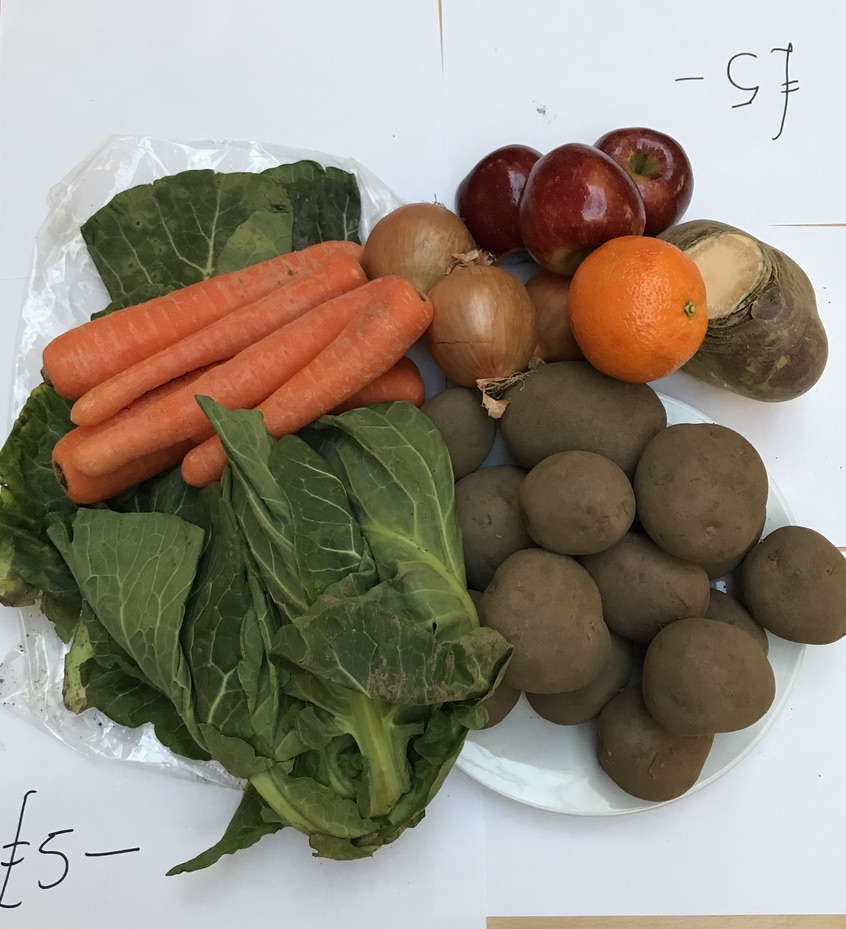
What £5 could buy people.
What this means for housing providers
Housing providers already hold relationships with residents that no other institution can replicate. Many are already working on fuel poverty, damp, retrofit, and neighbourhood services. Blake's research suggests that food insecurity is part of the same system, not a separate issue for a different team.
The link between fuel poverty and food poverty is direct. Trade-offs between heating and eating are well documented. A resident whose home is cold and damp is a resident who is more likely to be unwell, less likely to be in work, and less able to manage the daily logistics of feeding a household. Addressing the home addresses more than one problem at once.
Blake is also beginning to explore the intersection of food insecurity and neurodiversity, an area where she observes that quantitative research has not yet caught up with qualitative reality. Many people who participate in her interviews demonstrate characteristics associated with ADHD or autism without having a formal diagnosis. For those households, the complexity of managing food goes beyond budget: it involves sensory needs, time management, and the cognitive load of planning and preparing meals under significant pressure.
A framework, not a prescription
Food Ladders is not a programme with a fixed delivery model. It is a way of thinking about what kind of support is being offered and what its relationship is to the underlying conditions. Blake's point is that every intervention sits somewhere on that ladder, and that it is worth being deliberate about where, and why.
For housing providers, that framing offers a useful test. A starter tenancy pack with a pan and a kettle sits at rung one. A partnership with a local food club that gives residents somewhere to go and people to share meals with is closer to rung two. A neighbourhood food network that reduces isolation, builds social trust, and eventually creates the conditions for something more permanent is rung three.
None of these is better than the others in the abstract. But understanding the distinction helps providers be more intentional about the change they are trying to create.
Megan Blake is Senior Lecturer and Knowledge Exchange and Impact Lead at the School of Geography and Planning, University of Sheffield. Her Food Ladders toolkit is available at Geofoodie. Healthy Homes Hub will be recording a podcast with Megan later in 2026.
Image credit: Megan Blake
Unlock all content
This is the 1 of 3 articles you can access for free. Become a member to unlock unlimited access to our full content library.