
Collaborating to Deliver Warmer Homes for Wiltshire
27th July 2026
Wiltshire Council’s year one Warm Homes Local Grant programme shows how a compliant procurement framework can remove the delay between funding award and on-the-ground retrofit delivery.
At a Glance
Wiltshire Council deployed £440,000 of Warm Homes Local Grant funding in year one at an average of £18,000 per property, with residents projected to save around £400 annually on energy bills.
Using a direct award route through an established procurement framework allowed the council to onboard a principal contractor compliantly and at pace, avoiding the mobilisation delays that commonly affect grant-funded retrofit programmes.
Lead generation and eligibility conversion proved the most significant operational challenge, with rural housing characteristics, funding caps and customer drop-off requiring active, continuous pipeline management throughout the year.
The mobilisation gap, the time lost between securing grant funding and getting work started in homes, is one of the most persistent constraints in retrofit delivery. Wiltshire Council’s year one Warm Homes Local Grant programme addressed it directly. A direct award route through the CHIC Healthy Homes Framework allowed EDF to be appointed as principal contractor compliantly and at pace, without the delay of a full procurement process. An existing working relationship between EDF and Wiltshire Council, established through the earlier HUG2 scheme, meant delivery could begin promptly once the grant was awarded.
The CHIC Healthy Homes Framework covers three areas: retrofit coordination and design consultancy, works and services including an end-to-end turnkey delivery approach, and digitalisation solutions. EDF met the requirements across the works element, allowing Wiltshire Council to concentrate resource on delivery, eligibility processing and resident engagement rather than procurement administration. The programme represents the first year of a three-year scheme running to March 2028, targeting households with an EPC rating of D or below, with a primary focus on fuel poverty among lower-income households in the county.
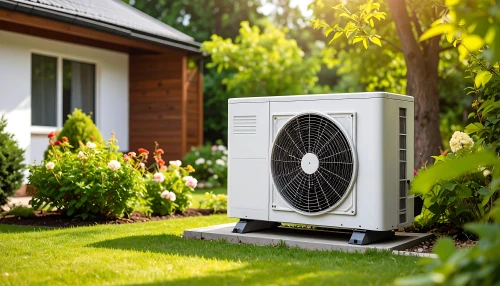
Across the homes completed in year one, 76% received solar PV, 38% an air source heat pump, 85% ventilation measures and 43% loft insulation. The combination of fabric and technology measures reflects PAS 2035-accredited design applied to each property individually, ensuring measures were matched to specific building and household characteristics. Average projected savings of around £400 per year on energy bills indicate meaningful progress against the programme’s primary fuel poverty objective. Total funding deployed reached £440,000 at an average spend of £18,000 per property.
Lead generation and eligibility conversion proved the most demanding operational challenge. Wiltshire’s rural housing stock includes a significant proportion of large, older and solid-walled properties that exceed available funding caps or carry treatment costs the grant cannot cover. Some eligible households withdrew during the delivery process, with the disruption involved in heat pump installations requiring new radiators and pipework throughout a property among the most common factors. Weekly reporting meetings attended by all three partners maintained delivery visibility and allowed the team to respond to pipeline shortfalls throughout the year.
The improvement identified most consistently across all three partners for years two and three is earlier activation of community networks. Trusted local channels, including existing council networks, community leaders and residents who have already received measures, are more effective at reaching eligible households than direct marketing alone. Scepticism about whether a fully funded scheme is genuine proved a recurring barrier, addressed in part through consistent use of council and partner branding on all resident communications. A community event planned by Wiltshire Council for the summer will offer prospective applicants face-to-face contact with the delivery team, building the kind of trust that written communications alone cannot establish.
Practical steps for housing providers
Where grant timescales are tight, use an established procurement framework with a direct award route to reduce mobilisation time without compromising compliance.
Apply PAS 2035-accredited design to each property individually before installation begins, ensuring measures reflect the specific building fabric and household circumstances.
Combine fabric and technology measures where the funding envelope allows, rather than defaulting to heating-only interventions, to maximise both comfort and energy efficiency outcomes.
Build eligibility pre-screening into the lead generation process from the outset to reduce customer drop-off further along the delivery journey.
Activate trusted community networks early, particularly in areas with high concentrations of eligible households, rather than relying solely on direct marketing or online application routes.
Use consistent, recognisable branding across all resident communications to establish that a funded scheme is genuine and government-backed, addressing scepticism before it becomes a conversion barrier.
Plan regular multi-party reporting meetings from mobilisation, including the procurement framework body, to maintain delivery visibility and resolve pipeline or eligibility issues in real time.
Hosted by Andy Cameron-Smith, Communications and Partnerships Director, Healthy Homes Hub
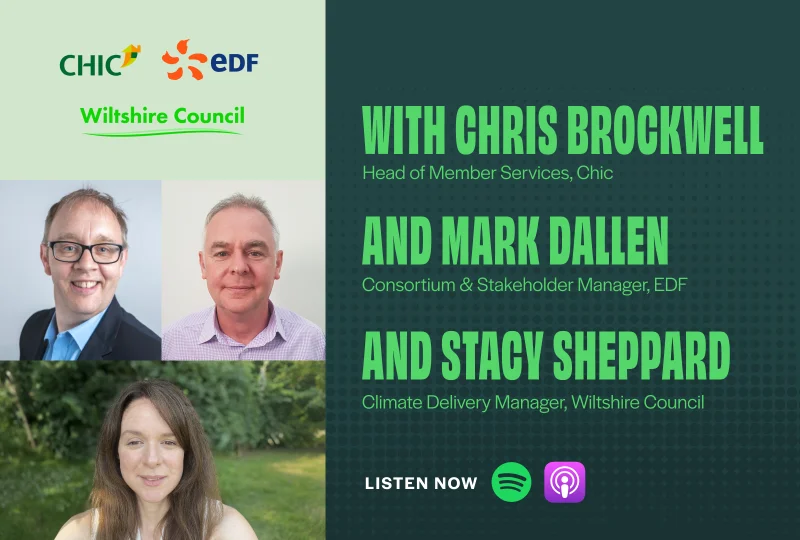
Guests: Stacey Shepherd, Climate Delivery Manager, Wiltshire Council; Mark Dallen, Consortium and Stakeholder Manager, EDF Energy; Chris Brockwell, Head of Member Services, CHIC