
Q&A: From principle to practice - how Warm Rents is being delivered in social housing
20th April 2026
Jenny Danson

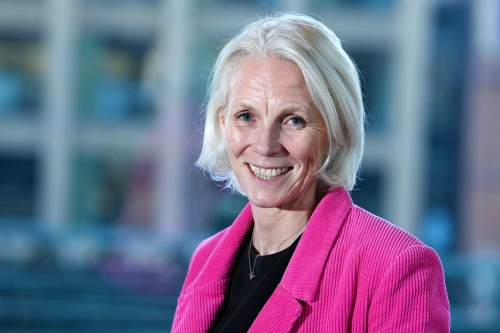
We sat down with Alex Willey, our Project Director, to understand more about the Warm Rents Programme, and what it really takes to move from recognising cold homes to doing something about them.
Q: We’ve known about cold homes and fuel poverty for years. Why does it still feel unresolved?
In short, because the system isn’t set up to solve it.
We’ve made progress on developing standards, on delivering retrofit, and on complying with regulation, but fundamentally, the experience for many residents hasn’t changed. There are still homes that sit below safe temperatures for long periods, and we tend to only find out once something has already gone wrong.
What’s become clear is that this isn’t about awareness anymore, it’s about a system that doesn’t enable the right solution.
Most organisations care deeply about this, but they’re working within structures that separate rent, energy, asset management and resident support. Cold homes sit across all of those, so they don’t get addressed in a way that leads to consistent outcomes.
That’s the gap our Warm Rents programme is trying to close.
Q: So what’s different about the Warm Rents programme compared to what providers are already doing?
The key difference is that it turns the current approach to tackling fuel poverty on its head. Whilst retrofit remains critical to providing better quality, warmer social homes, it can take time and there will always be some properties that cannot be upgraded and households in such poverty that they can’t afford the heating. At the same time housing providers are dealing with the consequences of cold homes caused by fuel poverty, through repairs, complaints and providing support packages.
We’ve designed Warm Rents to start with a different question: what if the landlord ensured the home was kept warm through the heating season?
The key shift is that the landlord remains accountable until the home reaches a safe baseline temperature.
And fundamentally, that’s a different way of thinking about the role of a housing provider in tackling fuel poverty.
Q: The idea of “guaranteeing warmth” sounds simple, but in reality it’s quite complex. Where do organisations tend to struggle?
Most providers don’t have a single, clear view of which homes are consistently cold. Data exists, but it sits in different places, and it’s not always used in a way that supports day-to-day decisions.
Then there’s the question of why a home is cold. Is it because the resident can’t afford to heat it? Or because the building is losing heat? You need to distinguish between those things, otherwise you risk intervening in the wrong way.
And finally, there’s the practical reality of stepping in. Funding heat, engaging residents, tracking outcomes - these are all things housing providers don’t traditionally do at scale and there is no one-size-fits-all technical solution for the multitude of scenarios that exist in these homes. Warm Rents is designed to test how all of that works in the real world, not just in theory.
Q: You mentioned data. How central is that to making this work?
Data is fundamental, but only if it leads to action. We’re using a mix of sensor data, smart meter data and resident insight to understand what’s happening inside homes. That allows landlords to identify properties that are consistently below the 16–18°C range and intervene early.
But data on its own doesn’t change anything - the important part is what happens next. For example, how quickly you can act, how confident you are in the decision, and whether you can evidence the outcome.
That’s why this programme isn’t just about technology; it’s about workflows, accountability and making sure the right decisions happen at the right time.
Q: One of the biggest questions providers will have is cost. How should they be thinking about that?
Most providers are already paying for the issues arising from cold housing, just not in a way that solves the problem.
They’re dealing with damp and mould remediation, repeat repairs, complaints, disrepair claims, and the internal cost of managing all of that. That spend is reactive, and it keeps coming back, year after year, winter after winter.
Warm Rents reframes that, so instead of waiting for the consequences, you invest earlier to prevent them.
The indicative cost of supporting a home to reach a safe temperature over winter is around £500, depending on the property. What we’re testing is how that compares, in reality, to the costs providers are already absorbing elsewhere.
For many organisations, that’s when the model starts to make financial sense.
Q: What are you hoping the sector will learn from the 2026/27 programme?
There are a few key things here.
Firstly, how to identify cold homes early and consistently, without creating unnecessary complexity.
Secondly, how to target support fairly - making sure we’re helping where affordability is the issue, while also understanding where the building itself needs to change.
Thirdly, what the real impact looks like, not just on temperature, but on repairs demand, asset performance and resident health and wellbeing.
And finally, what this means for policy. If we can demonstrate that guaranteeing warmth works in practice, it starts to open up much bigger conversations about rent structures and how we define a healthy home.
Q: This is described as a “learning programme” rather than a single solution. Why does that matter?
Because no single organisation has all the answers here and we need to learn together. Warm Rents brings together different providers, different types of housing stock, and different delivery approaches, with each project testing a slightly different way of achieving the same goal.
The value comes from sharing that learning - understanding what works in practice (and what doesn’t), where it gets difficult, and how others can apply it across a variety of situations.
If every organisation tried to solve this on its own, we’d move much more slowly.
Q: For housing providers considering getting involved, what kind of commitment does it require?
Participation in the programme is £5,000 plus VAT per housing provider, with the cost of heating each home anticipated to be £500 plus VAT between October 2026 and March 2027. And a commitment to testing something (potentially game changing!) properly.
That means identifying a cohort of homes - at least ten, but ideally more - working with residents, and being open to learning as you go.
It also means being willing to look at your data, your processes and your assumptions in a slightly different way.
This isn’t about proving you’ve got it right - it’s about understanding what works, and helping shape what comes next for the sector.
Q: What would success look like for you?
Success for me is when this stops being something we pilot, and just becomes part of everyday housing delivery.
At that point, we’re not having to identify cold homes after the fact or step in once things have escalated. We’re designing services in a way that prevents that situation from happening in the first place.
If we can get to a position where a safe, warm home is consistently delivered, as opposed to occasionally achieved, then we’ve moved the sector forward in a meaningful way.
Q: And finally, if someone is reading this and thinking about getting involved, what should they do next?
We’re inviting a small number of housing providers to take part in the 2026/27 programme, so the next step is simply to register your interest or get in touch with us for an initial conversation.
We’re looking for organisations that want to test this properly; in other words, bring forward a cohort of homes, work with residents, and contribute to the shared learning. The earlier you come into that conversation, the more you can shape how it works in practice.
Unlock all content
This is the 1 of 3 articles you can access for free. Become a member to unlock unlimited access to our full content library.