
The Research Perspective: Creating Healthy Homes
5th June 2025
Andy Cameron-Smith
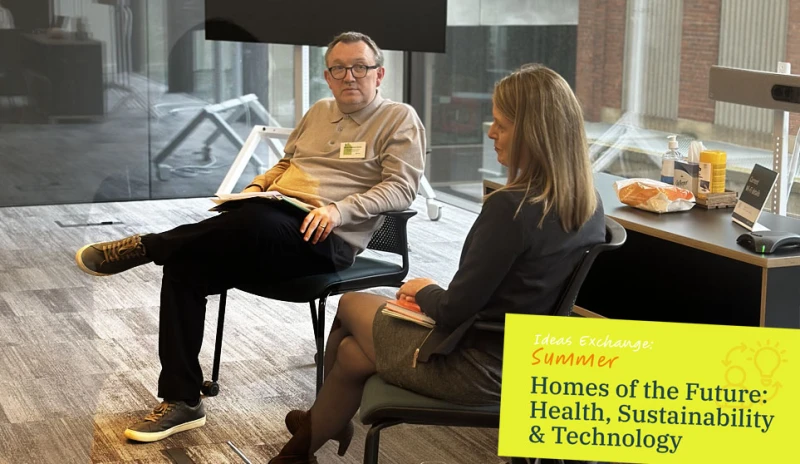
Can our homes act as health interventions? In this thought-provoking session from the Summer Ideas Exchange, Annalise and Brendon challenged us to rethink the purpose and potential of housing—shifting the narrative from bricks and mortar to wellbeing and prevention. Drawing on years of academic research and real-world policy experience, they explored how homes can be designed not just to shelter, but to heal, protect, and enhance lives.
Although Brendon was unable to attend due to illness, the session was led in conversation with Annalise Johns, Director at the Institute of Healthy Urban Living, alongside Andy from Healthy Homes Hub.
A Personal and Professional Journey
Annalise began by reflecting on her journey into the field. Initially trained in architecture at Dalhousie University in Canada, she moved to the UK to pursue urban design. Her career evolved through work in local authorities and a pivotal secondment into public health at Hammersmith and Fulham. “It was a transformative time,” she recalled. “We were beginning to look at health through the lens of place—how housing, design, and the built environment affect outcomes.”
This multidisciplinary perspective shaped her approach: bridging architecture, urbanism, and public health to focus on system-level thinking.
Rethinking the Role of the Home
The heart of the session was the provocative idea that homes are health infrastructure. Annalise explained that current systems tend to treat housing and health as separate domains. “You have your GPs and hospitals over here, and your housing providers over there—and often, they don’t speak the same language.”
But the evidence tells a different story. Poor housing—whether through damp, overheating, crowding, or poor design—directly impacts physical and mental health. The costs are measurable: increased hospital admissions, higher care needs, and reduced quality of life.
“If we started designing homes as preventative health spaces, imagine the change we could create,” Annalise said. “The home could become the first line of defence.”
Beyond Warm and Dry
Andy prompted a discussion on retrofit, noting how many housing interventions still focus on making homes warmer and more energy efficient. While these goals are vital, Annalise pushed for a broader conversation.
“Yes, homes should be warm and dry. But that’s the baseline. We also need to think about access to daylight, views of nature, air quality, noise, layout—all of which contribute to mental and physical wellbeing.”
She highlighted that many retrofit programmes risk missing the bigger opportunity by treating the home as a passive shell to be patched up, rather than a dynamic environment with the potential to promote wellness.
Health-Based Design: From Evidence to Action
Drawing on her team’s research, Annalise described a series of frameworks and tools that can guide health-centred housing design. One is the use of biopsychosocial models that assess the interplay between biological, psychological, and social conditions in a resident’s life. Another is the Life Course approach, which considers how housing needs—and vulnerabilities—shift from birth to old age.
“We don’t just need technical retrofit plans. We need strategic frameworks that help landlords and developers understand the lived experience of residents—and how that changes over time,” she explained.
Crucially, Annalise argued, these models need to be embedded early in the process. “Too often, health is brought in as an afterthought. But it needs to be part of the design brief from day one.”
Data Gaps and the Danger of Generalisation
Another theme of the conversation was the need for better data—and more nuance. Annalise cautioned against one-size-fits-all policies. “If you design for the average, you exclude the vulnerable. We need disaggregated data to understand how different people experience the same home in different ways.”
She gave the example of older people living alone who may be at risk from cold, but also from loneliness and falls. “A retrofit plan that improves insulation but overlooks accessibility or social connection is a missed opportunity.”
Annalise also spoke about the importance of relational infrastructure—the networks, trust, and support structures that surround people. “Good housing isn’t just about the building—it’s about the connections it enables.”
Cross-Sector Collaboration
The session repeatedly returned to the challenge of cross-sector working. “We have to get housing professionals, health professionals, planners, and designers speaking the same language,” said Andy.
Annalise echoed this. “We need common frameworks, shared data, and the right incentives. At the moment, we have silos and short-term funding streams. That’s not going to solve complex, intergenerational issues.”
She advocated for place-based pilots that bring different sectors together to experiment and learn. “If we wait for the perfect model, we’ll wait forever. We need to test, evaluate, and iterate in real communities.”
Practical Steps Forward
To close the session, Annalise offered a hopeful message. While the challenges are complex, the tools and evidence already exist to make progress.
“We don’t need to reinvent everything. What we need is the courage to lead with health—not as an afterthought, but as a core purpose of housing.”
Key takeaways for practitioners included:
Adopt a whole-person, life-course view of residents
Integrate health frameworks into housing policy and design
Focus on relational as well as physical infrastructure
Champion cross-sector partnerships
Use data to tailor interventions—not generalise
About the Summer Ideas Exchange
Hosted by Healthy Homes Hub and supported by AWS, the Summer Ideas Exchange brings together housing professionals, researchers, and innovators to explore new approaches to healthy, sustainable living. This session showcased the power of academic insight to shape practical housing solutions that prioritise people, place, and wellbeing.
Unlock all content
This is the 1 of 3 articles you can access for free. Become a member to unlock unlimited access to our full content library.