


The Journey Towards Healthier Homes
18th December 2024
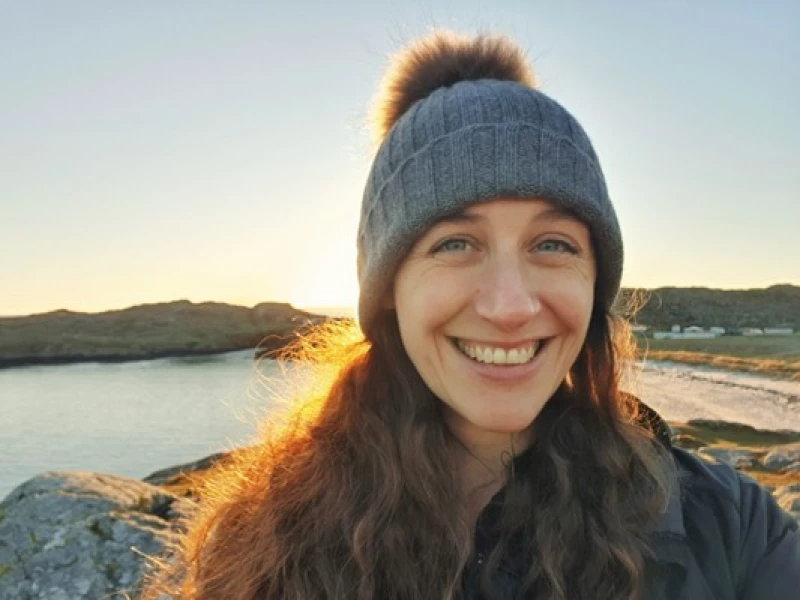
In the heart of Scotland, a transformative journey is underway, led by Dr Olivia Swann, a pioneering figure in Paediatric Infectious Disease.
With a wealth of experience gained from her work in Malawi, Ethiopia, and Nepal, Dr Swann is now focused on a critical issue affecting the health of our youngest generation: the impact of underheated homes on preschool respiratory infections.
A Personal Motivation
Dr Swann's passion for reducing health inequalities was ignited during her time treating children with cerebral malaria in Malawi. Witnessing the profound effects of poor living conditions on child health, she felt compelled to integrate research into her clinical practice. “I wanted to improve the health of as many children as possible,” she recalls, balancing her dual roles in the hospital and academia. This drive has now culminated in her ambitious five-year research project, which aims to explore the intricate relationship between housing conditions and child health in Scotland.
The Challenge of Underheated Homes
In Scotland, a staggering 20% of homes are underheated, contributing to a significant public health concern. Acute respiratory infections (ARIs) are the leading cause of hospitalisations in preschool children, and these infections are closely linked to cold, damp housing. “Children under age five are almost like canaries in the coal mine,” Dr Swann explains. “Their home environment has a disproportionate effect on their health because they spend so much time at home.”
As the UK grapples with rising energy costs and the realities of fuel poverty, many families find themselves unable to adequately heat their homes. Dr Swann has increasingly encountered young patients suffering from respiratory infections, often with parents struggling to afford basic heating. “It is very upsetting,” she shares. “As a clinician, you treat these children and send them home, but all you’re doing is putting a sticking plaster on it; you’re not addressing the underlying problem.”
A Data-Driven Approach
Dr Swann’s research project is groundbreaking, as it utilises novel cross-sectoral datasets and national data linkage for the first time in Scotland. By connecting healthcare data to individual homes, she aims to uncover how underheated housing affects preschool ARI risk. The project seeks to answer critical questions: How can we identify children living in underheated homes? What proportion of preschool ARIs is attributable to these conditions? And do different methods of warming homes increase or decrease the risk of ARIs?
To achieve these goals, Dr Swann is establishing a national retrospective birth cohort that links healthcare, housing, energy efficiency measures, smart meter data, air pollution, and weather data. This comprehensive approach will provide invaluable insights into the relationship between housing conditions and child health.
The Intersection of Health and Policy
As Scotland strives to meet its Net Zero targets, Dr Swann is acutely aware of the implications of housing energy efficiency (HEE) measures on health. While retrofitting homes can improve energy efficiency, some interventions may inadvertently trap indoor air pollutants, exacerbating respiratory issues. “We urgently need to examine this in more detail,” she asserts, emphasising the importance of considering health impacts in policy decisions.
“The health impacts of policies can’t just be afterthoughts,” Dr Swann insists. “We need to know the best way to make a home warmer while reducing respiratory infections.” Her work highlights the necessity of a ‘health in all policies’ approach, ensuring that the voices of health professionals are heard in discussions about housing and energy policies.
Championing Women in Data Science
Beyond her research, Dr Swann is also a passionate advocate for women in data science. She notes the stark gender disparity in the field, with only 0.68 analyst/data scientist roles filled by women for every four filled by men. “Data science is a fantastic career for women and those with caring responsibilities,” she states. “It gives you so much autonomy, flexibility, and it’s really exciting.”
Dr Swann actively works to combat stereotypes, encouraging more women to enter STEM fields. “I love it when people tell me I don’t look like a data scientist as it gives me the opportunity to debunk some stereotypes!” she laughs.
A Vision for the Future
As Dr Swann embarks on this pivotal research project, she is not only addressing the immediate health concerns of preschool children but also paving the way for long-term improvements in housing policy and health equity. “If you try and answer your question in a silo, you don’t get the whole answer,” she explains. “This topic is a wonderful opportunity to bring together cross-sectoral researchers to do something bigger than the sum of its parts.”
With rising public and political awareness surrounding the intersections of housing, health, and climate change, Dr Swann’s work is more relevant than ever. By tackling the issue of underheated homes and their impact on child health, she is not just improving individual lives but also contributing to a healthier, more equitable future for all.
As the project unfolds, the hope is that it will illuminate the path toward healthier homes, ensuring that every child in Scotland has the opportunity to thrive in a safe and warm environment.
Unlock all content
This is the 1 of 3 articles you can access for free. Become a member to unlock unlimited access to our full content library.