

Lived Experience: Supporting a Family in an Unhealthy Home
5th June 2025
Jenny Danson
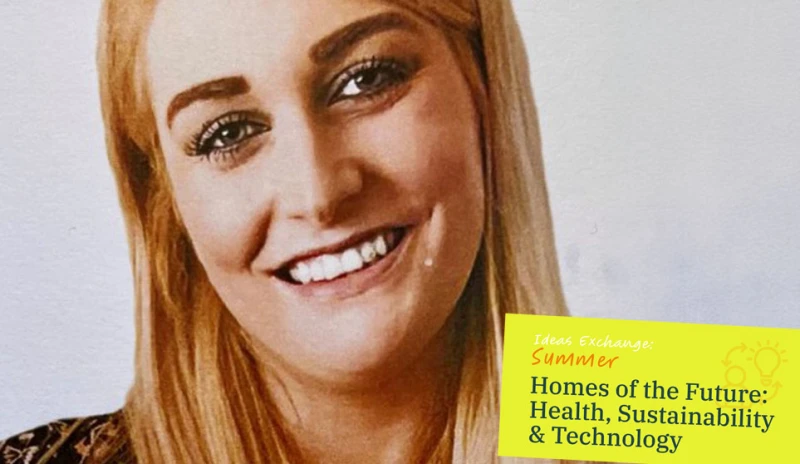
We often speak of housing as policy, as planning, as systems. But every door hides a story—and sometimes, that story is one of pain, perseverance, and quiet strength. At the Summer Ideas Exchange, we began the day not with data or theory, but with a mother’s voice.
Maggie Bosanquet opened her heart to share the story of her daughter Lucy—a vibrant, intelligent, and kind young woman—and the harrowing impact of living in an unhealthy home. Her story is not just about a flat in Darlington; it is about what happens when housing fails to protect, support, or nurture.
“I’ve never told this story before”
Maggie is no stranger to public speaking. But as she sat before the room that morning, she said quietly, “I’ve never told this story before.” What followed was a raw, powerful account of a mother trying to support her daughter through a perfect storm of trauma, mental health challenges, and environmental neglect.
Lucy was funny, clever, deeply loving, and fiercely bright. “She never failed an interview,” Maggie told the room. “She had this lightning-quick wit. Everyone loved her.” But underneath her humour and sparkle was a young woman trying to cope with an overwhelming world.
Lucy had experienced trauma, and while she fought hard to build a life filled with connection, she struggled to keep her footing. Eventually, she found herself in a council flat in a rough part of Darlington, raising a baby, trying to move forward, and living in a space that was far from safe.
A flat with potential—and peril
“When you first walked in,” Maggie said, “it looked light and spacious. She was so excited.” The flat itself had promise—bright rooms, a view from the balcony, enough space for a young family.
But problems surfaced quickly.
The environment was loud, chaotic, and unpredictable. “There were parties. Fights. High heels clomping across ceilings at all hours,” Maggie recalled. “The noise never stopped.”
Neighbours began to create tension. One, initially friendly, became volatile—banging on the door, even climbing in through Lucy’s balcony. “It wasn’t just the noise—it was the fear. The sense of being trapped. There was no peace.”
Inside the flat, conditions worsened. “It was cold. There was black mould. Damp in places you couldn’t use for storage. There was nowhere to go.” Lucy, like many young mothers, spent most of her time in one large room—cooking, eating, playing, sleeping—all within the same four walls.
There was no privacy. No respite. And despite Lucy’s efforts to create a home, it was never truly a safe or healthy place to live.
Isolation, anxiety, and a system too slow
Maggie described how Lucy slowly withdrew. “She didn’t like asking for help. But she was anxious all the time. And when I visited, even I felt it—that atmosphere, the noise, the constant tension. You wouldn’t believe how exhausting it is just to be there.”
Mental health services were slow to respond. Housing officers changed frequently or didn’t engage. “There was no continuity, no one person who really knew what was happening,” Maggie said. “I was trying to help her, trying to be the bridge—but I could only do so much.”
Lucy’s world grew smaller, and her sense of hope dimmed. Despite her intelligence and strength, the pressure of her environment, the lack of support, and her past trauma all combined into a weight too heavy to carry.
“She deserved so much better,” Maggie said.
What needs to change
As Maggie spoke, the room fell silent—not just in sympathy, but in deep reflection. Her story cut through policy language and sector jargon. It was a call to do better.
So what can we learn from Lucy’s story?
Environment matters: A home is more than its physical structure. It is noise, safety, air quality, lighting, the people next door. All of these affect mental health and quality of life.
Early signs need early action: There were many moments where Lucy’s situation could have been picked up—by housing officers, GPs, mental health services. But siloed systems and inconsistent engagement meant warning signs were missed.
Relationships matter: “You need someone who knows you,” Maggie said. “Not a different person every month. Not someone ticking a box.” The lack of a sustained relationship between Lucy and a housing officer left her without a safety net.
Data should serve people: Multiple attendees pointed out that data exists to track anti-social behaviour, complaints, and maintenance issues. But it is rarely used to proactively protect vulnerable residents. “We place people into flats without understanding what they really need,” one speaker noted. “That has to change.”
A different kind of community
Maggie described the estate where Lucy lived as one where “there could have been a sense of community—but instead, it was full of fear.” And yet, Lucy found moments of joy. She raised her child. She made friends. She tried—every day—to make it work.
And Maggie was there. Always. Quietly, fiercely, loving her daughter and trying to shield her from a system that didn’t always see her clearly.
A call to listen—and to act
The Healthy Homes Hub exists to make homes better—not just in structure, but in spirit. Maggie’s story reminds us that lived experience must be at the heart of everything we do. Policy is important. Retrofit is essential. But if we are not listening to people like Lucy—if we are not designing systems with them, not for them—then we are failing.
“I don’t want anyone else to go through what she did,” Maggie said.
Neither do we.
About the Summer Ideas Exchange
The Summer Ideas Exchange, hosted by Healthy Homes Hub with support from AWS, is a day of ideas, storytelling, and collaboration. Maggie’s session opened the event with honesty and courage, grounding all that followed in what really matters: people.
Unlock all content
This is the 1 of 3 articles you can access for free. Become a member to unlock unlimited access to our full content library.