
Seeing A Person, Not A Line Of Data
14th October 2025
Andy Cameron-Smith
Lucy’s story: a tale of how we can do better
Every week across Britain, tragically lives are lost because some of the systems built to protect people are not delivering. Lucy’s story is one of them. Her death displays how, in some cases, privacy concerns and fragmented services can get in the way of joined-up care.
Lucy was a young mother, bright, kind and determined to be well. Over three years she was admitted to hospital 18 times with seizures, infections, overdoses and sepsis. Each time she was treated, patched up and sent home. Each service that interacted with her focused only on its part of the problem.
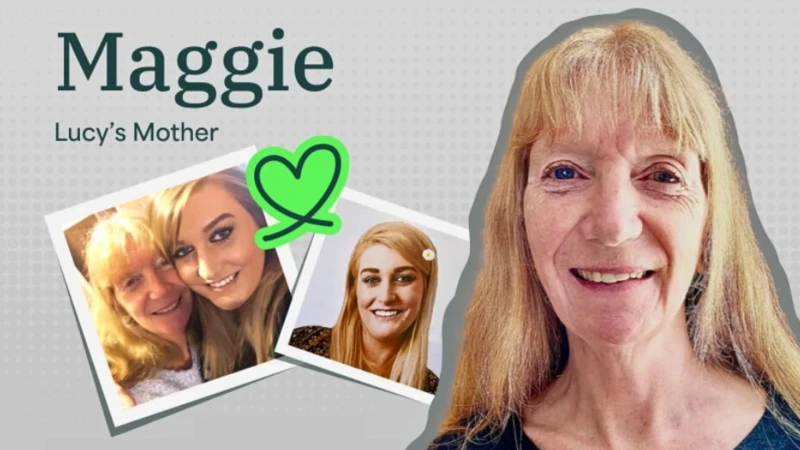
In a recent Healthy Homes Hub podcast, Lucy’s mother, Maggie, described how she tried again and again to raise the alarm. “I was shouting into a void,” she said. “Nobody would talk to me. Nobody joined the dots.”
If privacy rules are applied too rigidly, are compassion and common sense lost? Sadly, Lucy died alone in her council flat on her little boy’s third birthday.
A system that didn’t see her
Lucy’s story began with promise. She was described as clever, creative and kind. But years of trauma and poor mental health left her trapped in a system built around short-term interventions, not long-lasting support.
“She had a care coordinator,” Maggie recalls. “But they did nothing. When her ex went to trial, nobody called. Nobody asked if she was okay.” When Lucy was discharged from psychiatric care with nowhere to go, Maggie was told staff couldn’t discuss her daughter’s case.
It seems Lucy was seen but never understood. Every service recognised a fragment of her story, yet no one held the full picture.
When home becomes a trap
When Lucy got a flat of her own, it should have been a new start. Instead, it became a place of fear and isolation. The block was dated and noisy. There were no carpets, no curtains and little storage. Drug dealing and anti-social behaviour in the area left her frightened.
“She used to say it felt like Fort Knox,” Maggie remembers. “She was scared to go out, and scared to stay in.”
The flat was technically compliant, yet everything about the environment worked against her recovery. Cold air seeped through the balcony door, noise travelled through thin walls, and the absence of any community left her completely alone. Like so many across the UK, Lucy’s home met the standard but failed the person, offering compliance without comfort, safety or dignity.
Joined-up in theory, not connecting in practice
Lucy’s life intersected with almost every public service, in place in theory to protect her: health, housing, mental health, police, social care. Each operated in isolation, the issue being no one was responsible for joining it all together.
Eighteen hospital admissions. Three bouts of sepsis. A child protection case. Yet no one professional or service held oversight.
“Every time I called, they said they couldn’t talk to me, data protection,” Maggie says. “I wasn’t trying to pry. I was trying to save my daughter’s life.”
Data protection is rightfully there to safeguard and empower, but when applied without judgement or trust, it can become a barrier to collaboration. Too often, it stops professionals from talking to one another, in this instance with tragic results.
The false economy of crisis
For years, Lucy’s situation was visible to everyone. Ambulances came, police visited, social workers called. Yet she remained without coordinated care, while public money poured into emergency response rather than prevention.
“The cost must have been hundreds of thousands,” Maggie reflects. “Hospital admissions, emergency callouts, foster care, court proceedings. If someone had acted early, it could have been prevented.”
This pattern is sadly often repeated across the sector: escalating need, fragmented systems and reactive spending. Early intervention saves money but, more importantly, it can save lives.
Not statistics, people
Lucy’s son was three when she died. He still asks questions no child should have to. “He said to me, ‘If Mummy’s in the sky and she falls out, will she die again?’” Maggie says quietly.
Her story is not unique. Reviews into domestic abuse, mental health and safeguarding echo the same themes: services working in silos, limited information-sharing, families excluded from decisions. At the heart of every case is a home that was supposed to be safe.
Lucy was not a statistic. She was a person. One of many whose lives remind us that systems built to protect must also listen, connect and act.
A call to conscience
The lessons from Lucy’s story are clear. When people’s lives cross multiple services, collaboration must be the rule, not the exception.
This is not a plea for more bureaucracy, rather it’s a call for clarity, trust and shared accountability. We need to see each tenant, patient and parent as a person, not as data. We need to build relationships between housing, health and care so that someone, anyone, who comes into a case like Lucy’s can see the full picture.
When communication breaks down and every service retreats to its corner, the system itself contributes to harm that could have been avoided.
Some possible future approaches
See the person, not the process. When concerns arise, they need to be escalated, we can’t assume someone else will.
Share responsibly. Create clear local protocols so information can be used to protect, not withheld through fear.
Act early. Prevention always costs less than crisis and repair.
Design for dignity. Storage, curtains and carpets aren’t luxuries, they should be the basic fabric of comfort and stability.
Be present. A housing officer, community connector or local warden can turn isolation into support.
Lucy’s story reminds us that a home is more than bricks and mortar. It is the setting for a life. Seeing, listening and acting early are the first steps towards making every home a healthy one.
Unlock all content
This is the 1 of 3 articles you can access for free. Become a member to unlock unlimited access to our full content library.