
Housing, Health and Data: Lessons from Richard Harding
21st October 2025
Matt Chenery
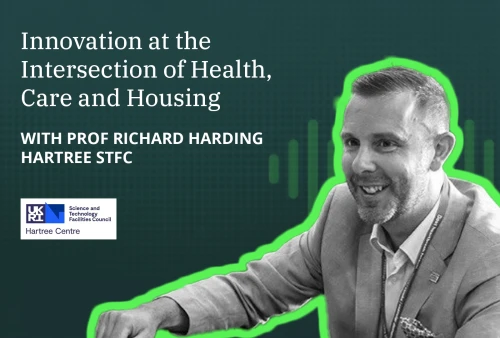
When Richard Harding describes himself as a “digital enabler,” it is less about technology and more about people. His career has spanned fintech, social care, and now high-performance computing at the Hartree Centre. Along the way, he has carried one consistent belief: innovation only matters if it changes lives.
“Most of the people we worry most about in care live in social housing houses,” he reflects. “If housing isn’t at the table, you simply can’t see enough of someone’s life to support them well.”
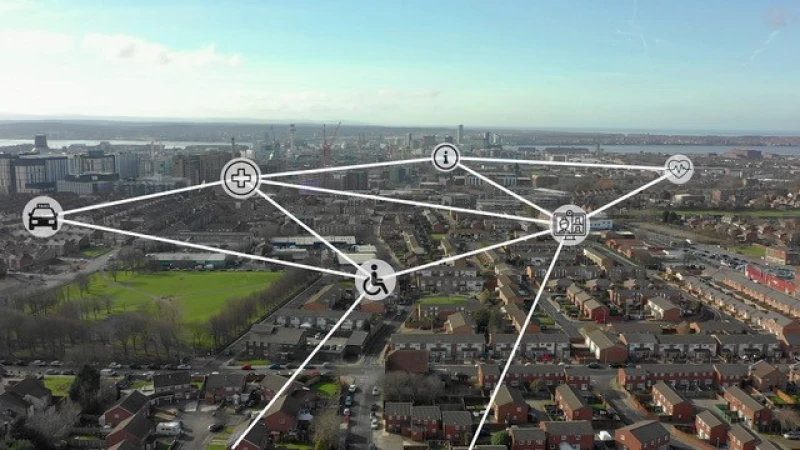
This conviction has shaped his work in health, care and housing sectors that, he argues, need to stop working in parallel and start operating as one system.
Technology is rarely the barrier
Harding’s research highlights an uncomfortable truth. Progress does not stall because sensors are unavailable or algorithms too complex. The real obstacle lies in what he calls the “squidgy bits”, the people, processes and services that must absorb innovation.
“Drop cutting-edge IoT into an unchanged service and you only inflate someone’s workload,” he says. “The data becomes burdensome; the pilot dies.”
For housing, this means service redesign has to come before digital roll-out. Without it, even proven technologies with a strong return on investment will fail. Harding is clear: budgeting for the change matters more than buying the kit.
Data is not the answer
Harding recently published a paper with the blunt title Data is Not the Answer. The argument is simple: data only has value if it is linked to a clear decision and outcome. Too often, housing and care providers create vast datasets with no route to action.
He illustrates this through a project with adults with learning disabilities. A shared care record, enhanced with wearable technology, allowed information to be fed back to citizens and their carers in accessible, visual form. An avatar’s posture drooped as mood declined; patterns could be traced to benefit payment dates or weekend activities.
“It wasn’t about big data,” Harding explains. “It was about making meaning visible. That’s what made the difference.”
For housing, the lesson is obvious. Damp alerts, temperature readings or repair histories are only useful when tied to a clear line of sight: who receives the insight, what action they take, and how outcomes improve for residents.
Housing’s voice is too quiet
Harding draws attention to a stark imbalance. Within the NHS North West, he estimates there are around 150 data scientists. In social care and housing combined, the number is negligible.
Health benefits from national programmes on interoperability, clinical entrepreneurs, and academic posts that link practice to research. Housing has none of this architecture. Instead, the sector relies on small teams, pilots, and passionate individuals working against the odds.
“Health without the home is guesswork,” Harding says. “But housing is still under-represented, under-resourced and under-connected.”
He calls for a national approach that treats housing as part of the health infrastructure. That means secure data environments designed to include landlords, frameworks that prevent vendor lock-in, and joint investment in skills.
What Hartree can offer
At the Hartree Centre, Harding now helps organisations apply advanced computing — from AI and optimisation to quantum simulation. But he is quick to point out that the technology is not the starting point.
“We never begin with, ‘How might we use AI?’” he explains. “We begin with, ‘What really frustrates you? What do you want to reduce?’ Then we wrap the right people around that problem.”
For housing providers, this means framing challenges in terms of lived pain points: rising repair demand, poor resident health, escalating costs. From there, the right tools can be applied with a clear line to action.
A Healthy Homes Hub perspective
At Healthy Homes Hub we know that evidence and lived experience must move together. Harding’s work reinforces this: sensors alone will not improve lives, but service design rooted in real human need can.
The Hub has consistently argued for a stronger housing voice in health and data policy. Harding’s perspective confirms why: without investment in skills, research partnerships and shared infrastructure, housing will remain a missing piece of the health puzzle.
The challenge is not to collect more information, but to turn insight into better decisions, faster.
Practical steps for housing providers
Redesign first, deploy second. Test whether your teams could act on an alert tomorrow. If not, redesign the workflow before investing in more technology.
Map the data-to-decision pathway. For each dataset, define who sees it, what action they take, and how outcomes are measured. Remove any data that lacks a clear owner.
Collaborate with health and care. Establish a joint working group with local NHS and social care partners. Begin with one shared dataset that supports a real resident outcome.
Invest in people, not just platforms. Sponsor staff to build expertise through academic partnerships or secondments. Create internal champions who can link practice with research.
Frame challenges in plain terms. Approach innovation partners with “we hate it when…” statements. This keeps the focus on lived issues rather than abstract technology.
Housing cannot remain on the margins of data and health reform. Harding’s message is clear: innovation must be demand-led, insight-driven, and rooted in collaboration. For housing providers, the opportunity is not to chase every new tool, but to build services capable of acting when insight arrives.
Unlock all content
This is the 1 of 3 articles you can access for free. Become a member to unlock unlimited access to our full content library.