
Building Resilience: Preparing Social Homes for Climate Challenges
5th June 2025
Andy Cameron-Smith
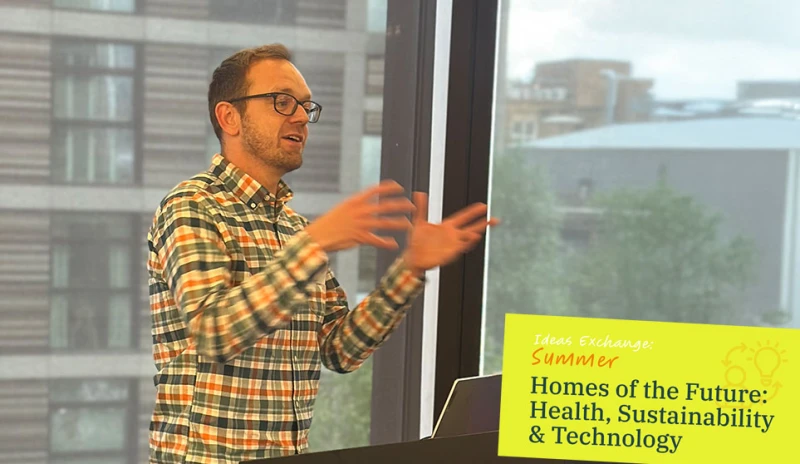
As climate change accelerates, the impacts on social housing are no longer theoretical—they’re here, now. From extreme heat and flooding to high winds and water stress, the challenges are intensifying, particularly for the UK’s most vulnerable households. In a standout session at the Summer Ideas Exchange, Richard, CEO of Map Impact, led a powerful panel exploring how the sector must respond to safeguard homes and protect residents.
The session focused on three key questions:
What are the key climate risks social landlords need to prepare for?
How do we plan and prioritise adaptations?
Who pays—and how can we unlock funding at scale?
A Shift From Awareness to Action
Andy, Communications Director at Healthy Homes Hub, opened the session by stating plainly, “Climate change is not coming. It is here now.” With that, the tone was set for a forward-looking but urgent discussion.
Richard Flemmings, CEO at Map Impact began by emphasising the importance of place-based data. His organisation works with housing providers to create hyper-localised climate risk models. “We need to understand the specific threats at the postcode level—whether that’s overheating, subsidence, or flooding,” he said. “It’s not enough to rely on broad regional forecasts anymore.”
He explained that such data allows landlords to make smarter decisions about asset investment and tenant support. “If you’re managing thousands of homes, you need to triage—understand which properties need intervention now, and which can wait.”
Climate Risk Is Uneven—So Are the Solutions
Antoine Pellet, who leads the retrofit credit programme at HACT, offered a financial lens on the challenge. “Climate risk isn't equally distributed, and neither is funding. There’s a real danger that the properties and communities most at risk get left behind if we don’t rethink how we fund resilience.”
He introduced the concept of carbon credits as a potential mechanism for funding retrofit work. By verifying energy and emissions savings in social housing, landlords could generate sellable credits—bringing in new revenue streams. “It’s not a silver bullet,” Antoine admitted, “but it’s part of a more creative, diversified funding mix.”
This theme of blended finance was echoed by Matthew Conroy from Unity Trust Bank. He spoke about the shift in banking priorities toward sustainability. “We’re seeing a lot more interest from investors in projects with social and environmental impact,” he said. “The challenge is making the business case stack up—especially for preventative measures.”
Moving Beyond Compliance
One of the strongest messages from the panel was that resilience planning must go beyond just regulatory compliance.
“We’re still seeing too many landlords waiting for a mandate—whether from the regulator or government,” said Richard. “But if you wait until you have to act, you’re going to be firefighting.”
The panel advocated for building climate resilience into long-term asset strategies. That means identifying high-risk properties now, factoring climate risk into stock condition surveys, and aligning retrofit plans with future climate scenarios—not just current regulations.
Richard shared an example where Map Impact had helped a provider reclassify ‘low-risk’ homes as high-risk due to their exposure to surface water flooding—information that wouldn’t have been visible without detailed local modelling.
Engaging Tenants in the Journey
The human side of resilience was not forgotten. Matthew noted that some of the biggest challenges are social, not technical. “Residents need to understand why changes are being made. We need to build climate literacy alongside physical adaptations.”
He suggested housing providers take inspiration from public health campaigns—clear, localised messaging that builds trust. “Climate resilience isn’t just about the fabric of the building. It’s also about empowering the people inside it.”
The panel agreed that successful projects are those that put tenants at the heart of the process—from early consultation through to post-installation support.
Funding: The Elephant in the Room
Perhaps the thorniest topic of the session was funding. While innovative ideas like carbon credits and green finance are emerging, the panel agreed that there is still a significant funding gap—particularly for large-scale adaptation.
“There’s a danger that resilience gets siloed as an ‘extra’ cost rather than a core business function,” warned Matthew. “But the cost of not adapting is far greater.”
Richard called for a shift in how value is measured. “Too often, resilience is framed in terms of cost avoidance. But we also need to recognise the social value—keeping people safe, preventing homelessness, reducing pressure on health services.”
Antoine suggested that as ESG requirements tighten, there may be an opportunity for social landlords to lead the way in climate-responsive investing—if they can demonstrate measurable outcomes.
A Sector-Wide Effort
In closing, the panel called for more collaboration across the sector. Data sharing, collective funding bids, and cross-sector partnerships could all help accelerate progress.
“Resilience is not a competitive advantage,” said Richard. “It’s a shared responsibility.”
The session ended with a lively discussion among attendees, many of whom raised the need for centralised tools and consistent metrics. There was also strong support for the Healthy Homes Hub to play a role in curating and sharing good practice.
About the Summer Ideas Exchange
Hosted by Healthy Homes Hub and supported by AWS, the Summer Ideas Exchange brings together housing professionals, innovators, and policymakers to explore the future of healthy, sustainable homes. This session on climate resilience was one of several dynamic discussions focused on practical action and shared learning.
Unlock all content
This is the 1 of 3 articles you can access for free. Become a member to unlock unlimited access to our full content library.