
Asthma: Fix the Home First
5th November 2025
Matt Chenery
Housing providers don’t need a new theory to cut childhood asthma attacks, they need a process. That’s the thread running through our conversation with Catherine Sutton, founder of Airborne Allergy Action and secretary to the Ella Roberta Family Foundation. Her message is disarmingly simple: alongside the right medicines, reduce everyday exposure to indoor allergens , dust mite, mould, pet dander, pests , and you can transform outcomes.
“We put anti,dust mite bedding on, switched to a HEPA vacuum, and the cough stopped,” she recalls. “Then a school changed their vacuum , and it started again.”
Why this matters
Children spend a large share of their lives indoors. The Royal College of Paediatrics and Child Health (RCPCH) has long warned that poor indoor air is a preventable source of ill health, with bedrooms a particular concern for allergen exposure.
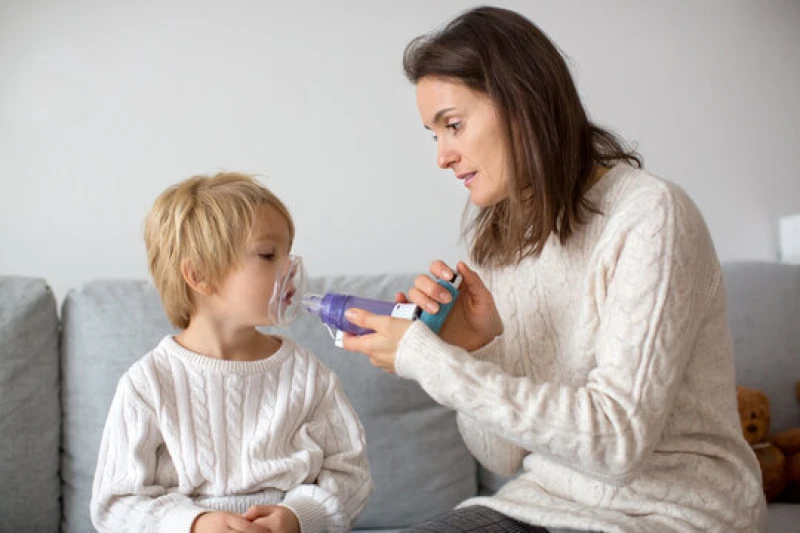
Sutton’s lived experience mirrors that evidence base. She describes “cause and effect” changes , anti-dust mite encasements, high-filtration vacuums with sealed bags, and tackling mould and pest residues , followed by fewer GP visits, fewer steroids, and a child who no longer caught a cold every month.
“If you take it seriously , and take your medication , it can make major improvements,” she says.
The evidence and the myth,busting
One persistent myth in UK clinical practice has been that “you can’t do anything about dust mites, so don’t bother” , a position that has lingered for years despite being withdrawn from use. Sutton’s experience is that targeted environmental controls do help, especially in the bedroom, and newer clinical guidance now recognises the importance of tackling indoor exposures.
She also points to international practice. In Alameda County, California, a public health programme combined medication support with anti-dust mite bedding, sealed bag HEPA vacuums, minor home repairs, pest remediation and simple monitors to show families what’s in the air. The result? Fewer hospital visits and reduced costs , a lesson Sutton believes the NHS can learn from.
Policy has moved , implementation must follow
Since the second inquest into Ella Adoo Kissi Debrah’s death, NHS England has embedded environmental risk into its National Bundle of Care for Children and Young People with Asthma. It provides a clear, standardised framework for systems , individualised plans, education, and non-pharmacological measures , and explicitly calls out indoor risk factors.
For housing linked triggers, it points to practical steps: encasements, sealed bag HEPA vacuums, humidity control, and mould mitigation alongside medicine adherence.
At the same time, the housing regulatory context has tightened. Awaab’s Law is now in force in England, putting legal timeframes on emergency hazards and serious damp and mould , with investigation required within 10 working days and fast follow up to fix. Government guidance for social landlords is live, and sector bodies are clarifying expectations and schedules.
For providers, this moves mould from “should” to “must”, with health protective time limits and real accountability if they fall short.
Collaboration beats silos
Sutton’s dual roles keep the housing health interface front and centre. The Ella Roberta Family Foundation campaigns for clean air as a human right and continues to educate clinicians and the public after Ella became the first person in the world to have air pollution listed as a cause of death on a death certificate.
Unlock all content
This is the 1 of 3 articles you can access for free. Become a member to unlock unlimited access to our full content library.