
Are Healthy Homes Being Suffocated by Dumb Air?
31st March 2026

Why intelligent ventilation and energy control must sit at the heart of decarbonisation if homes are to be both affordable and healthy.
Airtight retrofit can increase damp and air quality risks if ventilation is not responsive.
Smart control of heating, hot water and tariffs can cut bills while protecting health.
Connected data enables earlier, proactive intervention by housing providers.
In this episode, Jenny Danson, Chief Executive of Healthy Homes Hub, speaks with Dr Pete Armstrong, CEO / CTO and Co-Founder of Mixergy, about the risks of treating heating, hot water and ventilation as separate retrofit upgrades.
Spun out of University of Oxford, Mixergy’s technology turns hot water cylinders into connected energy assets, optimising off peak tariffs, renewable generation and storage. But the conversation moves beyond energy efficiency alone.
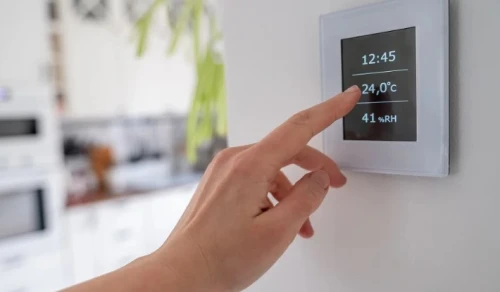
As homes become more airtight, continuous ventilation, described as “dumb air”, can unintentionally increase heat loss or be switched off due to cost or noise. Intelligent control, monitoring CO2, humidity and temperature, enables ventilation to respond to real conditions, reducing damp and mould risk alongside compliance pressures such as Awaab's Law.
Pilot work with St Basil's suggests energy bill reductions of 20 to 30 percent through better tariff alignment and system control, alongside improved visibility for housing managers.
More information:
https://www.mixergy.co.uk/social-housing-hem/
Narrative insight – Mixergy
Mixergy’s approach depends on sustained data access, tenant trust and reliable connectivity, placing responsibility on the organisation to evidence energy savings and air quality improvements while managing privacy, resilience and retrofit cost constraints.
Practical steps for housing providers
Review whether ventilation strategy in retrofit programmes is responsive to measured indoor air quality rather than fixed extraction rates.
Assess tariff optimisation and off peak usage before and after retrofit investment.
Integrate heating, hot water and ventilation controls into a single performance framework.
Use connected monitoring to identify early signs of damp, mould or fuel poverty risk.
Test whole home pilots before scaling, ensuring operational teams can act on the data provided.
An Invitation
Mixergy is inviting social housing providers to express interest in taking part in trials of their Smart Home Energy Management System (SHEM)
SHEM brings together smart hot water control, indoor air quality monitoring, adaptive ventilation, and a tariff optimisation engine in a single connected system. The goal is to give housing teams real visibility of conditions and energy performance across their stock, reduce the risk of damp and mould, and cut the cost of hot water and heating for residents who are already stretched. Early results from a pilot with St Basils, running since early 2025 across 32 self-contained apartments, point to energy bill reductions of around £200 per resident per year, a 20% average saving on electricity tariffs, and a reduction in compliance admin time of over 50%.
The beta is a structured trial programme, and partners will work with the Mixergy team to define measures of success, receive installation support aligned to their scheme type, and feed directly into the product roadmap. It's designed for providers where damp, mould risk, or high electricity costs are live issues, and where there's an appetite to test, learn, and share what works.
Providers interested in joining the next beta cohort can get in touch via mixergy.co.uk/social-housing-hem